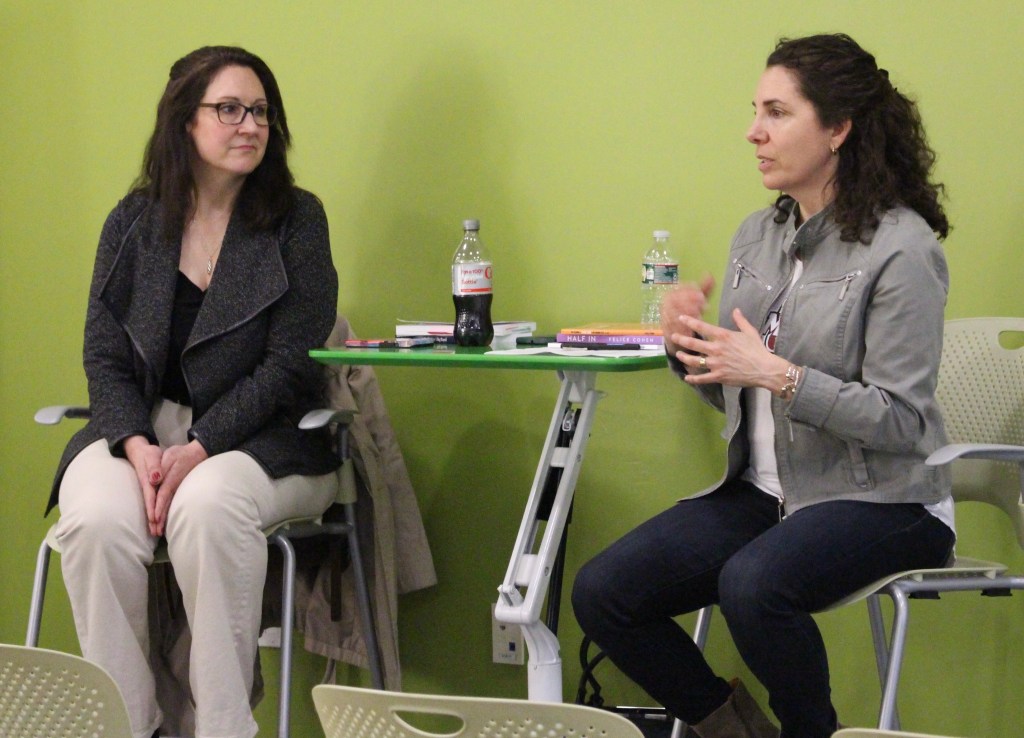
The UMass Journalism Department graciously invited my former UMass/Massachusetts Daily Collegian pal, the award-winning writer Felice Cohen, and me to talk about our experiences writing memoir.
In late April, Felice told attendees that her family read early drafts of her UMass-based memoir, Half In — which reveals her 1990s love affair with a much older woman — and said they were supportive of her relating the truth of her experience. She said she heavily relied on the journals she kept during that time to refresh her memory about specific events and conversations, which, in the book, are very detailed. Felice is currently working on what she called a “reverse memoir” using letters she’s received throughout her life.
I, meanwhile, totally put my husband Scott on the spot and asked him what he thought about being portrayed and quoted in my memoir, Uncomfortably Numb, which traces the first several years of my life with multiple sclerosis. His reply? He trusts me (!) to tell my “truth” since I’ve been writing about my life –and, consequently, him — ever since we met when we were undergrads.
It was wild to look around the state-of-the-art Journalism Hub and to later visit the freakishly clean Collegianoffices — which, years ago, moved out of its original location in the windowless Campus Center basement. Gone were the days of that smelly, lumpy sofa in the Journalism Department and of messy student newspaper offices with stacks of papers and all manner of wires snaking up the walls and across floors like out-of-control ivy.
Another major difference on the Amherst campus? The dining hall. Not necessarily the halls themselves, but the food within them which is now top notch, a far cry from when the chicken cutlet sandwiches were referred to as “chicken pucks” and the highlight of the week was when fried French toast sticks were on the menu. It’s no wonder why, when I asked my younger son who graduated last year, where we should go out to eat and he said, “The dining hall.”
I want you all to know that I was so very dedicated to this project that I watched Liverpool take on Brentford on Nov. 12 at the end of a trip to the humid, overheated hellscape that is Florida (the weather didn’t get along well with my severe multiple sclerosis-heat sensitivity) as I sat in the car my husband Scott and I rented, while I sat in the airport, while I dragged my super-fatigued ass through said airport, and then as I sat my ass on an early-ish Delta flight back to Boston. The only parts of the game I missed were when I went through airport security and during the time it took to get settled in my seat and find the game on the plane’s channel guide.
In spite of my MS fatigue and mobility issues — as well as the fact that I hadn’t yet had any coffee — I was quite impressed with myself for making it a point to not only watch the game, but to also take some pretty thorough notes. The first thing that struck me as I tuned into the contest on my phone was that the energy thousands of miles and an ocean away on the Anfield pitch was the polar opposite of what I was feeling. Once we got to the airport, Scott dropped me off so he could return the rental car. I dragged our luggage inside and plopped myself onto seats in front of the Delta counters.
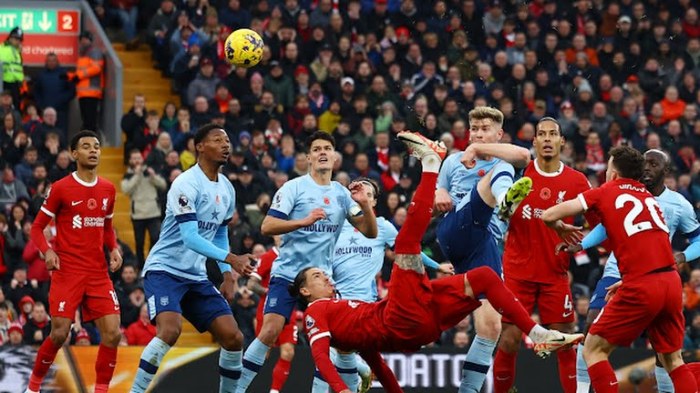
Early on in the game, the teeny tiny little figures of Virgil van Dijk and Mo Salah on my phone’s screen teamed up to make a series of plays that looked impressive, but didn’t yield any goals. Diogo Jota was as chippy with Brentford players as I felt toward the Sunshine State, eager to get out of an area where the weather literally affected my damaged brain and made me feel ill nearly the entire time I was there. Darwin Nunez, channeling the energy of two dozen espressos, managed to emerge from traffic in front of the Brentford Bees’ goal in the 22nd minute and land it in the back of the net. Alas. He was offside. Six minutes later, Nunez executed this amazing backwards-over-his–head kick (see below) that also sunk. But. Again. He was declared off side. When, a minute later, two Brentford players got tagged with yellow cards and Liverpool blew a free kick, an announcer said, “Nothing breaking for a Liverpool player yet.”
By the 37th minute, Scott walked through the airport doors, I handed him an earbud, and we joined the security line just in time to watch Joel Matip receive a warning from an official for colliding into a Brentford player and then get a yellow card for complaining. (It occurred to me that I was jealous of the officials’ power to walk around issuing cards to people who make with stupid complaints. That was be amazing.) Meanwhile, the Anfield chanted, “Bullshit,” while Scott and I argued about whether Matip deserved the card. If my Chelsea-mad son had been there, I’m certain he would’ve been very black-and-white about it, officiously telling me that Matip complained, complaining’s against the rules, therefore he deserved the yellow card. However he was back at home taking care of our two dogs which, he realized, isn’t so easy.
Just before Scott and I dumped our belongings onto the Transportation Security Administration’s (TSA) conveyor belts – I experienced a pang of worry about the safety of my laptop (the one on which I’m typing this very post) in the hands of Floridian TSA agents because, I suddenly remembered it bore a rainbow sticker saying, “Say gay, do crime” on it to protest Florida’s “Don’t Say Gay” law. (One TSA agent, to my shock, told me she liked the sticker.) – Mo Salah scored his 199th English football goal via a beautiful backward pass from Nunez. At the half it was 1-nil.
By the time Scott and I were able to return to the game, it was the 54th minute and officials were using VAR (video assistant referee … it’s a British phrase) to determine if Wataru Endo should get a red card for a slide-tackle where his studs wound up on top of a Brentford player’s foot/leg. However I didn’t totally hear most of the announcers’ commentary because I was wearing one ear bud (Scott had the other one) and there was incessant Charlie Brown’s-teacher-blathering from the gate attendants on the public address system. They’d overbooked our flight and were begging people to take the $500 gift card for another flight. How rude of them to talk over the Prem announcers!
Salah sunk his 200th British football goal in the 62nd minute but there was a question about whether Konstantinos Tsimikas was out-of-bounds when he passed the ball to Salah. (Reader: he was not.)
Both Scott and I shouted, “Wow” when Brentford’s goalie, David Raya, made an extraordinary save, looking like Superman as he went airborne. Minutes later, we again became noisy when Jota scored a bomb of a goal into the top, upper-right side of the goal, demonstrating “controlled strength,” an announcer said. No one in our seating area seemed to notice, particularly while this tiny, gray-black shaggy dog in a red harness was frolicking around the seating area. (I know I wasn’t the only one hoping the hound would be a silent traveler. On our way down to Florida, someone brought a dog who was clearly unhappy and barked for an extended period.)
Scott and I missed 14 minutes of the game due to the boarding process and, when we found the correct station on the seat-back TV (see above), the score was still 3-nil Liverpool, as it would remain for the rest of the match, including its six minutes of extra time. As the whistle blew, I heard Anfield filling with The Standells’ Boston-centric “Dirty Water,” the 1966 song usually played at Fenway Park after the Boston Red Sox win a game. Have they played this song all season and I never noticed? Did they start to play this after the Fenway Sports Group purchased Liverpool? (I shall explore these questions in a future post.)
International break, then a Nov. 25, 2023 draw with Man City
So, hear me out. I’m preemptively making excuses for my Nov. 25 mistake. While I was so proud of my valiant effort to make sure I saw as much of the Liverpool-Brentford game as I could even though I was traveling, I kind of fell on my face when it came to the 7:30 a.m. Liverpool game against Manchester City. I only saw half the game because I overslept. *Ducks to avoid the tomatoes being thrown at my head.*
I woke up at 8:20 and it was already halftime and Man City was up 1-nil. Ugh. Blame it on the two days of cooking before Thanksgiving dinner at my house and dessert at my brother’s. Blame it on spending nearly three hours on the following day watching and singing along with Taylor Swift’s Eras Tour movie with my daughter Abbey. I was beaten like the dozens of eggs we used during that week. (Bad mom joke, I know.) I arrived in the family room looking like a zombie, or, as my youngest son would say, like I need another hour of sleep. Jonah, who was staying over for a few days for the holiday, was already in the family room, while Scott was listening to the game in the adjacent kitchen as he prepared more stuffing because our family was having our second Thanksgiving dinner with his side of the family later that afternoon. Abbey, who came down with a head cold and missed Thanksgiving Part II, was watching the game in her bed.
Maybe it was my fuzzy-headedness, but as I watched the very physical play of Man City, I was captivated by the dude who looked like a Bond movie villain with slicked-back blond hair and grimace — Erling Haaland — who kept getting into tussles with Liverpool players, including one with Trent Alexander-Arnold that led to a free kick, which failed. Man City players were swarming Liverpool like annoying, powder blue gnats. And THEY aren’t the ones who have an insect nickname. (Their tenacity reminded me of the Roy Kent chant on Ted Lasso: “He’s here! He’s there! He’s every fucking where! Roy Kent!”)
The first thing I said out loud about the game came in the 67th minute when I asked if I’d remembered correctly that Liverpool usually fares poorly at early-morning matches. The Chelsea-mad son, who’d recently joined us in the family room, confirmed my memory saying that, yes, in the earlier matches, “They normally suck.”
One minute later … controversy. Man City scored a goal, but only after a player grabbed and held onto the shoulder of Liverpool goaltender Alisson Becker. Our family room descended into debate as some said the goal was legit and others disagreeing. The announcers were clearly in the “it’s a goal” camp. But they lost that argument.
Liverpool tied it up in the 80th with an Alexander-Arnold line-drive into the net after which he stood still and laid a single index finger across his lips to shush the Man City fans (see above), causing Jonah to leap off the couch, pump his balled right fist, and then high-five Scott and me. This set off a round of barking from our 12-pound caffeine-on-legs Jack Russell terrier who is offended by cheering or shouting of any kind. (Dude’s a super-sensitive soul, even though he murders fuzzy creatures like chipmunks and bunnies for sport.)
Liverpool Coach Jurgen Klopp’s substitutions at the 85th minute – bringing in Endo and Harvey Elliott and sending Nunez and Alexis MacAllister to the bench – yielded this gem from my Chelsea-fan son: “Endo and Elliott? How to lose the game 101? What are you smoking, Klopp? That’s not going to end well.”
Scott shook his head. “Endo scares me.”
“Yeah,” Chelsea boy said, “that’s what I said.”
Three yellow cards – two for Liverpool, one for Man City – followed a couple more concerning plays involving Becker, including on where a Man City player shoved him into the net after he grabbed the ball out of the air. As Becker fell to the ground in the 97th (!) minute, clutching the back of his right thigh, our living room fell silent at the prospect of an injured Becker.
“Oh, you’re getting relegated,” declared the Chelsea fan.
However, Becker eventually got back in goal, just as Haaland and his blond hair headed the ball (above) that, luckily, didn’t make its way into the net, leaving the score 1-1.
“All right!” shouted Jonah when the whistle blew. “I’m actually happy with a draw!”
Audiobooks.com is putting my MS memoir, Uncomfortably Numb, on sale for the month of May.
Narrated by Erin deWard, the audiobook traces the two years it took me to finally get diagnosed with multiple sclerosis (after being told my symptoms were psychosomatic), and then the three years it took me to reach an uneasy peace with the ways in which the incurable, neurological disease changed my life.
If you click on this link, you can listen to a sample of deWard reading my words aloud (something that still feels surreal, someone else giving voice to my experiences).
Uncomfortably Numb — my medical memoir about the life-altering impact of a multiple sclerosis diagnosis — has been transformed into an audiobook.
I can’t tell you how odd it is to have this intensely personal story about my health and ultimate MS diagnosis, which occurred months after my 65-year-old mother died from a fast-moving cancer, read aloud by somebody else.
When I was first approached about having the memoir professionally narrated, I was excited but also concerned. How could anyone possibly use the emphasis I intended, the specific tone of voice that was in my head when I wrote those words, I wondered.
Well, in the trusted hands of narrator Erin deWard, I fret no longer.
I recently had the pleasure of participating in the Friends of the Hatch Library author series at Bay Path University in Longmeadow, Mass. — where I teach in the MFA in creative nonfiction program, a program from which I graduated in 2017.
I discussed my medical memoir, Uncomfortably Numb, read an excerpt that took place in Martha’s Vineyard aloud, as well as fielded myriad questions about writing, research, and inspiration.
While I was disappointed that I couldn’t meet folks in person — thanks COVID — I recorded my brief speech for the virtual fundraising luncheon and spoke on the theme of making peace with wherever you are in your life at this very moment, whether you have MS or some other unpredictable obstacle with which you must contend.
(My speech starts in the 37th minute of the video above.)
The essay — structured around my disappointment about having to miss yet another Boston Red Sox game due to multiple sclerosis — is an exploration of how, since being diagnosed with MS in 2014, I’ve been on a long learning curve adjusting to my new normal, adjusting to an unpredictable life with chronic illness.
The essay begins this way:
It was game day.
I had tickets to see my beloved Red Sox play at historic Fenway Park. They were in the hunt for a Wild Card playoff spot.
But I couldn’t attend the game.
Again.
Why? Because it was going to be hot and humid. Because the weather conditions – not the spate of uneven Red Sox performances – would make me ill. Because multiple sclerosis has caused damage to the area of my brain that controls my temperature and, when I’m in hot and humid conditions, that damage causes me to, essentially, short-circuit.
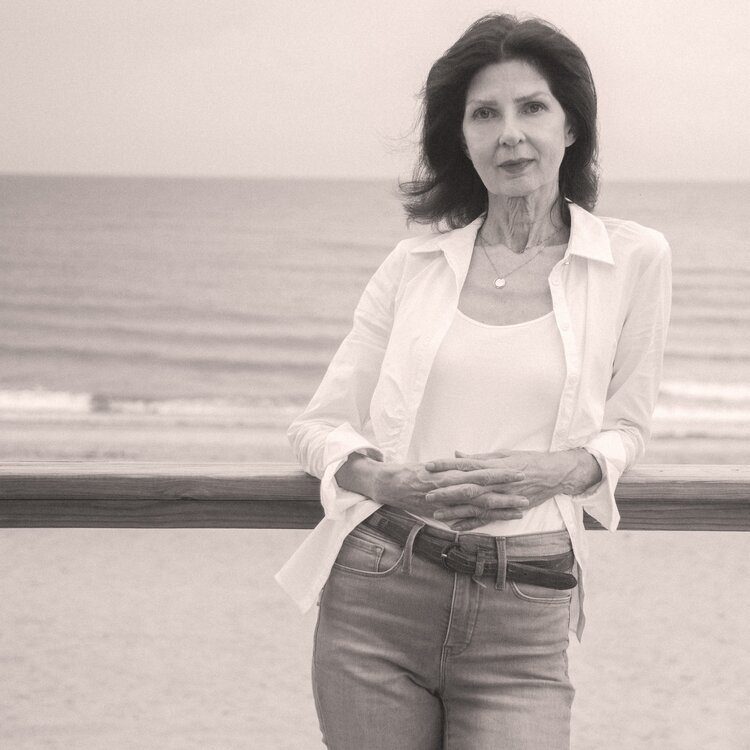
Marleen Pasch
Over on Intima’s blog, Crossroads, writer Marleen Pasch, compared themes in “Another Game Day” with a newly-published essay of her own, “Rocks and River.”
Pasch (on right) said, “O’Brien understands the need to assess risk then listen to and heed the more protective voice of wisdom.”
A few years into my life with multiple sclerosis, I started noticing that food and beverages tasted … off.
Coffee was bitter. Wine was acidic. Sweet food was bland. And, worst of all, I couldn’t taste salt very well.
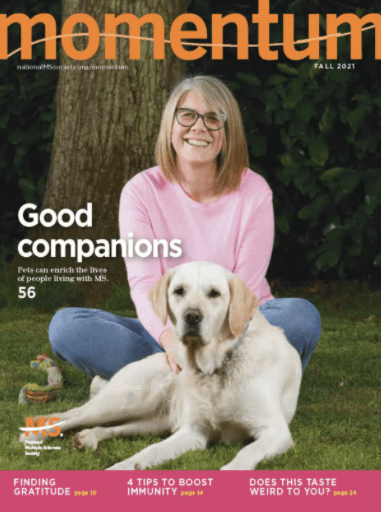
The folks at the National Multiple Sclerosis Society’s Momentum Magazine interviewed me for a story about taste dysfunction called, “Does this taste weird to you?”
The article starts by featuring yours truly:
As a salt-lover, Meredith O’Brien used to eat Ritz crackers upside down to savor the salt crystals dissolving on her tongue. But one day, two years into her diagnosis of multiple sclerosis, those same crackers tasted like plain paste. The next morning, her coffee tasted burnt. Red wine at dinner tasted sour. When O’Brien, who is based in the Boston area, brought up the issue to her neurologist, he said he’d never heard of such a thing.
“Taste alterations are a primary MS symptom that has flown largely under the radar,” confirms Mona Bostick, a dietitian-nutritionist in Greensboro, North Carolina, who also lives with MS. A 2016 study in the Journal of Neurology suggested that 15% to 32% of people with MS may experience taste deficits. A 2019 study in the Journal of Community Dentistry and Oral Epidemiology puts that number closer to 40%. The latter study also found that 68.4% of survey respondents complained of dry mouth, which further dampens flavor, as saliva helps taste buds do their job.
Read the rest of the article — which also quotes fellow MS patient and author Trevis Gleason, a chef who shares his “umami bomb” tips — here.
I was honored to be invited to serve as a fellow for the Disability Justice Project. As part of my work with the group, I’ll serve as a mentor to a journalist as she works on journalistic projects.
The Disability Justice Project (DJP) is a strategic partnership between the Disability Rights Fund, an international NGO funding grassroots organizations of persons with disabilities (OPDs) in the Global South, and journalism educator and human rights filmmaker Jody Santos and other nationally recognized media makers from Northeastern University’s School of Journalism in Boston, Massachusetts. Based on a fellowship model, newer professionals with lived experience of disability from the Global South are paired with mentors/professional journalists in the U.S. In an exchange of ideas and experiences, the fellows learn about digital storytelling from some of the best in the industry, while the mentors learn about the global disability justice movement from frontline activists – with the goal of incorporating that new understanding into their reporting for publications like The New York Times and The Guardian or for broadcasters like PBS and ABC.
The group recently ran a feature story about me as I’m writer and journalism faculty member who has a disability (multiple sclerosis). The article entitled, “Meet DJP Mentor Meredith O’Brien,” began:
Disability Justice Project mentor Meredith O’Brien has always loved reading and writing. “As a kid, I was often reading and trying my hand at writing little stories,” she says. “I’d find notebooks around the house and just start writing stories in them.”
Since the COVID pandemic essentially shut down the world in early 2020, I haven’t really had the opportunity to speak in front of actual, live people about my medical memoir, Uncomfortably Numb, or about the fact that I have multiple sclerosis. Other than one event to launch the book in March 2020, all my other events have been virtual, and, given the circumstances, that’s entirely reasonable.
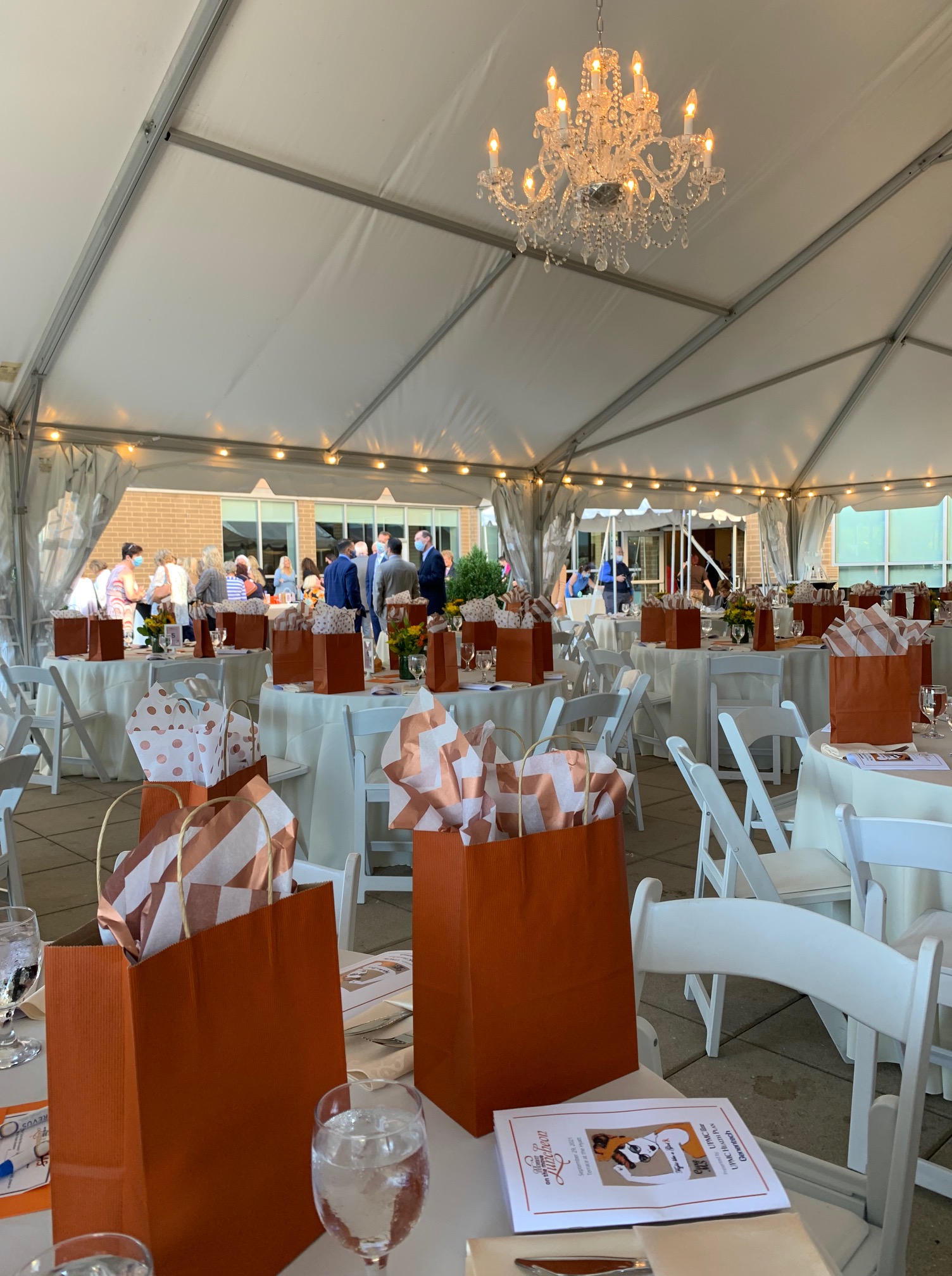
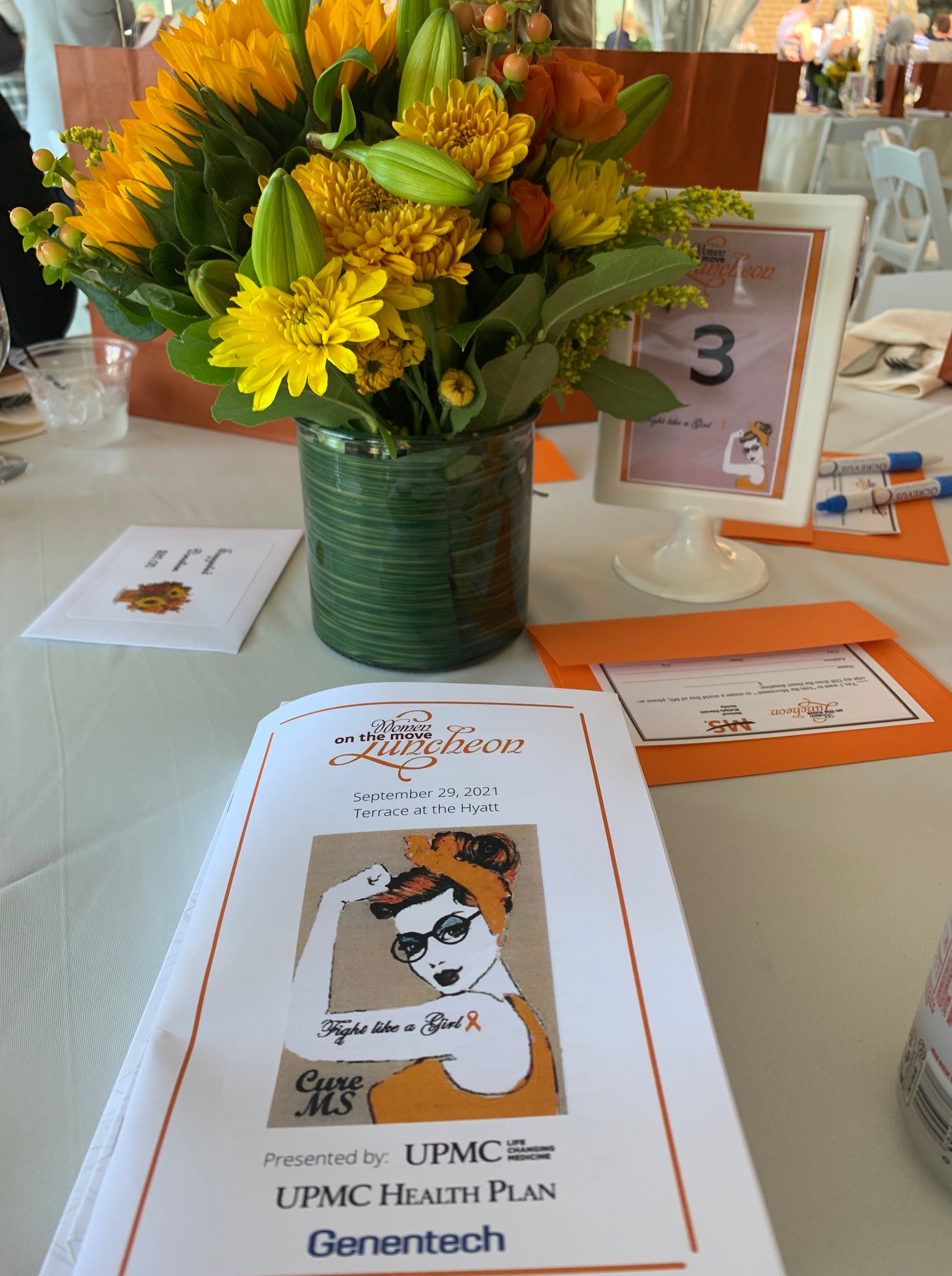
Then the Pennsylvania Keystone Chapter of the National Multiple Sclerosis Society invited me to speak at their annual Woman on the Move luncheon for Sept. 29, 2021. The event would occur after we’d had our COVID vaccines. The event would be outdoors. And when not sitting at the tables or speaking at the podium, most folks would wear face masks.
Now that the event has concluded (and I can breathe again … I was low-key terrified about speaking to tell you the truth), I’m experiencing a rush of joy at having been able to not just share my MS experience with others, but about seeing and speaking with fellow MS patients. It’s like a fellowship of sorts, a collection of people who just get it, who understand the unpredictable and chronic nature of the disease, who understand heat sensistivity and what it’s like when you hit a wall of fatigue.
For instance, I spoke with a Pennsylvania man who, despite having MS, has run four marathons, including the Boston Marathon. After my speech — in which I mentioned I have MS-induced heat sensitivity — he wanted to show me photos of how he was able to regulate his temperature while running the marathon (sleeves and a baseball hat filled with ice that would be replenished at different stops along the marathon route).
Several people shared that they, like me, were initially disbelieved or dismissed when they sought medical help for what they feared was multiple sclerosis.
Two nurses who work with MS patients were bursting with pride about their vocation, while someone who does physical therapy with MS patients slipped me her business card and told me she’d be reaching out to me with some advice.
I even got to speak with CBS affiliate KDKA-2 News Anchor Ken Rice — the event emcee — about journalism and baseball, two of my favorite subjects.
Everything from the orange gift bags on the tables — which included candy Boston baked beans (because I’m from the Boston area) and little notebooks (because I’m a writer) — to the authentic warmth everyone exuded, it became shockingly clear to me why so many of us have deeply and vicerally missed being in one another’s presence and why having to understandably be relegated to the safety our COVID bubbles has been painful.
Don’t get me wrong, I’m not running around and partying maskless. I wear my mask outside, indoors (except when eating), and in the classrooms where I teach. (I’m one of the few folks who even wear them to baseball games.) I’ll get a booster shot as soon as I am able. But being with people today at this Women on the Move luncheon made me realize, man, have I missed people!







 Meredith OBrien