uncomfortably numb 2: ‘amazing resource’

MS Activist and Influencer Jodi Dwyer said the new multiple sclerosis anthology Uncomfortably Numb 2 would’ve been “an amazing resource” had she had it in her hands when she was first diagnosed.

That was the goal of this sequel to my MS memoir. It was to create a guide that I wish I’d had when I received my own diagnosis in 2014. Comprised of stories from patients with varying stages of MS, Uncomfortably Numb 2 includes stories from a woman who was diagnosed as a teen and a neurologist who treats adult and pediatric MS patients.

lobbying for ms-related causes on capitol hill

It’s been hectic here in my neck of the woods. Between promoting my new novel Louie on the Rocks, prepping the May 6 release of Uncomfortably Numb 2: An Anthology for Newly-Diagnosed MS Patients, and teaching two journalism courses, I’ve also been doing volunteer work for the National MS Society.

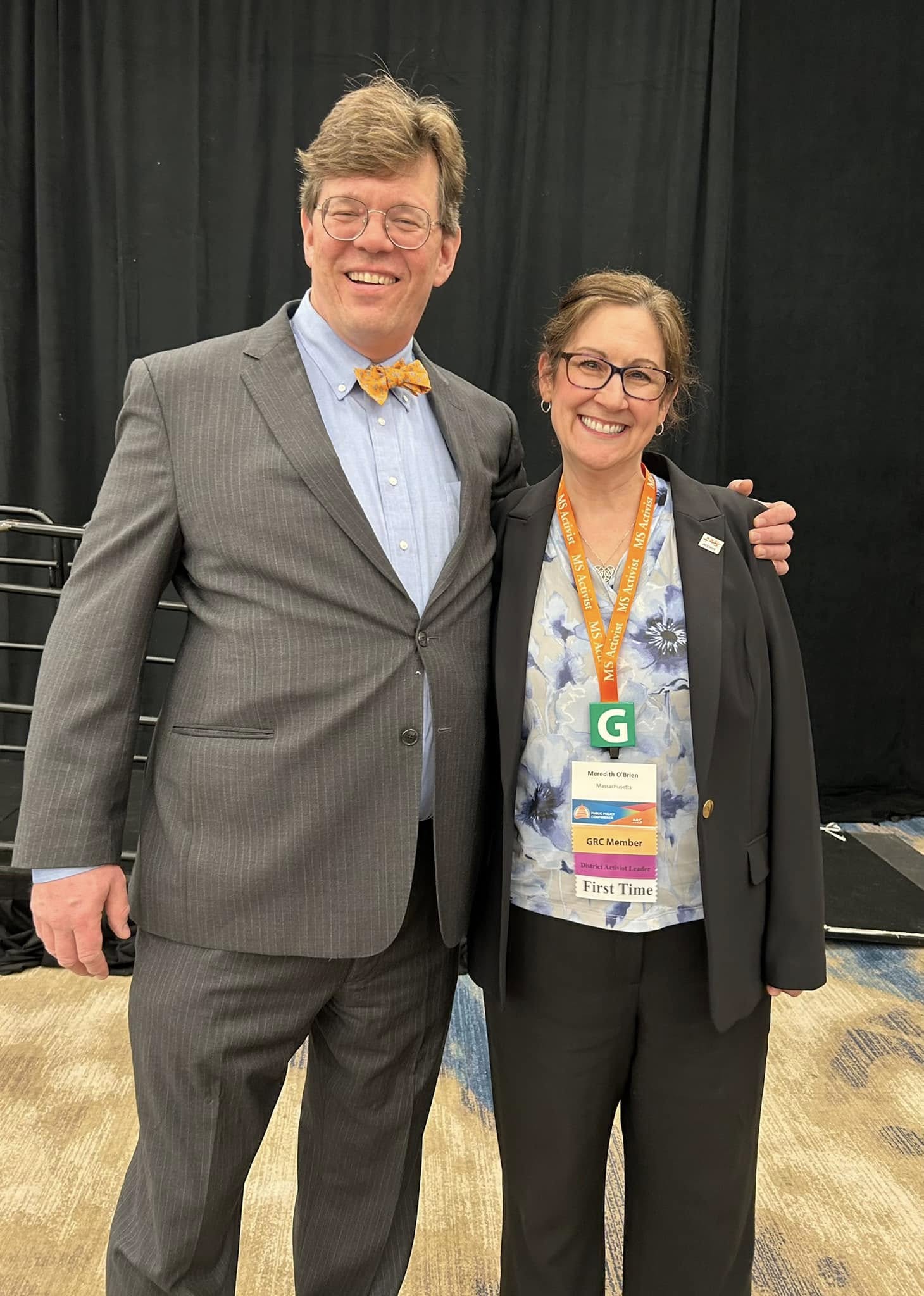
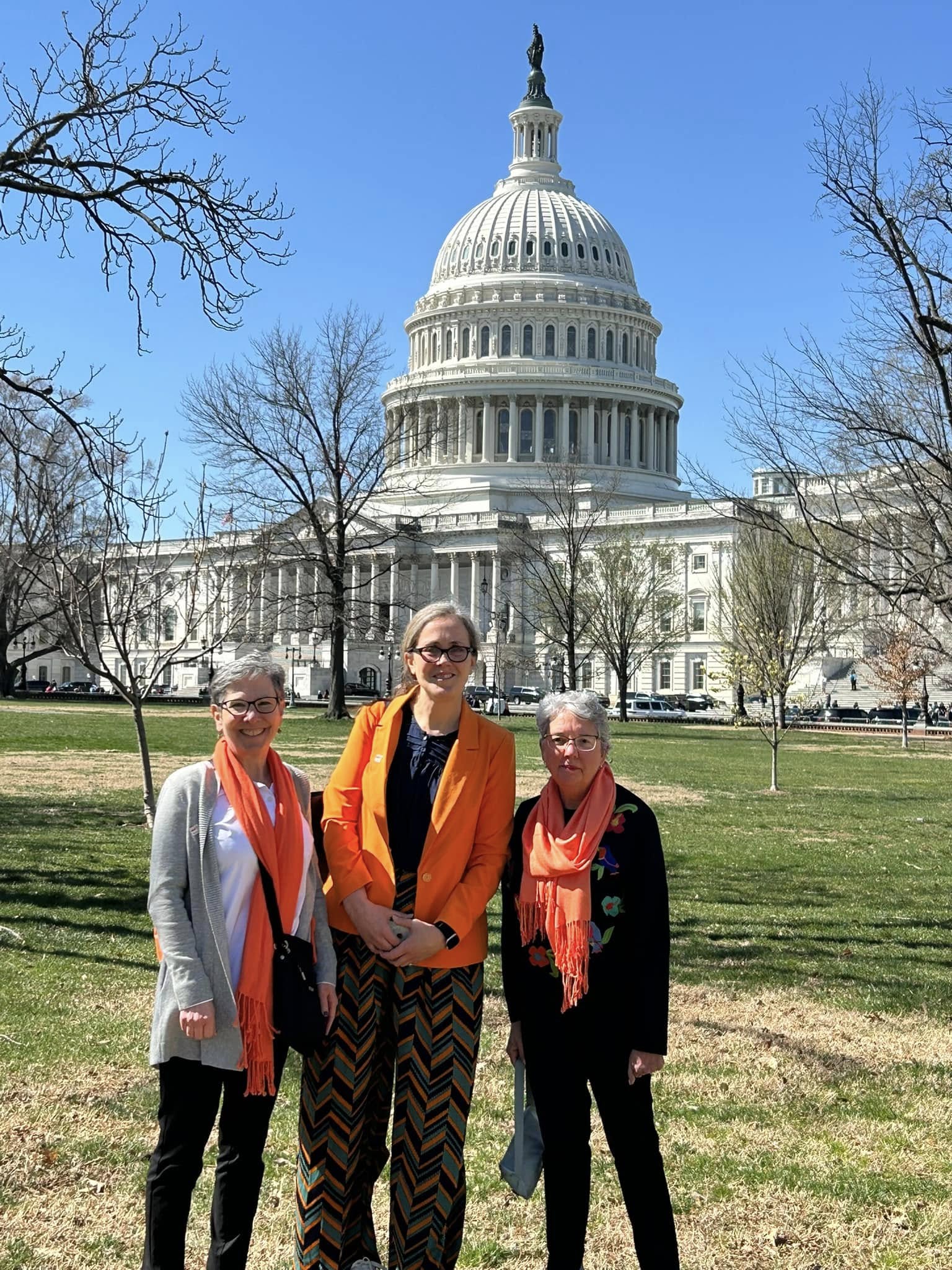
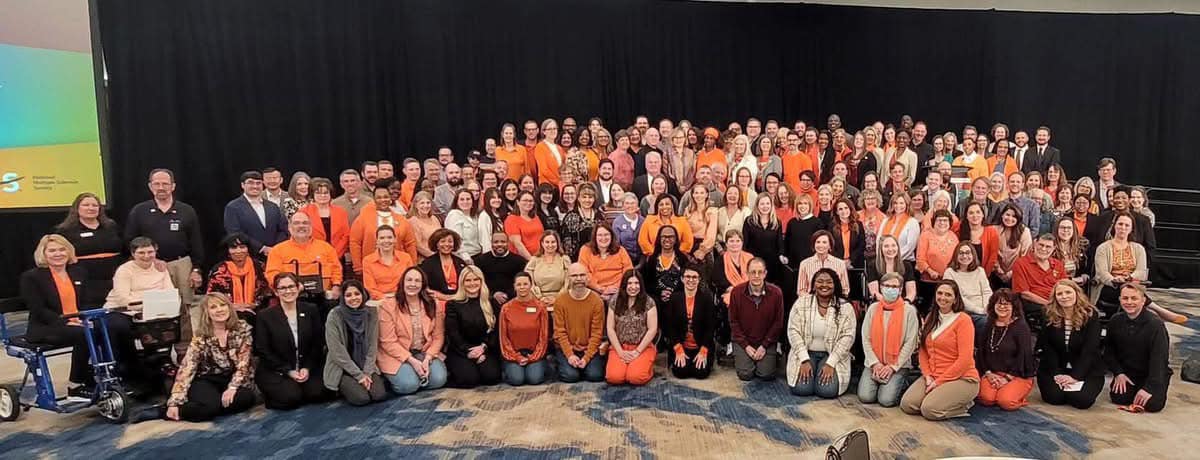
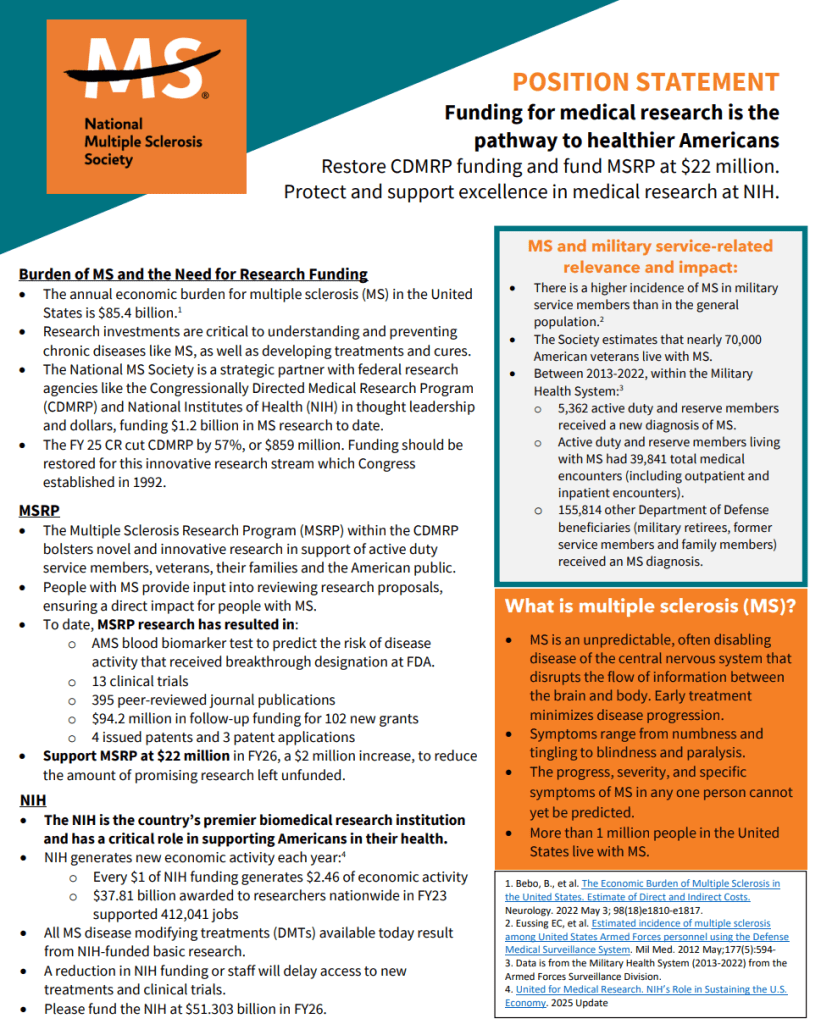
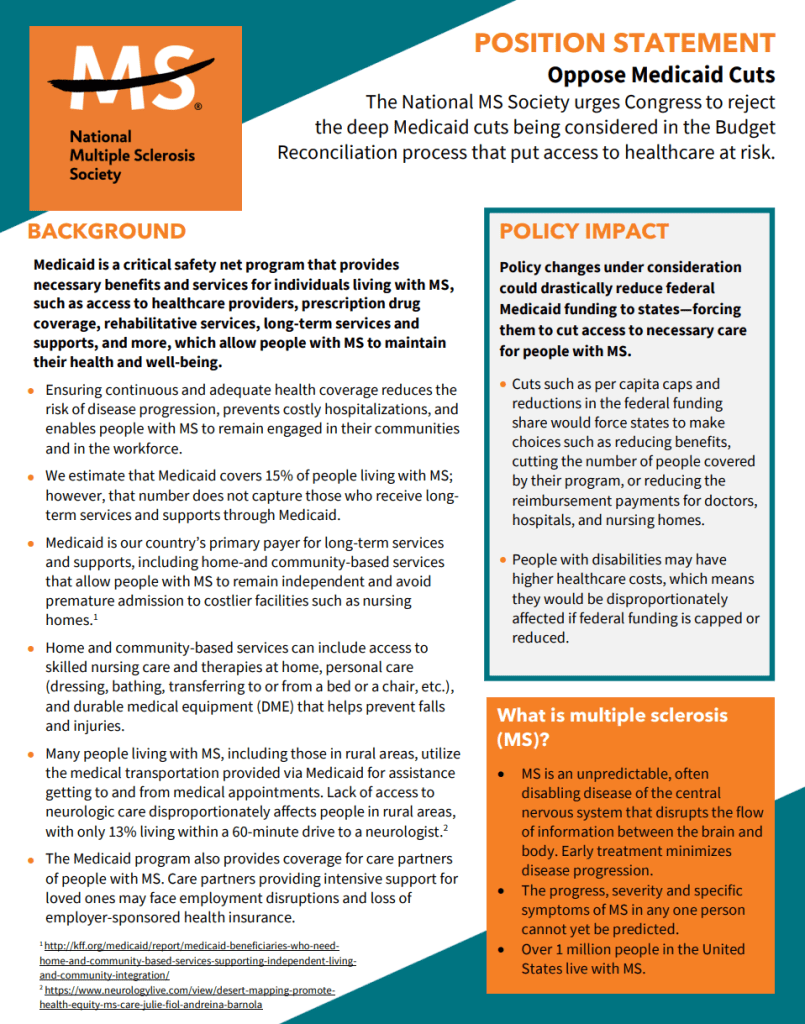
In March 2025, I attended the Society’s three-day Public Policy Conference in Washington, D.C. which culminated with visits to Capitol Hill to discuss with our members of Congress two issues: the restoration of funds for Congressionally-Directed Medical Research for Multiple Sclerosis (MSMR) and requesting that our elected officials reject deep cuts to Medicaid on which over 15 percent of MS patients rely.

It was a fraught and contentious atmosphere in which to be visiting the Hill. A few of our volunteer MS Activists — many of whom have MS themselves — reported being met with disrespectful staffers, including one who complained that he was “tired of all the lies” when it came to their Medicaid pitch.

During the training portion of our conference, MS Society volunteers heard from Evan Conant, a full-time employed husband whose wife has severe MS to the point where she needs round-the-clock care in their home. They have private health insurance through his work, but were shelling out over $70,000 annually for her care, which he said was financially unsustainable. They learned of a Medicaid waiver program which enables people who demonstrate tremendous need to be able to pay monthly premiums (if your state allows it) in order to get assistance with medical costs. In Conant’s case, after three years of rigorous vetting, he said his family was allowed to buy into the program to provide four hours of health aide coverage so he could continue working and his wife was safe in their home. This is the kind of story that was met with disregard for some folks (as examples of “waste, fraud, and abuse in the system”), whereas, historically, MS Activists have said, they’ve been warmly welcomed by lawmakers because multiple sclerosis issues, and the MS Society as a whole, are nonpartisan.

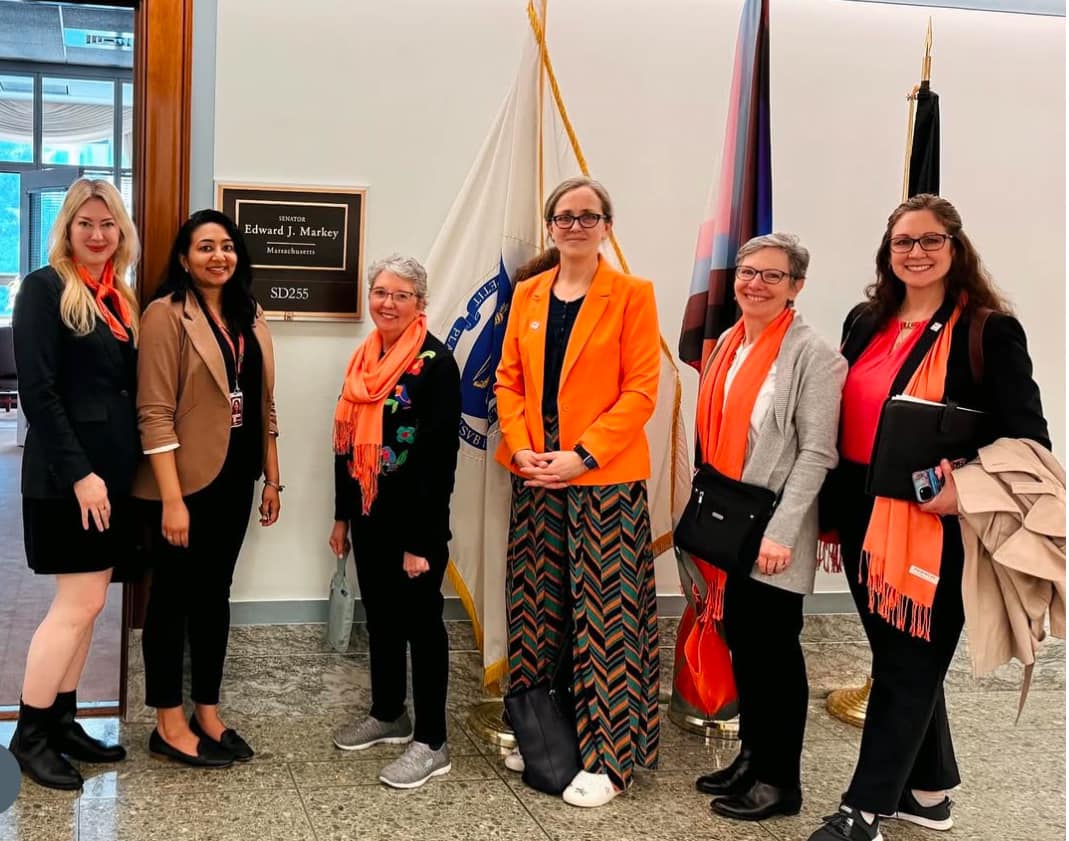
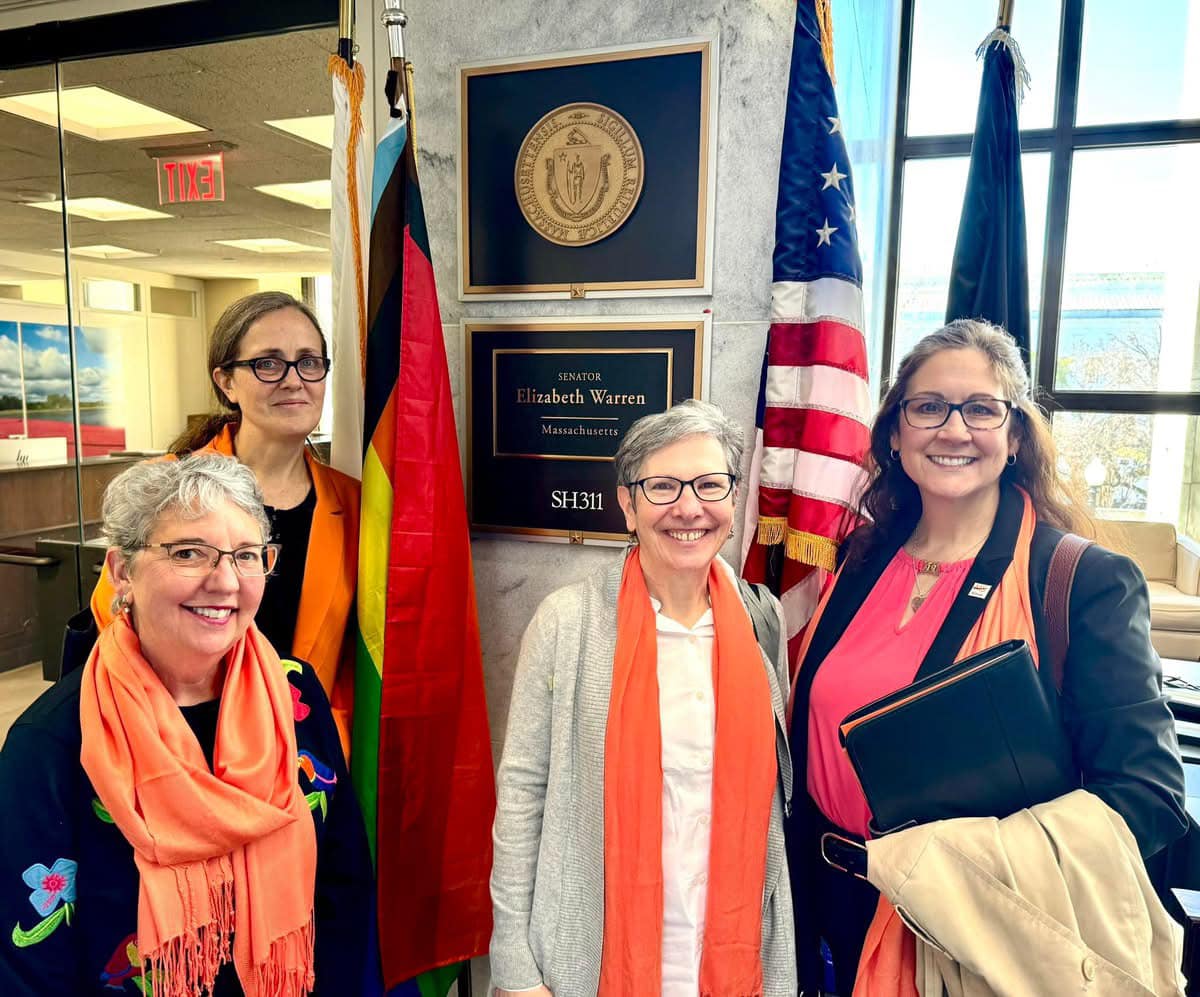
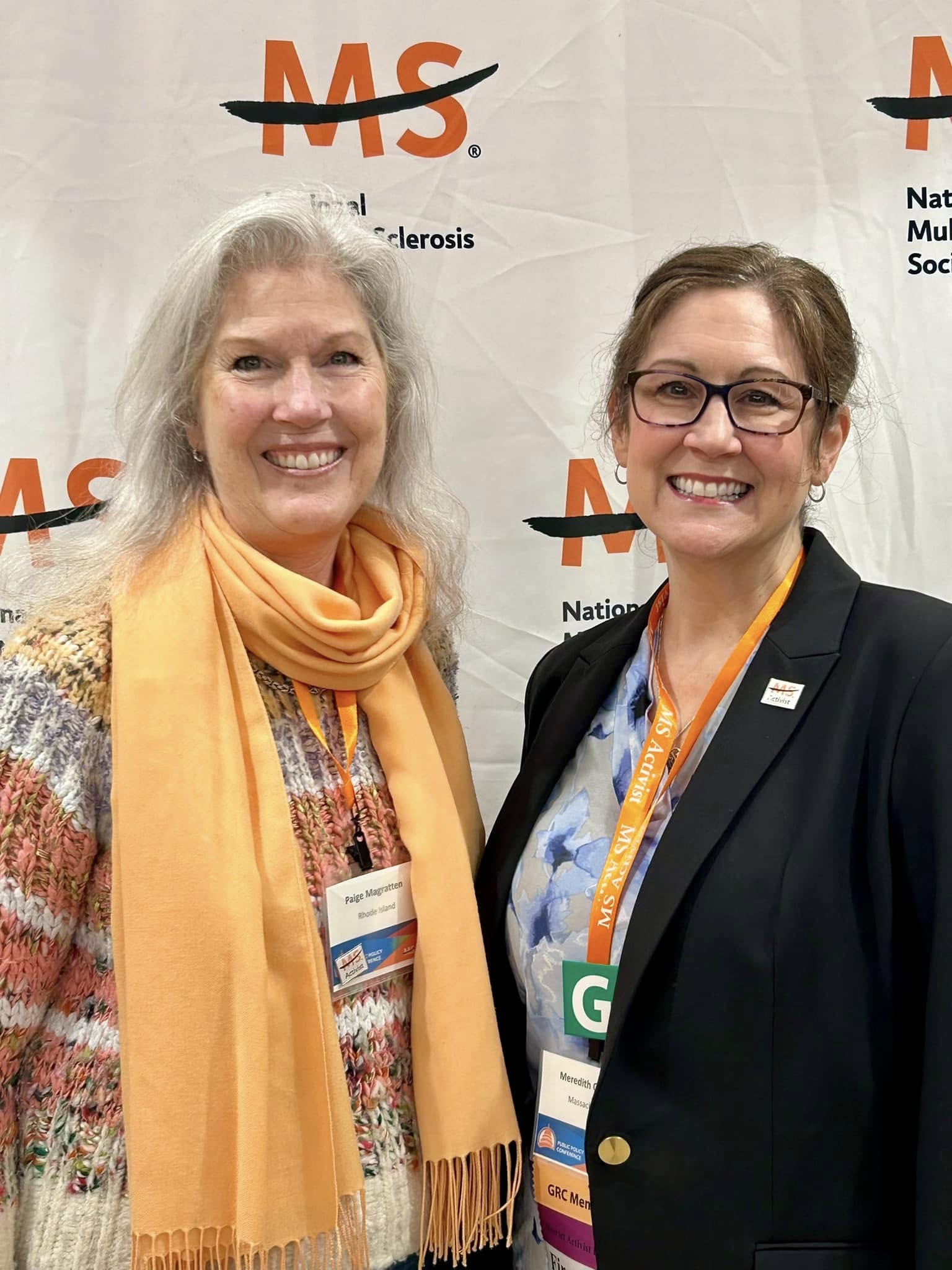
However my Massachusetts crew (pictured in the photos above), was fortunate in that all of our meetings — with US Senator Elizabeth Warren and Ed Markey’s staffers, as well as with congressional staffers from our various districts — went well. Staffers were uniformly understanding and kind, even if some were palpably stressed by what’s currently transpiring in Washington, D.C.

Will volunteer MS patients speaking up for MS research help? I know that without prior medical research into possible MS treatments, the medicines upon which I rely to cope with my MS symptoms and to prevent more spinal and brain lesions from forming would likely have NOT been developed. My life could look much different. Who knows if I’d be working, or writing, or volunteering. And for working folks whose MS is severe and requires services they can’t afford, sharing their stories with people who control the funding mechanisms of government, could, perhaps move a person or two. Sometimes, that’s all you need.

Advocating for policies and laws needed by those with chronic illnesses, like MS, is a subject I cover in my forthcoming book, Uncomfortably Numb 2 (available for pre-order). This is a relatively recent (since 2022) endeavor for me, this advocating business, but it’s left me feeling as though, even though I can’t control my what ultimately happens with my MS, I can use my voice to try to make the world a bit better for people with chronic illnesses. It also makes me feel less alone in the fight. We’re stronger, the saying goes, when we fight together.

two new books in 2025

While I’ve already announced the upcoming February release of my second novel — Louie on the Rocks, a dark comedy set in central Massachusetts about a dysfunctional family influenced by Trump era politics, circa 2019 — I can now proudly announce my second 2025 book.

Uncomfortably Numb 2: An Anthology for Newly-Diagnosed MS Patients is slated for publication in May 2025 by Wyatt-MacKenzie, which published my 2020 medical memoir, Uncomfortably Numb, about the life-altering impact of my MS diagnosis.

This nonfiction book will feature the stories of MS patients at varying stages of the incurable autoimmune disease of the brain and spinal cord, and of MS advocates who work to better the world for multiple sclerosis patients. Additionally, I share new stories about how I have morphed from being a stunned, newly-diagnosed patient to an MS Activist who lobbies state and federal lawmakers on behalf of the National Multiple Sclerosis Society.

It’ll be quite the tonal shift to move from promoting a dark comedy about an alcoholic MAGA dad squaring off against his progressive, bookseller daughter just weeks after the presidential inauguration, to discussing the experiences of MS patients. I hope you’ll join me on what promises to be one bizarre ride.

umass journalism hosts memoirists

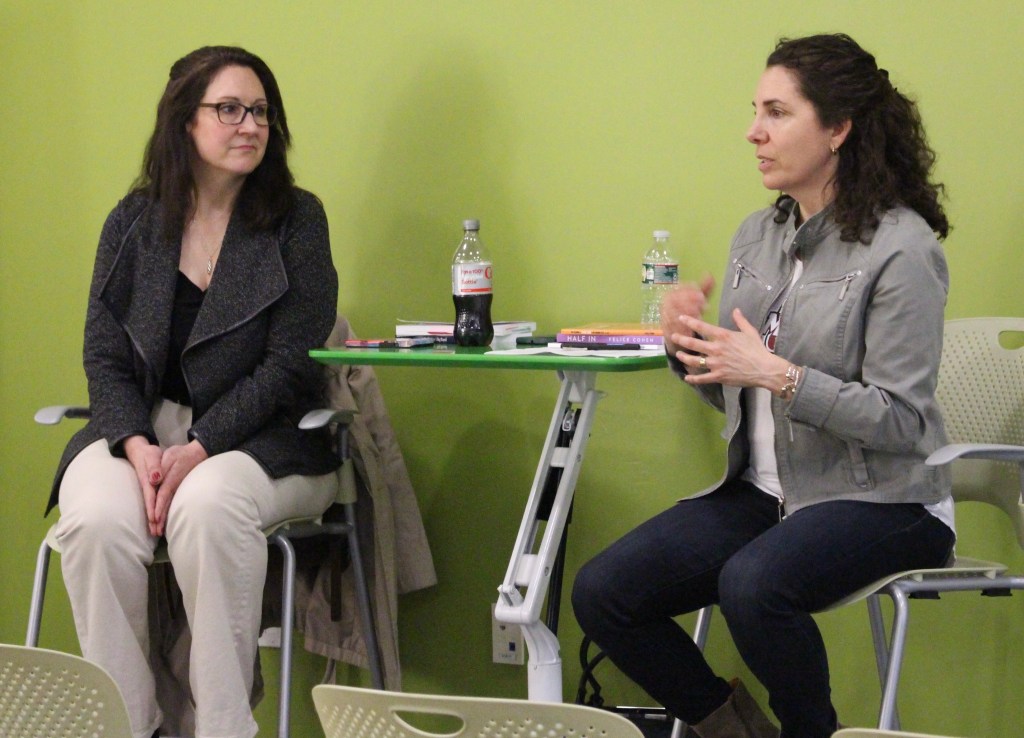
The UMass Journalism Department graciously invited my former UMass/Massachusetts Daily Collegian pal, the award-winning writer Felice Cohen, and me to talk about our experiences writing memoir.

In late April, Felice told attendees that her family read early drafts of her UMass-based memoir, Half In which reveals her 1990s love affair with a much older woman — and said they were supportive of her relating the truth of her experience. She said she heavily relied on the journals she kept during that time to refresh her memory about specific events and conversations, which, in the book, are very detailed. Felice is currently working on what she called a “reverse memoir” using letters she’s received throughout her life.

I, meanwhile, totally put my husband Scott on the spot and asked him what he thought about being portrayed and quoted in my memoir, Uncomfortably Numb, which traces the first several years of my life with multiple sclerosis. His reply? He trusts me (!) to tell my “truth” since I’ve been writing about my life –and, consequently, him — ever since we met when we were undergrads.

It was wild to look around the state-of-the-art Journalism Hub and to later visit the freakishly clean Collegian offices — which, years ago, moved out of its original location in the windowless Campus Center basement. Gone were the days of that smelly, lumpy sofa in the Journalism Department and of messy student newspaper offices with stacks of papers and all manner of wires snaking up the walls and across floors like out-of-control ivy.

Another major difference on the Amherst campus? The dining hall. Not necessarily the halls themselves, but the food within them which is now top notch, a far cry from when the chicken cutlet sandwiches were referred to as “chicken pucks” and the highlight of the week was when fried French toast sticks were on the menu. It’s no wonder why, when I asked my younger son who graduated last year, where we should go out to eat and he said, “The dining hall.”

audiobook for ms memoir on sale through may 31

Audiobooks.com is putting my MS memoir, Uncomfortably Numb, on sale for the month of May.

Narrated by Erin deWard, the audiobook traces the two years it took me to finally get diagnosed with multiple sclerosis (after being told my symptoms were psychosomatic), and then the three years it took me to reach an uneasy peace with the ways in which the incurable, neurological disease changed my life.

If you click on this link, you can listen to a sample of deWard reading my words aloud (something that still feels surreal, someone else giving voice to my experiences).

Image credit: Audiobook.com.

uncomfortably numb’s now an audiobook: get 50% off!

Uncomfortably Numb — my medical memoir about the life-altering impact of a multiple sclerosis diagnosis — has been transformed into an audiobook.

I can’t tell you how odd it is to have this intensely personal story about my health and ultimate MS diagnosis, which occurred months after my 65-year-old mother died from a fast-moving cancer, read aloud by somebody else.

When I was first approached about having the memoir professionally narrated, I was excited but also concerned. How could anyone possibly use the emphasis I intended, the specific tone of voice that was in my head when I wrote those words, I wondered.

Well, in the trusted hands of narrator Erin deWard, I fret no longer.

While the audiobook is available on Amazon, it is also on sale for half price at Audiobooks.com until the end of January.

I’m thrilled to have Uncomfortably Numb now available to those who prefer audible formats. Let me know what you think!

Image credit: Audiobooks.com.

talking memoir writing at bay path university

I recently had the pleasure of participating in the Friends of the Hatch Library author series at Bay Path University in Longmeadow, Mass. — where I teach in the MFA in creative nonfiction program, a program from which I graduated in 2017.

I discussed my medical memoir, Uncomfortably Numb, read an excerpt that took place in Martha’s Vineyard aloud, as well as fielded myriad questions about writing, research, and inspiration.

Thank you Bay Path for inviting me.

pittsburgh’s women on the move luncheon

Since the COVID pandemic essentially shut down the world in early 2020, I haven’t really had the opportunity to speak in front of actual, live people about my medical memoir, Uncomfortably Numb, or about the fact that I have multiple sclerosis. Other than one event to launch the book in March 2020, all my other events have been virtual, and, given the circumstances, that’s entirely reasonable.

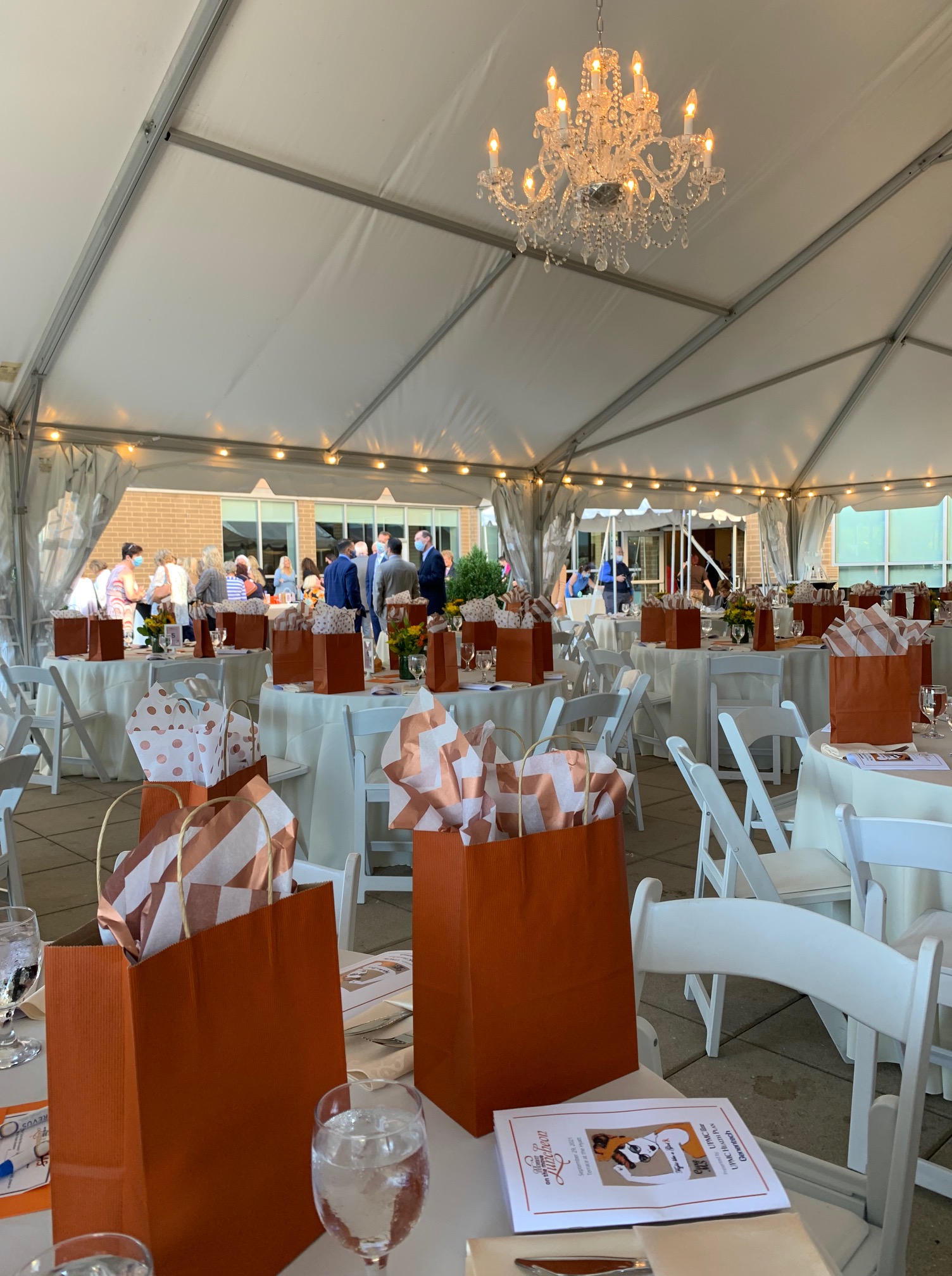
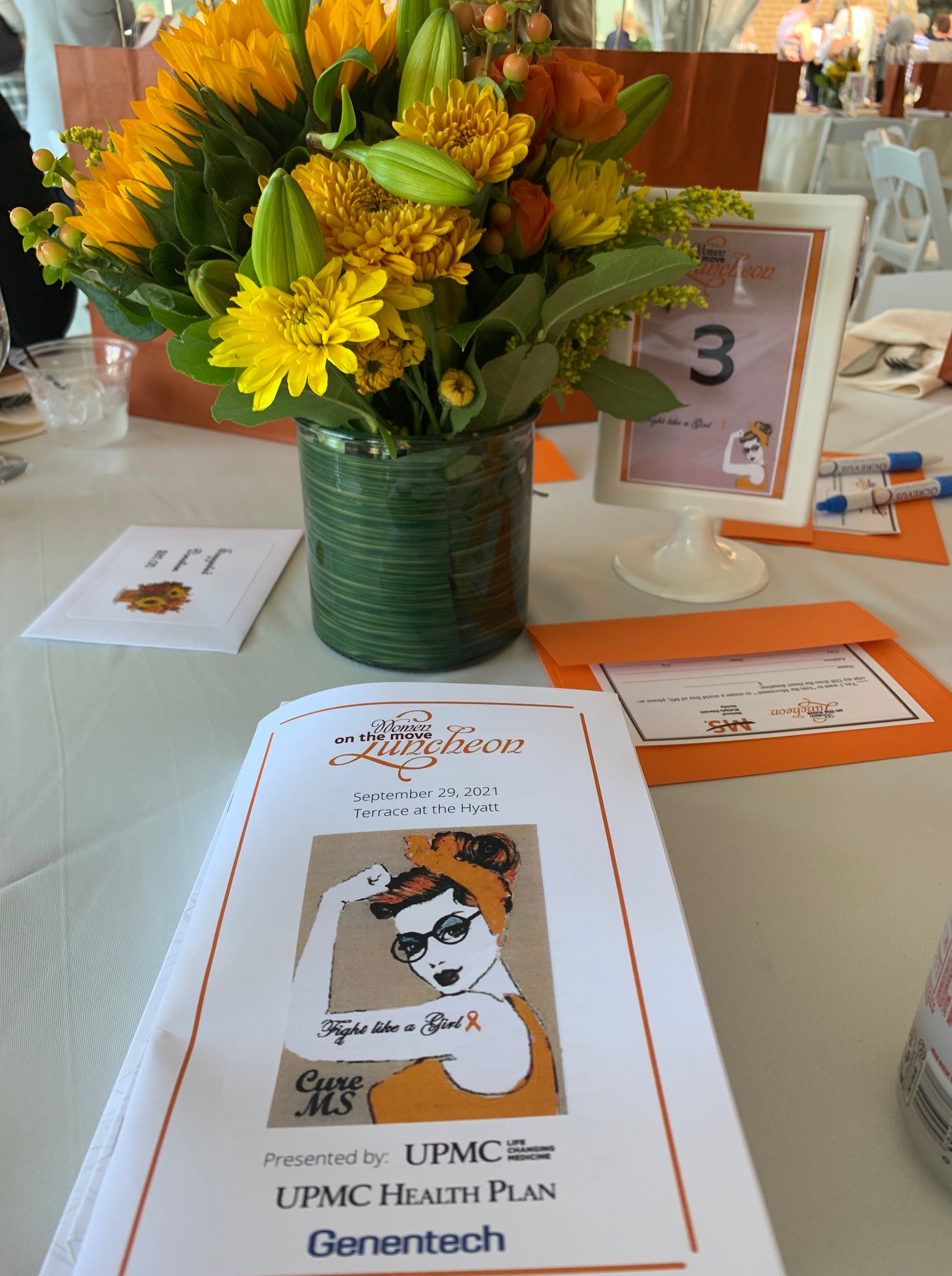
Then the Pennsylvania Keystone Chapter of the National Multiple Sclerosis Society invited me to speak at their annual Woman on the Move luncheon for Sept. 29, 2021. The event would occur after we’d had our COVID vaccines. The event would be outdoors. And when not sitting at the tables or speaking at the podium, most folks would wear face masks.

Now that the event has concluded (and I can breathe again … I was low-key terrified about speaking to tell you the truth), I’m experiencing a rush of joy at having been able to not just share my MS experience with others, but about seeing and speaking with fellow MS patients. It’s like a fellowship of sorts, a collection of people who just get it, who understand the unpredictable and chronic nature of the disease, who understand heat sensistivity and what it’s like when you hit a wall of fatigue.

For instance, I spoke with a Pennsylvania man who, despite having MS, has run four marathons, including the Boston Marathon. After my speech — in which I mentioned I have MS-induced heat sensitivity — he wanted to show me photos of how he was able to regulate his temperature while running the marathon (sleeves and a baseball hat filled with ice that would be replenished at different stops along the marathon route).

Several people shared that they, like me, were initially disbelieved or dismissed when they sought medical help for what they feared was multiple sclerosis.

Two nurses who work with MS patients were bursting with pride about their vocation, while someone who does physical therapy with MS patients slipped me her business card and told me she’d be reaching out to me with some advice.

I even got to speak with CBS affiliate KDKA-2 News Anchor Ken Rice — the event emcee — about journalism and baseball, two of my favorite subjects.

Everything from the orange gift bags on the tables — which included candy Boston baked beans (because I’m from the Boston area) and little notebooks (because I’m a writer) — to the authentic warmth everyone exuded, it became shockingly clear to me why so many of us have deeply and vicerally missed being in one another’s presence and why having to understandably be relegated to the safety our COVID bubbles has been painful.

Don’t get me wrong, I’m not running around and partying maskless. I wear my mask outside, indoors (except when eating), and in the classrooms where I teach. (I’m one of the few folks who even wear them to baseball games.) I’ll get a booster shot as soon as I am able. But being with people today at this Women on the Move luncheon made me realize, man, have I missed people!

talking women & health with authors & poets

Author Christina Chiu — who wrote the powerful Beauty (do yourself a favor and read it!) — invited three writers to tackle the topic of women & health, while she also shared candid stories of her own illness, as well as her son’s experiences with food allergies.

Among her guests:

Sandra Beasley, the author of the memoir, Don’t Kill the Birthday Girl: Tales from an Allergic Life, and more recently, Made to Explode: Poems, spoke about her food allergies and how she has embraced her disability as a part of her identity.

Poet Julie E. Bloemeke — whose collection of poems, Slide to Unlock, “investigates how modern technology redirects our erotic and familial lives” — discussed not only how she dealt with depression, but how it and various therapies for it influenced her writing.

I, meanwhile, read aloud a section of my multiple sclerosis-centric memoir Uncomfortably Numb where the neurologist who first examined me — after an MRI showed a lesion on my brainstem — suggested that my symptoms of numbness were likely “psychosomatic.”

I hope the discussion helps give people with illnesses and/or disabilities some sense that they are not alone.

why did i wait so long to join a support group?

My latest post for the National Multiple Sclerosis Society’s publication, Momentum Magazine, describes my initial reluctance — fueled by fear — to join an MS support group. But after attending several online support groups to promote my medical memoir, Uncomfortably Numb, I realized I was missing out.

Here’s how the piece begins:

I was diagnosed with relapsing-remitting multiple sclerosis in July 2014. Upon receiving my diagnosis, I reached out to the National MS Society for information. Included in the materials I received were contact details for MS support groups in my area. But despite the fact that I was perfectly able to attend a support group, I resisted.

Why?

I was petrified to sit, face-to-face, with my potential future.

Read the whole piece here.