lobbying for ms-related causes on capitol hill

It’s been hectic here in my neck of the woods. Between promoting my new novel Louie on the Rocks, prepping the May 6 release of Uncomfortably Numb 2: An Anthology for Newly-Diagnosed MS Patients, and teaching two journalism courses, I’ve also been doing volunteer work for the National MS Society.

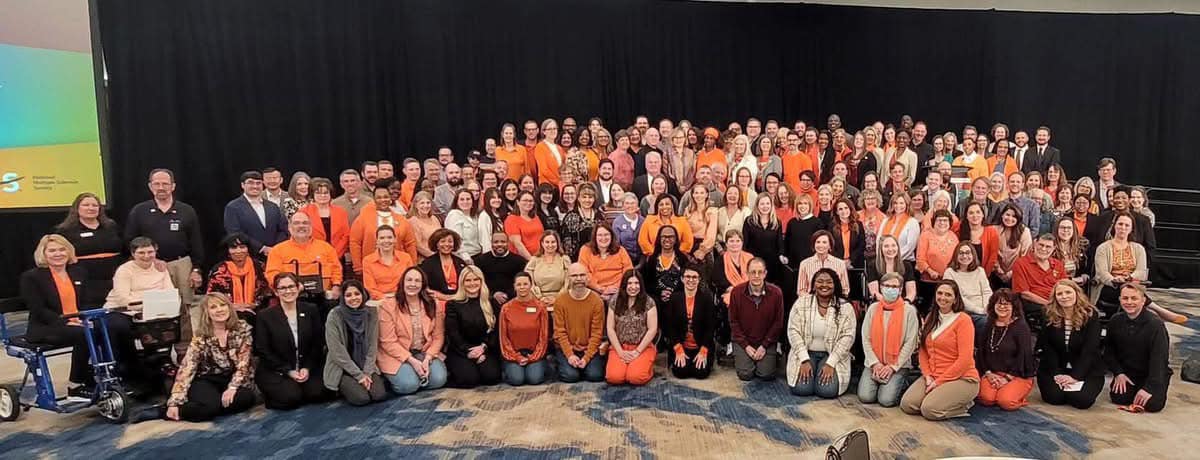
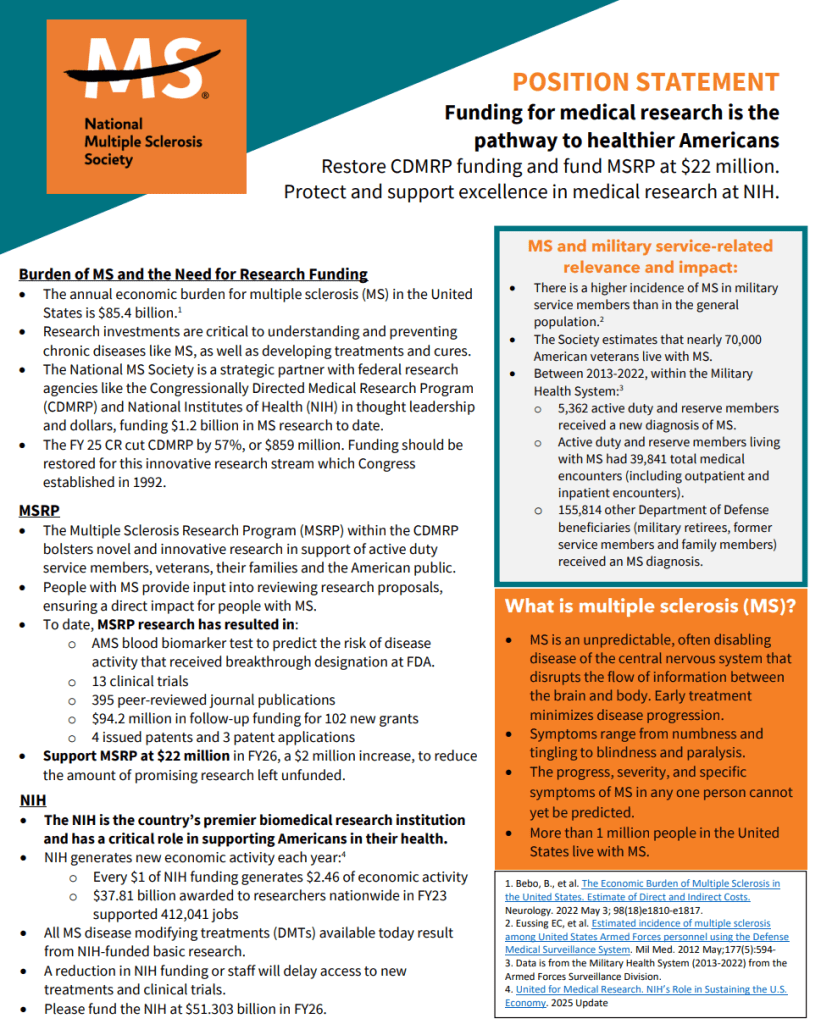
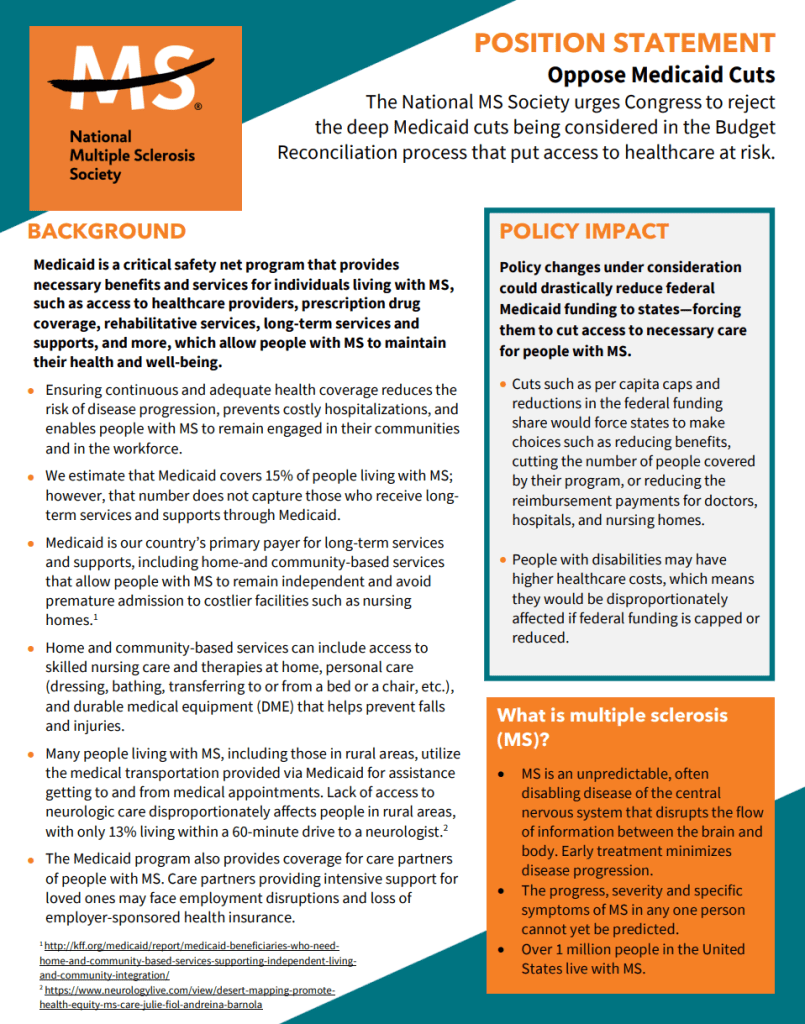
In March 2025, I attended the Society’s three-day Public Policy Conference in Washington, D.C. which culminated with visits to Capitol Hill to discuss with our members of Congress two issues: the restoration of funds for Congressionally-Directed Medical Research for Multiple Sclerosis (MSMR) and requesting that our elected officials reject deep cuts to Medicaid on which over 15 percent of MS patients rely.
It was a fraught and contentious atmosphere in which to be visiting the Hill. A few of our volunteer MS Activists — many of whom have MS themselves — reported being met with disrespectful staffers, including one who complained that he was “tired of all the lies” when it came to their Medicaid pitch.

During the training portion of our conference, MS Society volunteers heard from Evan Conant, a full-time employed husband whose wife has severe MS to the point where she needs round-the-clock care in their home. They have private health insurance through his work, but were shelling out over $70,000 annually for her care, which he said was financially unsustainable. They learned of a Medicaid waiver program which enables people who demonstrate tremendous need to be able to pay monthly premiums (if your state allows it) in order to get assistance with medical costs. In Conant’s case, after three years of rigorous vetting, he said his family was allowed to buy into the program to provide four hours of health aide coverage so he could continue working and his wife was safe in their home. This is the kind of story that was met with disregard for some folks (as examples of “waste, fraud, and abuse in the system”), whereas, historically, MS Activists have said, they’ve been warmly welcomed by lawmakers because multiple sclerosis issues, and the MS Society as a whole, are nonpartisan.
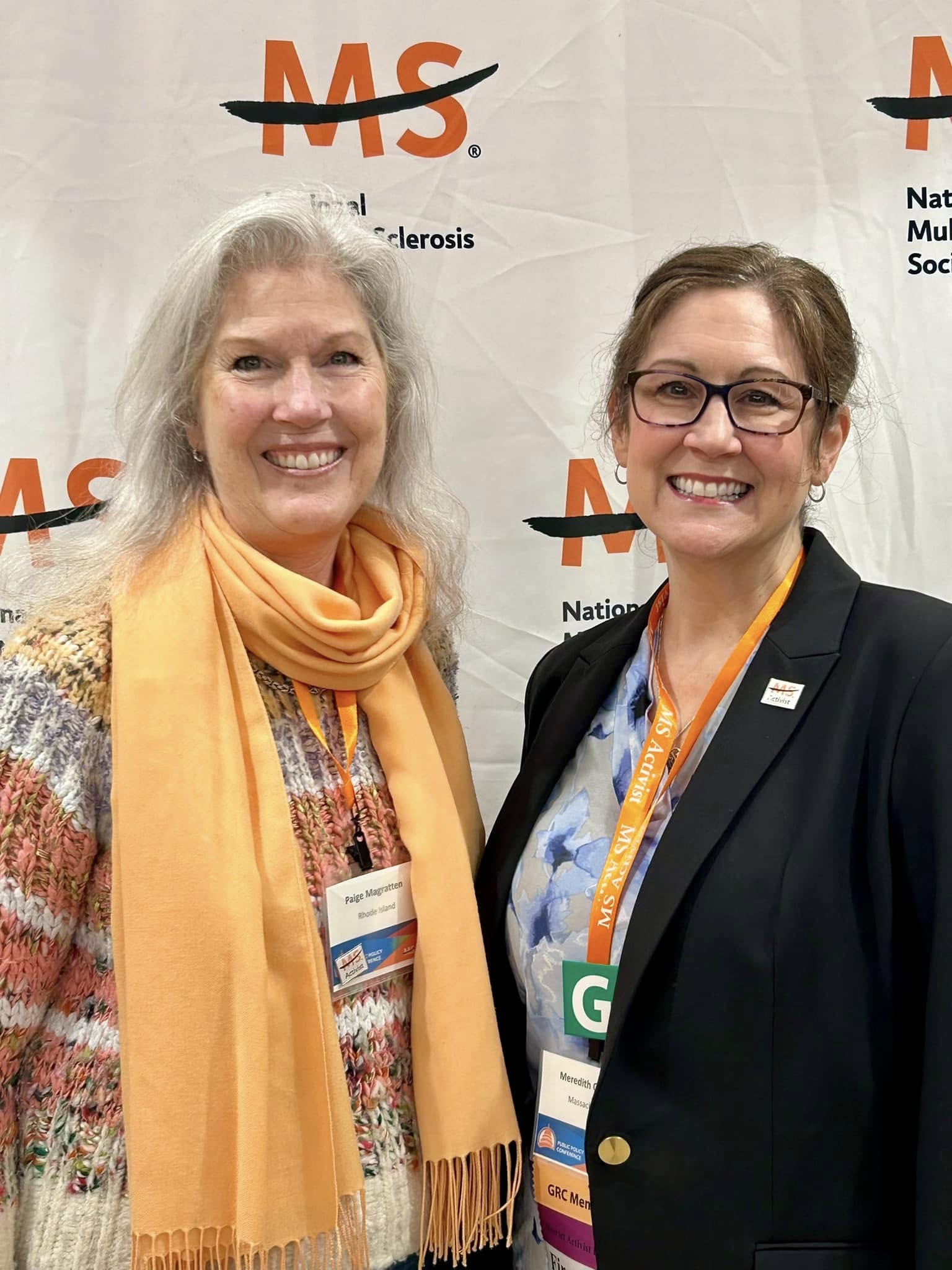
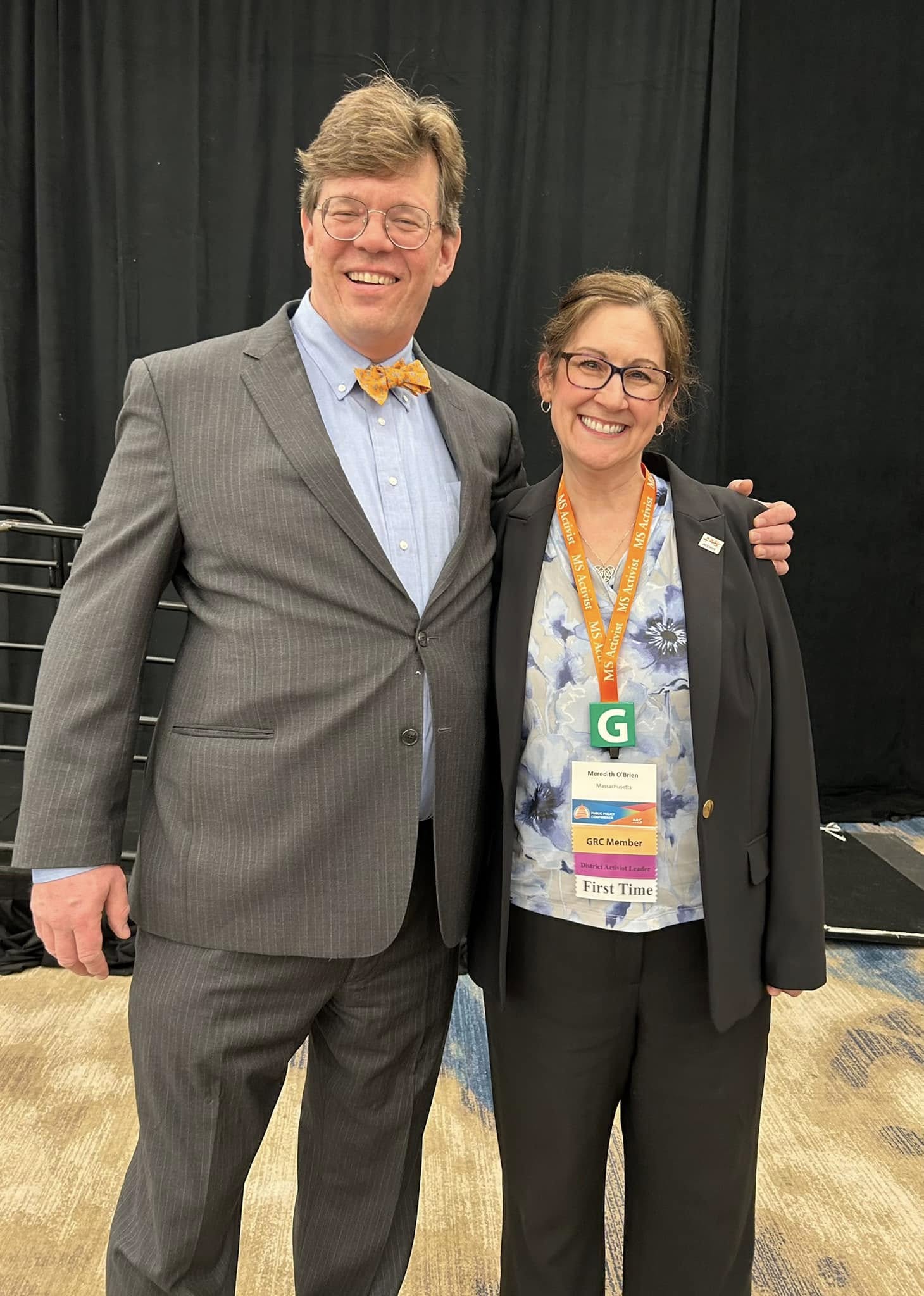
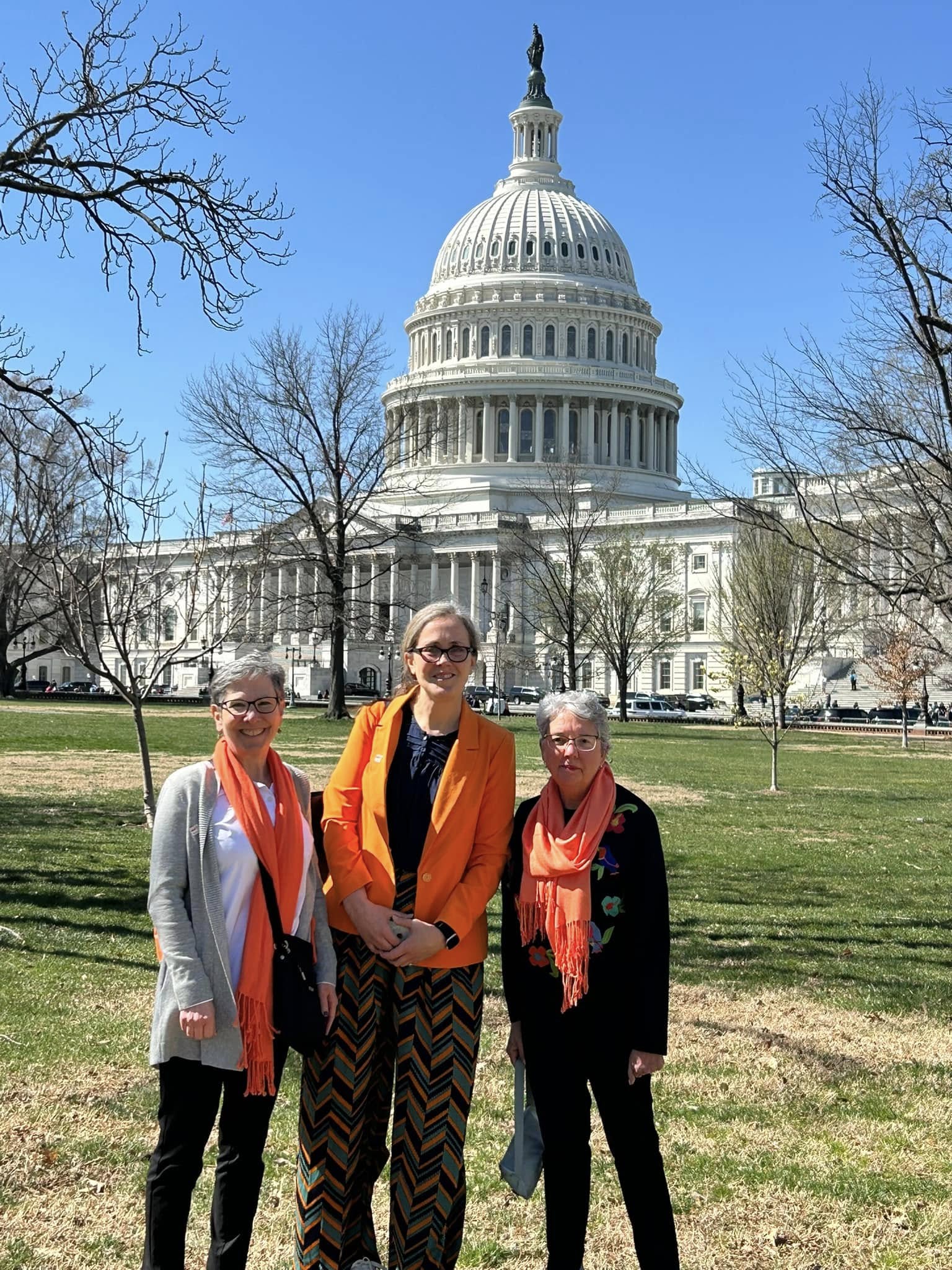
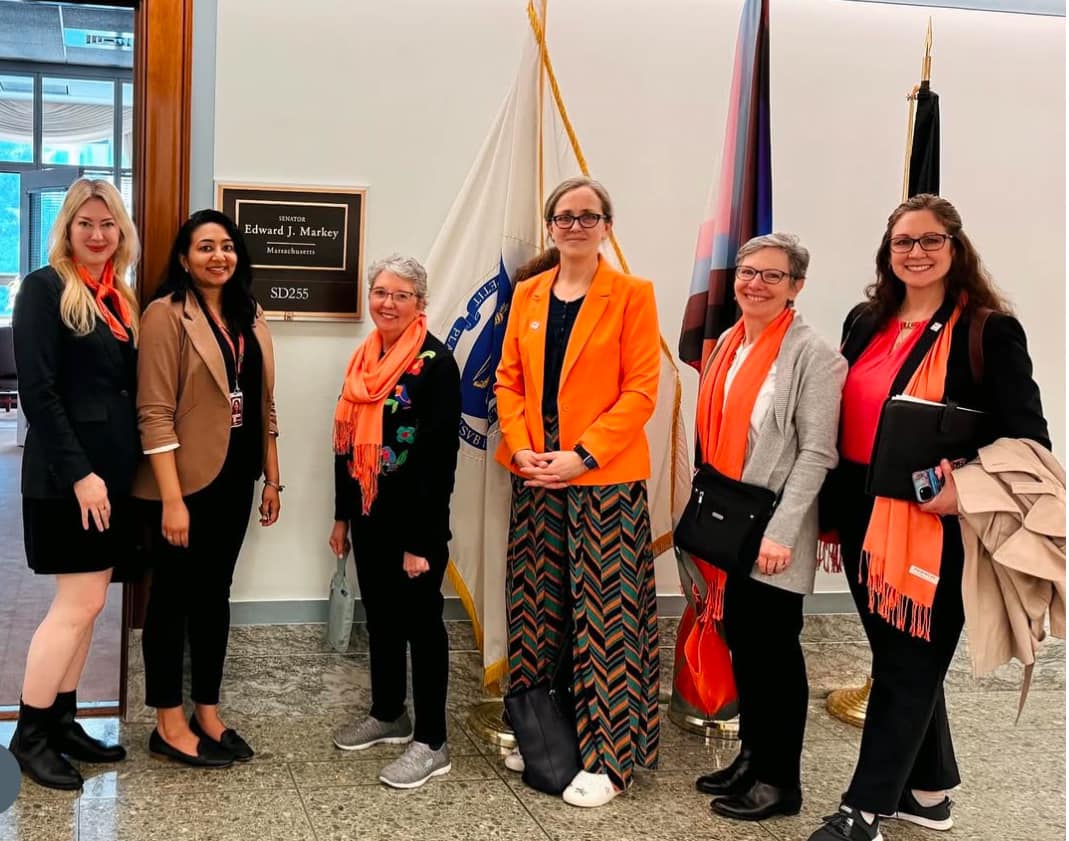
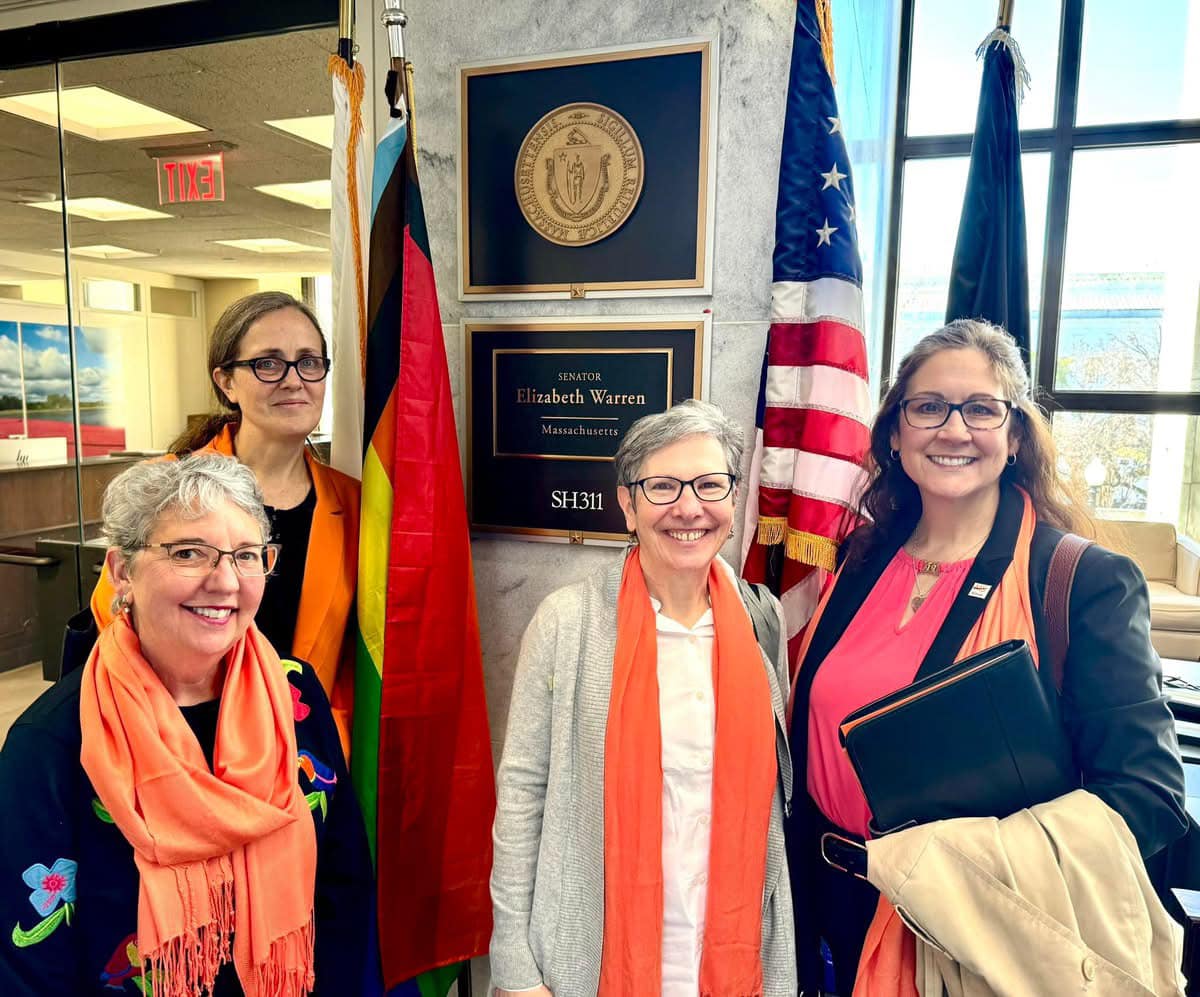
However my Massachusetts crew (pictured in the photos above), was fortunate in that all of our meetings — with US Senator Elizabeth Warren and Ed Markey’s staffers, as well as with congressional staffers from our various districts — went well. Staffers were uniformly understanding and kind, even if some were palpably stressed by what’s currently transpiring in Washington, D.C.

Will volunteer MS patients speaking up for MS research help? I know that without prior medical research into possible MS treatments, the medicines upon which I rely to cope with my MS symptoms and to prevent more spinal and brain lesions from forming would likely have NOT been developed. My life could look much different. Who knows if I’d be working, or writing, or volunteering. And for working folks whose MS is severe and requires services they can’t afford, sharing their stories with people who control the funding mechanisms of government, could, perhaps move a person or two. Sometimes, that’s all you need.

Advocating for policies and laws needed by those with chronic illnesses, like MS, is a subject I cover in my forthcoming book, Uncomfortably Numb 2 (available for pre-order). This is a relatively recent (since 2022) endeavor for me, this advocating business, but it’s left me feeling as though, even though I can’t control my what ultimately happens with my MS, I can use my voice to try to make the world a bit better for people with chronic illnesses. It also makes me feel less alone in the fight. We’re stronger, the saying goes, when we fight together.
when multiple sclerosis messes with your ability to taste food

A few years into my life with multiple sclerosis, I started noticing that food and beverages tasted … off.

Coffee was bitter. Wine was acidic. Sweet food was bland. And, worst of all, I couldn’t taste salt very well.

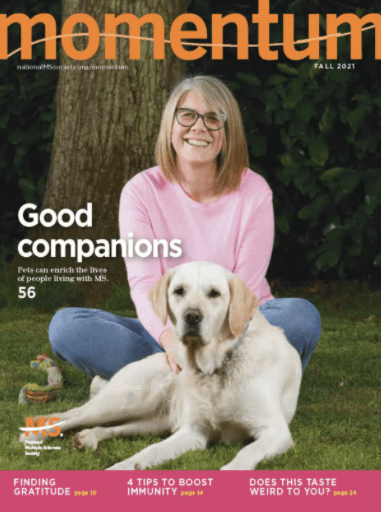
The folks at the National Multiple Sclerosis Society’s Momentum Magazine interviewed me for a story about taste dysfunction called, “Does this taste weird to you?”

The article starts by featuring yours truly:

As a salt-lover, Meredith O’Brien used to eat Ritz crackers upside down to savor the salt crystals dissolving on her tongue. But one day, two years into her diagnosis of multiple sclerosis, those same crackers tasted like plain paste. The next morning, her coffee tasted burnt. Red wine at dinner tasted sour. When O’Brien, who is based in the Boston area, brought up the issue to her neurologist, he said he’d never heard of such a thing.

“Taste alterations are a primary MS symptom that has flown largely under the radar,” confirms Mona Bostick, a dietitian-nutritionist in Greensboro, North Carolina, who also lives with MS. A 2016 study in the Journal of Neurology suggested that 15% to 32% of people with MS may experience taste deficits. A 2019 study in the Journal of Community Dentistry and Oral Epidemiology puts that number closer to 40%. The latter study also found that 68.4% of survey respondents complained of dry mouth, which further dampens flavor, as saliva helps taste buds do their job.

Read the rest of the article — which also quotes fellow MS patient and author Trevis Gleason, a chef who shares his “umami bomb” tips — here.

disability justice project features meredith

I was honored to be invited to serve as a fellow for the Disability Justice Project. As part of my work with the group, I’ll serve as a mentor to a journalist as she works on journalistic projects.

Here’s how the group defines itself:

The Disability Justice Project (DJP) is a strategic partnership between the Disability Rights Fund, an international NGO funding grassroots organizations of persons with disabilities (OPDs) in the Global South, and journalism educator and human rights filmmaker Jody Santos and other nationally recognized media makers from Northeastern University’s School of Journalism in Boston, Massachusetts. Based on a fellowship model, newer professionals with lived experience of disability from the Global South are paired with mentors/professional journalists in the U.S. In an exchange of ideas and experiences, the fellows learn about digital storytelling from some of the best in the industry, while the mentors learn about the global disability justice movement from frontline activists – with the goal of incorporating that new understanding into their reporting for publications like The New York Times and The Guardian or for broadcasters like PBS and ABC.

The group recently ran a feature story about me as I’m writer and journalism faculty member who has a disability (multiple sclerosis). The article entitled, “Meet DJP Mentor Meredith O’Brien,” began:

Disability Justice Project mentor Meredith O’Brien has always loved reading and writing. “As a kid, I was often reading and trying my hand at writing little stories,” she says. “I’d find notebooks around the house and just start writing stories in them.”

talking women & health with authors & poets

Author Christina Chiu — who wrote the powerful Beauty (do yourself a favor and read it!) — invited three writers to tackle the topic of women & health, while she also shared candid stories of her own illness, as well as her son’s experiences with food allergies.

Among her guests:

Sandra Beasley, the author of the memoir, Don’t Kill the Birthday Girl: Tales from an Allergic Life, and more recently, Made to Explode: Poems, spoke about her food allergies and how she has embraced her disability as a part of her identity.

Poet Julie E. Bloemeke — whose collection of poems, Slide to Unlock, “investigates how modern technology redirects our erotic and familial lives” — discussed not only how she dealt with depression, but how it and various therapies for it influenced her writing.

I, meanwhile, read aloud a section of my multiple sclerosis-centric memoir Uncomfortably Numb where the neurologist who first examined me — after an MRI showed a lesion on my brainstem — suggested that my symptoms of numbness were likely “psychosomatic.”

I hope the discussion helps give people with illnesses and/or disabilities some sense that they are not alone.