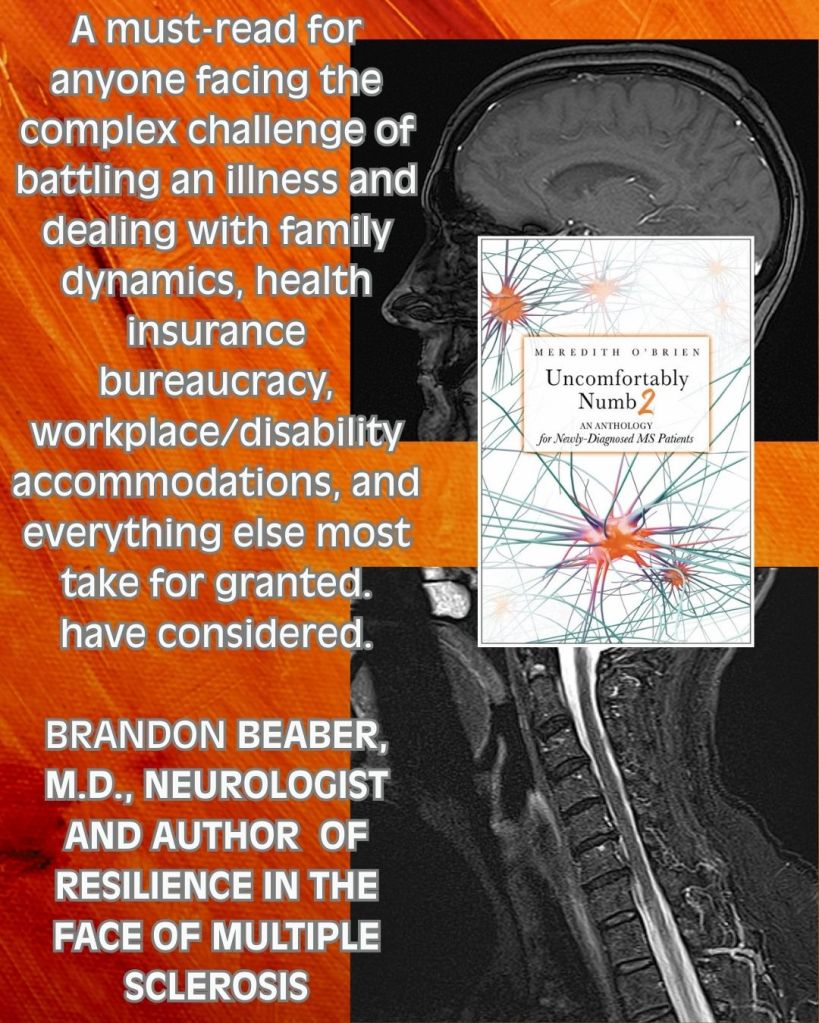
MS Activist and Influencer Jodi Dwyer said the new multiple sclerosis anthology Uncomfortably Numb 2 would’ve been “an amazing resource” had she had it in her hands when she was first diagnosed.
That was the goal of this sequel to my MS memoir. It was to create a guide that I wish I’d had when I received my own diagnosis in 2014. Comprised of stories from patients with varying stages of MS, Uncomfortably Numb 2 includes stories from a woman who was diagnosed as a teen and a neurologist who treats adult and pediatric MS patients.
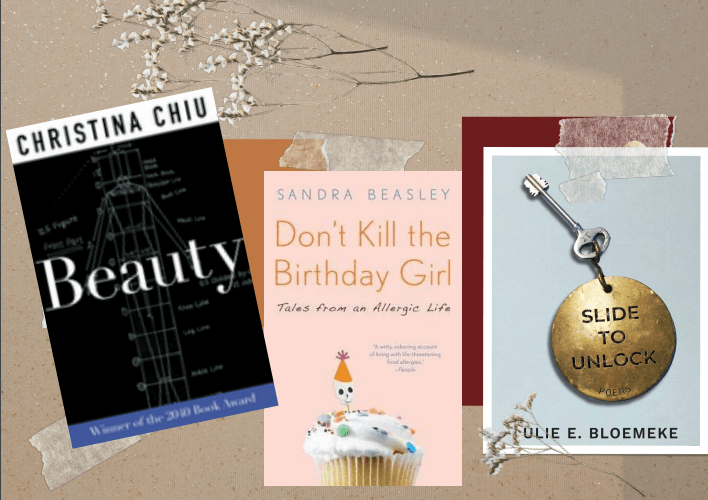
Author Christina Chiu — who wrote the powerful Beauty (do yourself a favor and read it!) — invited three writers to tackle the topic of women & health, while she also shared candid stories of her own illness, as well as her son’s experiences with food allergies.
Poet Julie E. Bloemeke — whose collection of poems, Slide to Unlock, “investigates how modern technology redirects our erotic and familial lives” — discussed not only how she dealt with depression, but how it and various therapies for it influenced her writing.
I, meanwhile, read aloud a section of my multiple sclerosis-centric memoir Uncomfortably Numb where the neurologist who first examined me — after an MRI showed a lesion on my brainstem — suggested that my symptoms of numbness were likely “psychosomatic.”
I hope the discussion helps give people with illnesses and/or disabilities some sense that they are not alone.
I rang out the wretched 2020 and rang in 2021 with interviews about Uncomfortably Numb: a memoir with podcasters and the host of a YouTube series.
We talked about adjusting one’s life to an unexpected turn of events (like having the world shut down because of COVID, as well as, obviously, getting diagnosed with multiple sclerosis), the impulsive decisions we can make when we’re under stress (like “panic adopting” a puppy just months after getting diagnosed with MS, as many folks have done amid coronavirus shut-downs), and the impact of about writing about very personal topics.
Dianna Gunn, of the Spoonie Author Network — a network “devoted to sharing the stories of disabled, d/Deaf, neurodiverse authors (and/or authors who manage mental illness and/or chronic conditions) and educating abled people about what life is like for us as ‘Spoonie’ creatives” — conducted an interview with me where we discussed how a multiple sclerosis diagnosis upended my life and forced a stubborn me to pace myself when it came to my day’s activities (something with which I’ve had mixed results).
Weeks later, Chris Moore, of The Situation and the Story Podcast — which interviews authors about “the ways our various identities and intersectionalities inform our stories and make us who we are” — chatted with me about writing this intensely intimate memoir which covers rough emotional terrain, from my own illness and questions about who I’d be as a writer if some of my symptoms worsened, to the death of my mother with whom I had a challenging relationship.
Then I heard from a California-based neurologist who specializes in multiple sclerosis, Dr. Brandon Beaber, who asked if I’d speak with him about Uncomfortably Numb and my experiences as an MS patient.
Book blogger, the Good Book Fairy, featured Uncomfortably Numb on her site, giving it four stars.
Her review:
“Uncomfortably Numb is a wonderful, absorbing memoir where the author chronicles her transformation after being diagnosed with multiple sclerosis. O’Brien, who is an author/journalist by trade, writes about her life pre- and post-diagnosis, and provides an honest account of how her diagnosis impacted her life and family. The author shares the long diagnostic process where many doctors did not take her seriously.
O’Brien writes with openness of heart and insight. I found her to be honest, relatable, and authentic. I admired her strength, courage, and perseverance as she finally accepts her diagnosis and learns to adapt to her ‘new normal,’ and hold onto her identify as a writer, she states that her ‘reluctance to move forward into uncertainty is rooting me in place, paralyzing me.’
Throughout the book, O’Brien showcases her talents as an investigative journalist by weaving in medical reports, physicians’ notes, and lots of valuable information about MS. She also spends a lot of time talking about her wonderfully supportive family.
… Prospective readers should know that this book is about much more than MS. There are universal themes throughout, and the lesson that readers can take away and apply to their own lives.”
Amy Wilson Sheldon — a writer and editor whose Instagram account, “A Lifely Read” discusses and features books and authors — recently reviewedUncomfortably Numb.
Her review:
This is a different kind of memoir, and it should be noted that MS is a chronic disease and that you can’t ‘conquer’ it and watch it disappear. O’Brien has a reporting background and teaches journalism at Northeastern, so her book definitely reads as reportage. That’s important because her work lays bare the acute nuts and bolts of living with MS. (There are a couple of scenes that are particularly tough.) That being said, other things happen in one’s life that help shape how we’ll respond to crisis. In the author’s case, it includes her relationship with her mother (and coping with her death), infertility struggles, a reckoning with her career. (“While I cling to my identity as a writer like a drowning woman to a life raft, I haven’t accepted that I’m also the writer who takes two pricey pills a day with a tablespoon of peanut butter in the morning and evening.”)
How does one’s diagnosis, one’s obstacles shape a life? It’s more than not letting it “dominate” you.
UK Author Madeline Dyer and her Book Party Chat Twitter page hosted me for an hour-long discussion about writing, about memoir, about researching, and about work that inspired me as I wrote Uncomfortably Numb.
We discussed how long it took to write the memoir, what it was like to write such raw and personal material, as well as what projects I’m working on next … to which I would only say that it’s something in the thriller/fiction genre and will be set in Springfield, MA where I used to work as a newspaper reporter. It’s still in its infancy/planning stages.
Thank you Madeline and the Book Party Chat team for taking the time to speak with me about my work and about the craft of writing.
How and why did it take two years from the initial onset of symptoms for the medical community to diagnose me with multiple sclerosis? This essay details my journey to learn something that would change the course of my life.
Over on the National Multiple Sclerosis Society’s MS Connection blog, I paid homage to writers who’ve shared their stories of strength and struggle while living with chronic illnesses. When you’re feeling down, reading about the experiences of others can provide an existential balm.
An excerpt:
Sometimes I just need to relate.
I need to see my experiences, my struggles confirmed instead of negated and misunderstood. I need to remind myself that I am not alone in my fatigue, in bouts of cognitive fuzziness, in my hair-pulling frustration.
I have been reading books written by those who are living with multiple sclerosis and other chronic illnesses. I’ve been quite voracious about it, collecting these tales as a way to see myself reflected, helping me feel seen and heard.


 UK Author
 I’ve written two new pieces about multiple sclerosis and chronic illness for your reading pleasure:
 Chronic illness lit: Finding solace between two covers
  Meredith OBrien