So … yeah … I’ve been a tad incommunicado here on this blog where I said I’d be chronicling my nascent Liverpool fandom. I’ll share with you some of the reasons why because I like to hold myself accountable:
I spent December wrapping up the fall semester and grading dozens of submissions from students in my undergraduate journalism class and two master’s of fine arts classes. When I completed that task, I revised three syllabi and three sets of online course modules for the spring 2024 semesters for three courses.
Additionally, there was the whole Christmas holiday prep — buying presents for the family and spending hours wrapping, planning the menus for two holiday dinners, cooking/baking, cleaning the house, and squeezing in a mid-December trip to visit my daughter Abbey and her boyfriend Anthony in their Bronx apartment.
In addition to helping my senior citizen father with his weekly medicine, paying his bills, and taking him to his medical appointments, I had meetings for the National Multiple Sclerosis Society (where I’m a member of the local chapter’s Board of Trustees, as well as an MS Activist, which means I lobby state and federal officials for bills which help those with chronic illnesses). I also did some more research for my work-in-progress about a Massachusetts Millennial minister, and, this is my low-key announcement, started working with a publisher to prep my second novel for a February 2025 publication date.
So … yeah … maybe taking on this British football project was a tad too ambitious. I realized early in December that I just would not have the opportunity to pull together blog posts for each game I watched. And I did watch all but one Liverpool game since I last blogged about the Reds. (I missed the Dec. 6, 2023 game against Sheffield United — which Liverpool won 1-nil — because there were too many people logged onto our streaming account. We’ve remedied the situation by purchasing our Liverpool-fan son Jonah an online streaming subscription for Christmas.) I watched eight games during December and one on New Year’s Day in my Boston area home, in our family’s Cape Cod place, en route to and in church, at Sean’s Bar & Kitchen in New York City, and at an in-law’s house during a holiday event. I took notes while watching most of these contests, but lost the ones I jotted on a Sean’s Bar & Kitchen napkin.
The Reds have compiled an impressive record during the past 10 games, winning seven, tying two, and losing one, the Europa group league game vs USG, which my Chelsea-fan son told me didn’t matter because Liverpool was advancing out of group play anyway, so I’d say they had a good December, in spite of my blogging lapse.
While I’ll post some highlights from my notes below, one question has been haunting me over the over-packed month of December: How can fans possibly keep up with all these games? Do they watch all of these games or some of them?
I, for example, don’t watch every Boston Red Sox game, given that they have 162 of them a season, and I still call myself a fan. I think I’ve been unduly influenced by my Chelsea-fan son who’s of the mind that only real fans watch every football game. (Yes, he’s employed.) I now realize that it’s unlikely that I’ll be able to blog about every game, and that’s okay. I’ll still watch as many as I can, taking notes when I can, and posting as I can.
As a British football newbie, I still find all these concurrent tournaments — EFL, Europa, never mind players leaving to play for their national teams’ continental football tournaments (like Mo Salah leaving Liverpool to participate in the Africa Cup of Nations for much of January) — befuddling. I’m unaccustomed to trying to balance all of the competitions in my mind. I think following just the Premier League would be simpler, but my Chelsea-mad son has strongly implied that would be very “plastic” of me. And, God knows, I don’t wanna be plastic.
Okay, so the Reds have fallen into a teeny, tiny slump as of late. In Premier League play, they fell to Tottenham 2-1 in a hotly-contested match filled with more cards than a stationery store and, a week later, they tied Brighton 2-2 in a game in which they had the lead until late in the contest. In Europa League group stage play, they beat Union Saint-Gilloise 2-nil.
Tottenham: I watched that dreadful, aggressively-officiated Sept. 30 Tottenham game between two unbeaten Prem teams (there were a dozen cards issued during this match!) from my living room, where I shouted repeatedly when Curtis Jones received a yellow card 26 minutes in, but, after the officials reviewed it via VAR (video assistant referee), the braintrust decided Jones actually earned himself a red card and a time out … which will last for three games. (An appeal of that ruling failed.) This also meant that Liverpool had to play Tottenham with one fewer player on the pitch.
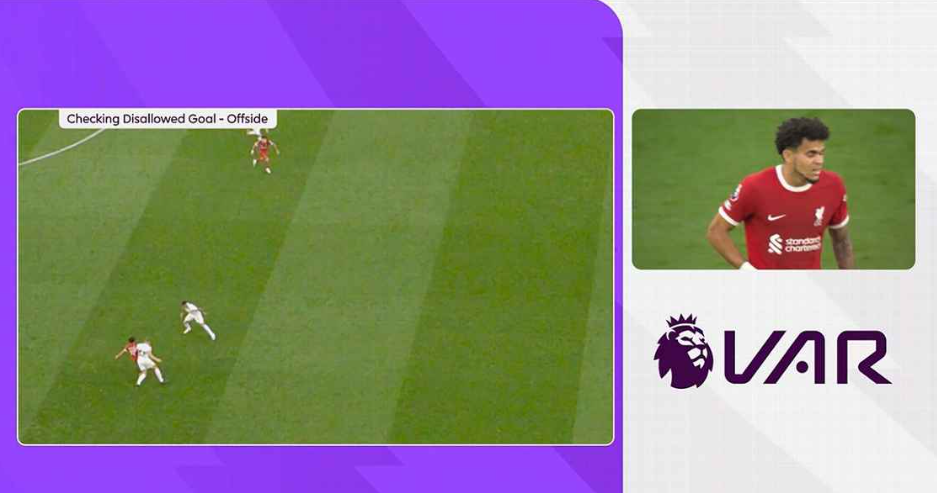
After Liverpool goalie Alisson Becker made two tremendous saves in a row, fans’ spirits were on the upswing. They were thoroughly lifted in the 34th minute when Luis Diaz scored a quick shot. Jubilation. Celebration … wait … what? The on-field ref said Diaz was offside so the goal was “disallowed?” Reader: Diaz was most definitely on side and the goal should have counted.
In what ESPN called “the biggest error the Premier League has seen” when it comes to officiating, the refereeing team miscommunicated and the on-field official misconstrued what the VAR folks were saying and gave the ball to Tottenham for a free kick. VAR realized that the goal was actually legit, but the on-location official misunderstood. “Seven seconds later,” ESPN reported, “the VAR team realized their error. Panic set in, but they decided they couldn’t go against protocol, so they let play continue.” Seriously? They knew Diaz’s goal was legit, but decided to let “protocol” — which is supposed to assure fairness and accuracy — triumph in the face of a nakedly obvious error?
My mood darkened even further when Liverpool was forced to play with only nine players (instead of the usual 11) because those sterling officials hit Diogo Jota with a second yellow card in the 69th minute, after awarding him a yellow card in the 68th minute. According to Prem rules, when you receive two yellow cards, like Jota did, that equals a red card and you get sent off the field.
To make matters exponentially worse, in the 96th minute, Liverpool’s Joel Matip scored an own goal (meaning he accidentally hit the ball into his team’s net) giving Tottenham the 2-1 win, an atrocious cherry on top of that wretched Tottenham sundae.
While I ranted on social media along with Liverpool fans about the disallowed Diaz goal which would’ve made the difference between a loss or a tie, Liverpool’s club issued a statement saying that the erroneous Diaz offside call “undermined sporting integrity,” while Liverpool Manager Jurgen Klopp said the game – which would’ve been 2-2 if Diaz’s goal counted – should be replayed, sparking mockery from Liverpool haters everywhere. (The VAR refs who handled this call weren’t allowed to officiate games the following day, so the refs knew they screwed up.)
Honestly, I’m still kinda salty about the whole affair, even a week later. While I spent more time than I would have liked debating my Chelsea-fan son (who agreed the offside call was wrong) by saying that, in the face of such a costly error (think of the monetary and business implications), the Prem should remedy the mistake, he kept telling me it was a pipe dream. But they know it was a mistake, I kept saying. They had it within their power to fix it. They could, like the Olympics does when it’s revealed that someone was doping or a judge was bribed, modify the results to reflect the new information. Apparently, according to my son, I’m a naive idiot for thinking this way.
Europa League Group Play: The next time a Liverpool game was on TV was the Oct. 5 Europa League group stage match against USG (the Belgian Royale Union Saint-Gilloise team). This wasn’t a good day for me. By game time, I felt drunk and high. And not in a good way. I’d received a combo flu and COVID vaccines the previous day and the cumulative effects, coupled with the insomia I experienced, hit me with unexpected force yielding chills contrasted with bursts of heat, muscle achiness, severe foggy-headedness, weakness, and lightheadedness. I spent the morning of Oct. 5 feeling not-at-all-right while I laid in bed listening to CNN anchors and reporters discuss the chaos inside the US House of Representatives after the Republican party booted its own speaker. I was proud of myself that, despite feeling ill, I remembered there was a Liverpool game on TV that afternoon. But, because I was feeling so lousy and didn’t want to fetch my laptop or the Roku device, I opted to watch the game on a channel that broadcast in Spanish (a language I do not speak) because that was the only station on which I could watch the game from my bed.
In spite of the haziness of my brain, I was still able to take handwritten notes on what I witnessed. My notes say I was impressed by Jota’s 92nd-minute goal after he outran his opponents and blasted a shot into the bottom corner of the net with his left foot, afterwards, celebrating by pantomiming pulling back on a bow and releasing an arrow into the crowd. Why? I have no idea. Did I, in my post-vaccine fog, imagine all of that? No, an online search revealed, I did not. My notes were indeed correct, at least about the Jota bow-and-arrow thing. Liverpool won, 2-nil. And, unlike with the card-mad Tottenham game, officials tagged players with a grand total of … zero cards.
Brighton & Hove: By the time the Oct. 8 game at Brighton & Hove started on a Sunday morning, I was already dressed, ready for church, and had informed those who use our family streaming account that I planned to watch the game on my phone. Luckily, during there were no issues with streaming access. Unluckily, Brighton drew first blood in the 20th minute with a triumphant goal, however, by the time I was ready to leave the house, good old Mo Salah evened it up. Salah then added a second goal to the scoreboard via a penalty kick just before halftime. Two-one, Liverpool.
The second half began five minutes before I pulled into a parking spot next to the church in downtown Westborough, Mass. With the game streaming on my phone, I turned the volume off as I stepped into the 19th century building and chatted with one of the greeters for several minutes. I resisted the urge to turn my phone over — I’d pressed the screen into my thigh — so I could check if the score had changed. When I finished the conversation, I felt proud of myself for being completely present during that exchange and then felt relief that the score was unchanged.
Once I settled into one of the pews in the back of the sanctuary, I found it difficult to prop the phone up so I could clearly see the tiny screen. I didn’t want everyone to notice that I was watching British football during church; I was trying to be subtle, respectful. I opted to rest the phone atop my right leg which was crossed over my left, as I tried to angle my face toward the pulpit and only use my eyes to look at the phone. However when the minister began to read the statement the president of the Unitarian Universalist Association released about the murderous attacks in Israel that took place the day before, I put the phone on the pew cushion beside me and gave the minister my full attention. It just felt wrong not to do so.
After that, I left the device upon the crushed, red velvet pew cushion in order to rise and “sing” — I can’t really carry a tune all that well — a hymn. (I have yet to figure out a way to record streaming Liverpool games so I don’t have to multi-task.) Once the hymn concluded, I was relieved to see that the score hadn’t changed … until the 78th minute when Brighton tied it up. Unable to shout to express my disappointment, I silently clenched and unclenched my free hand and screamed internally. Game officials handed out two yellow cards by the end of the game – one to Joe Gomez (only six minutes after he entered the game), one to a Brighton player – and the match was over by the time the collection plate was passed. A 2-2 tie.
After I got home, my Chelsea-fan son gleefully informed me that people online were mocking Klopp by sarcastically asking if he would demand to replay the Brighton game as well as the contested Tottenham game. Ha, ha.
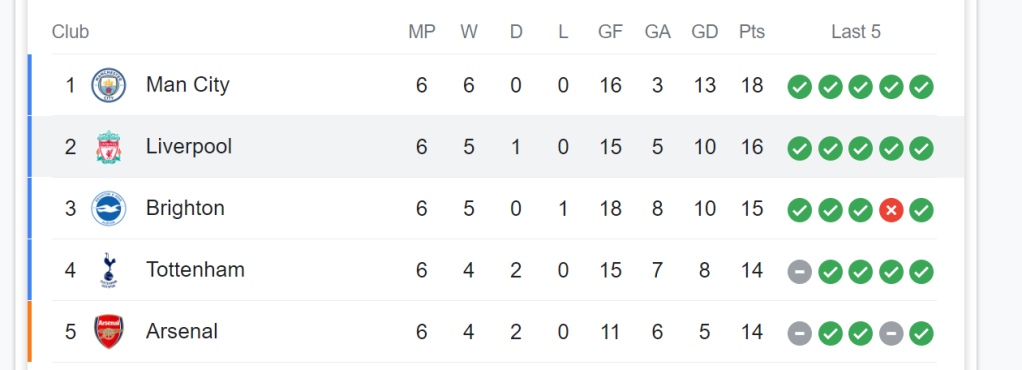
It was eight weeks into this season, and Liverpool still ranked significantly above Chelsea in the Prem standings. I let him yammer on while I kept that little dagger of truth to myself.
It’s been a crazy couple of weeks in my world. There’ve been three Liverpool games since the last time I blogged. And they’ve won them all. Beating the Wolves in a come-from-behind win, 3-1. Beating LASK in Europa Cup group match, 3-1. Beating West Ham, in a come-from-behind win, 3-1. Hmm, sensing a trend?
Keeping up with all of this football has been fairly challenging when one is trying to do something called life. I’m teaching, three, college-level courses (all writing classes) which involve a tremendous amount of input and a lot of class prep. Throw in the fact that I’ve got several ongoing writing projects — including organizing my research for a new book and editing my second fiction manuscript — as well as a Rosh Hashanah celebration with the extended family, and attending in-person Boston Red Sox games (my favorite team), and, I don’t know, inconsequential things like sleeping and eating … and things have been a touch chaotic. Shoehorning Liverpool’s Prem games, plus games for other competitions like the Europa Cup, into my daily life, was much simpler before the fall semester began.
To watch the last two Liverpool games required serious multitasking on my part, something I have to imagine many American fans need to accomplish in order to follow football matches taking place on another continent, during hours when Americans would typically be working. Or sleeping.
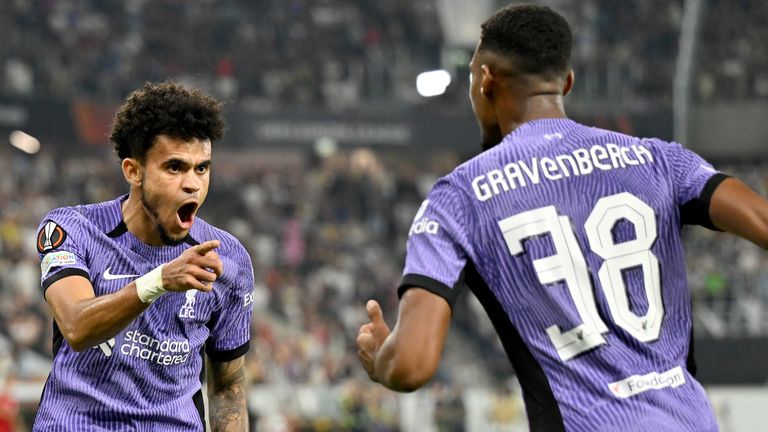
For example, when Liverpool — resplendent in their lavender kits (above) — took on LASK (which stands for Linzer Athletik-Sport-Klub, an Austrian professional football club) in group play for the regional football tournament, the Europa Cup, I streamed it, split-screen, on my laptop. On the right half of the screen was a tiny box streaming the action, and on the other, a manuscript I was editing and into which I had to try not to accidentally input “Nunez,” “Europa,” or “Diaz” while I listened to the announcers. I stopped editing and pulled the game onto the full screen when the Reds finally came alive in the 56th minute after Darwin Nunez scored a penalty kick, followed by Luis Diaz’s 63rd-minute tap-in. “Liverpool are alive and Liverpool are in the lead!” a commentator shouted. In the 88th minute, the always-reliable Mo Salah nutmegged (kicked the ball through an opposing player’s legs) a LASK player and scored in what a commentator said has become Liverpool’s “usual way:” a come-from-behind win.
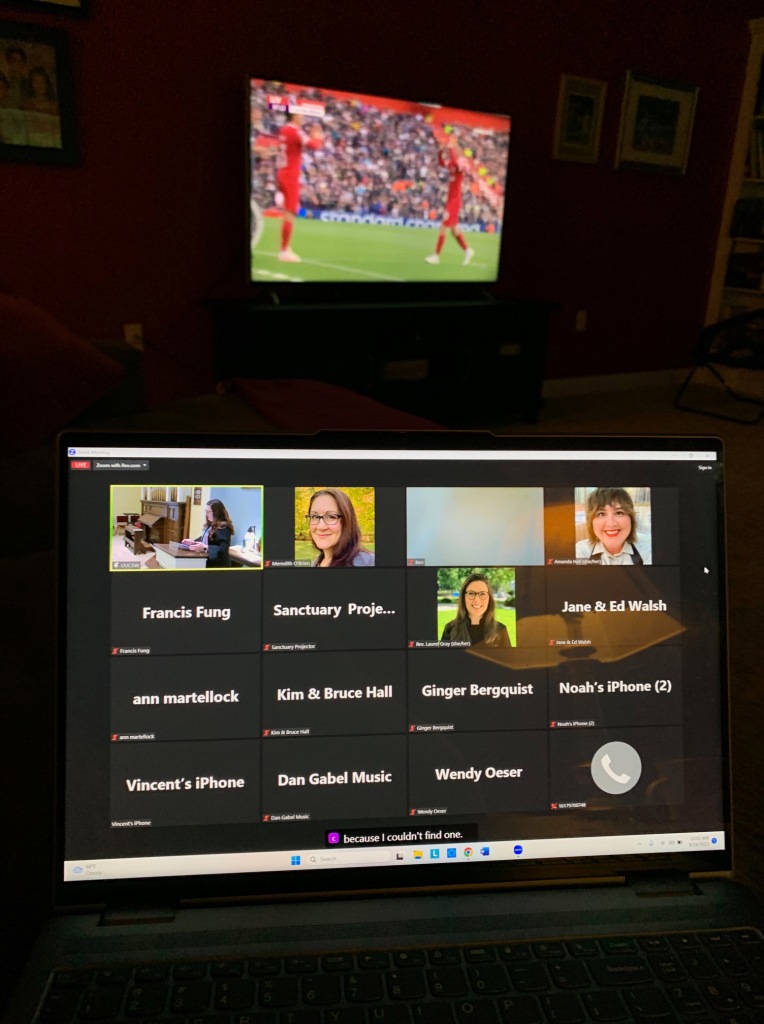
During the latest Liverpool game against West Ham United at home in Anfield, watching this 9 a.m. kickoff meant I had to juggle some things. My initial plan was to watch the first half at my house, drive to church, deposit myself in a back pew, and silently stream the second half from my phone. However, our Peacock account was maxed out on viewers so I wouldn’t be able to stream it. I had a choice to make: Church or Liverpool? Luckily, I could choose both because the Massachusetts church streams its services live. I watched the Liverpool game on the TV and church on my laptop. (See below) I texted Rev. Laurel — about whom I’m working on a book about being a Millennial minister — to explain my scheduling dilemma and she thought it was funny. I spent the second half petrified that I’d accidentally turn on my mic and have my cheers or my shouts of, “Shit!” ring through the church sanctuary speakers.
As has become rote thus far in Liverpool’s season, the club was cold at the beginning of the game, playing like they needed serious infusions of coffee (or tea, as they were playing in the land of tea). But the lackluster playing dissipated by the 16th minute when Salah easily scored on a PK. West Ham tied it by halftime, only to have Nunez score in impressive fashion in the 60th minute. Afterward, Nunez showily kissed his arms and wildly gestured toward the appreciative home crowd. I was even more impressed by the Diogo Jota goal in the 85th minute off of a very odd headed pass from Virgil van Dijk, who had just returned from a multi-game, red-card banishment.
Simultanously, my husband Scott was sitting across from me in the family room streaming the Chelsea game on his phone and my resident Chelsea fan son was in his room watching his preferred team, the Blues, which lost. And whenever Chelsea loses, a grumpy pall is cast over the house. No one is to speak about the game for at least 24 hours.
The only recent, Liverpool game to which I was able to devote my full attention was the Saturday, Sept. 16 match against the Wolves. That weekend, my house was filled with my three adult children and my daughter’s boyfriend. Football fans, all. We all got up early to watch the Liverpool game before I made dishes to bring to a family Rosh Hashanah dinner in the afternoon. (I made mini-potato kugels in cupcake tins, a salad whose components hailed from a local farm, and brought bottles of wine. My daughter baked an apple pie.) Outside, powerful winds from the dregs of Hurricane Lee which swept up the US East Coast, rattled the family room windows as rain poured intermittently. I gulped down several cups of coffee to wake myself up, seeing that the game kicked off at 7:30 a.m. Boston time.
The match began with the Reds playing … poorly. The Wolves were able to slice through their lackluster defense like a hot knife through butter. It was no surprise when the Wolves struck first, scoring the game’s first goal through the legs of Andy Robertson in the seventh minute. My ardent Liverpool fan son Jonah was edgy, 10 minutes in, “They’re on the ropes already!” For the bulk of the game, the Wolves’s lead felt more substantial than 1-nil because Liverpool was playing so badly.
Then … Salah.
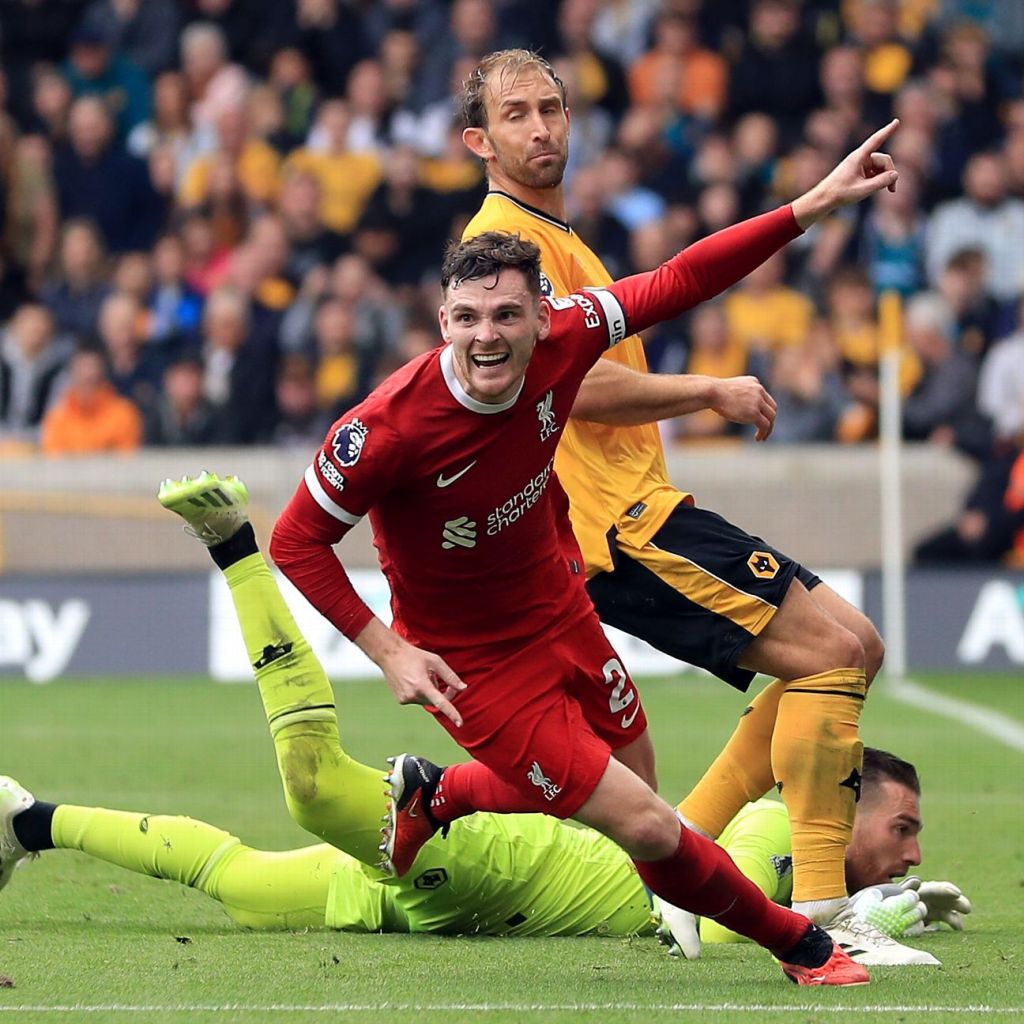
In the 55th minute, Salah sent Cody Gakpo the ball who converted it into the first Reds goal. Thirty minutes later, Robertson’s goal (pic above) caused Jonah to raise his right fist in triumph, “He NEVER scores!” The room’s dour mood shifted like quicksilver as a Liverpool W seemed possible. A Liverpool win was cemented by an unlucky own-goal by the Wolves’ Hugo Bueno (he accidentally tipped the ball into his team’s net) making it 3-1 Liverpool.
Next up for the Reds in the Prem: A match at Tottenham (my nephew’s favorite team) on Saturday, Sept. 30 at 12:30 ET.
Random bits:
I’ve now learned that it’s routine behavior for defensive players who are lining up to block a direct kick on goal, to not only protect their crotches, but to also jump vertically. Additionally, one player lies facing toward the goal — away from the opposing team’s kicker — should the kicker try to send the ball rolling on the pitch beneath the jumping defensemen. (This nugget of info was gleaned after I asked my kids, “Why is that dude lying on the ground?”)
Several weeks into the Premier League season, I haven’t quite memorized the Liverpool players’ names and often struggle to identify them on the pitch, especially if I’m not wearing my glasses. I’m working on it.
XG. Who knew that XG means “expected goals,” meaning, how many goals each team and/or player is expected to deliver in any given game? Everyone in my family except for me, the football newbie. I likened XG to a Major League Baseball pitcher’s ERA or a hitter’s batting average. However any time I liken football to baseball in my attempts to understand it, I get eye rolls. Nonetheless, I persist!
As I prepared to watch the first Liverpool game of the new Premier League season this past Sunday, I hoped to do so while donning the brand new Liverpool jersey I ordered in honor of the start of my British football experience. Instead, when I plopped myself down next to my spouse I was wearing my black “Democracy Dies in Darkness” tee because the football shirt didn’t arrive on time. I tried not to read anything into this, into the fact that the shirt didn’t arrive before the game. It’s not an omen or anything, I told myself.
Other than being inappropriately attired when I watched the Liverpool-Chelsea game on Sunday, what was the big news? The match ended in a 1-1 tie between Chelsea (my 22-year-old son Casey’s favorite) and Liverpool (my nearly-25-year-old twins Abbey and Jonah’s favorite), during which two goals were “disallowed” by officials because players were declared offside after VAR (video assistant referee). Luckily, football’s confusing offside rule had already been thoroughly explained to me by Casey who used popcorn kernels inside a semi-darkened movie theater a few weeks ago before the movie Oppenheimer began to illustrate what offside is. Without this explanation, along with important clarifying details from his girlfriend Jess, I would’ve likely been mystified by watching a Liverpool, then a Chelsea goal nullified on Sunday.
It’s been strange for me, this whole learning process, the fact that everyone in my house knows more about football than me. It’s been quite humbling to have my twentysomething kids — okay, mostly football superfan Casey, who’s been the family contrarian ever since he started speaking (for a short time, the kid rooted for the Yankees simply because the rest of the family rooted for the Red Sox) — teach me not only about the rules of the game, but about the Premier League and the history of some of its best clubs. While Casey hasn’t seemed exactly thrilled that I’ve decided to co-op his football passion and blog about it, he has humored me and been a pretty good teacher, as long as I don’t ask questions while a game is in progress.
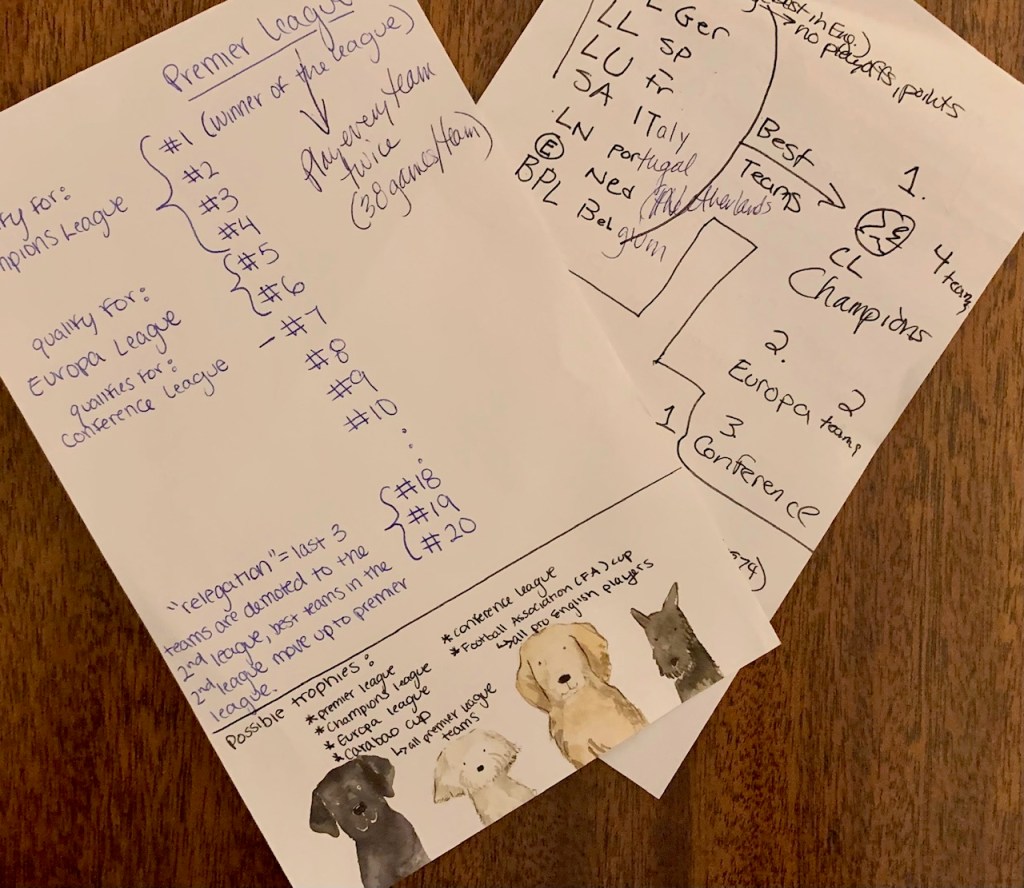
During the same weekend when Casey and Jess explained offside to me (I really want to add an “s” to the end of that word, but I’ve been told that’s not how it’s done in the Premier League), they also gave me a general British football 101 primer. Using my cartoon dog notepad, the two sketched out information about the 20-team Premier League which they said represents the best of English football. Its rules and traditions, at first blush, seem odd to me, someone whose preferred sport has been major league baseball ever since I was a little kid. For example, the Premier League doesn’t have playoffs. No playoffs! Its champion is determined by who has the most points.
“Three points are awarded for a win,” the Premier League website says, “one point for a draw and none for a defeat, with the team with the most points at the end of the season winning the Premier League title.” If there are ties, there are myriad ways to further break down the stats to determine a playoff-less winner, like comparing number of goals scored in the season or who scored the most goals when clubs played one another, according to the Sporting News. Thanks to my Ted Lasso viewership, I came to this football project with a very basic understanding of the utterly bizarre concept of “relegation” — where the last three teams in a British league are demoted each year and, conversely, the three with the most points in lower leagues are “promoted” to the next-highest league.
During my first week of watching Premier League games as a Liverpool fan, I learned the difference between shots versus shots on goal quite by accident after I made a throwaway comment to Casey while we were watching the Arsenal and Nottingham Forest match.
“They’ve had a lot of shots on goal,” I said of one team, I don’t remember which.
“No there haven’t,” replied six-foot-four Casey, his eyes darting back and forth between the screen and his phone, on which he was monitoring Premier League info.
“What do you mean? I just saw them kick the ball at the goal.” I felt like I was being gaslit. Isn’t that what they called it in hockey when teams shoot the puck at the goal? It’s different in football?
“That wasn’t a shot on goal. What is your definition of a shot on goal?”
I didn’t answer him in the moment because I despise being quizzed by the kid who once told me I was an animal abuser for not allowing our dog to eat his dinner at the kitchen table along with the rest of the family. But Casey’s subsequent explanation echoed what I later found online. “A shot on target is either any shot that goes into the goal, a shot that is saved by the goalkeeper or one where the last man blocks the ball,” said the Football Handbook. “In the last two scenarios, the ball must have a clear chance of going into the net.”
I made a mental note not to call a kick in the direction of the net that, say, hits the post, a “shot on target,” just like I made a mental note to refrain from commenting on a goal on the off chance it’s ruled offside. It’s hard enough to be the dumbest person in the room when it came to football, I don’t want to put myself out there to be potentiallly mocked for my ignorance, particularly if Casey, who consumes Premier League information like oxygen, is feeling chippy and wants to give his old mom a hard time.
On the day of the Liverpool-Chelsea match, there’d been ample pregame chatter about the tug-of-war between the two clubs over signing star footballers Moises Caicedo and Romeo Lavia, so I read up on it, scanned sports sites and checked social media so I could participate in any potential discussion. (Spoiler alert: Caicedo and Lavia both went to Chelsea, much to the embarrassment of Liverpool fans.) However, I didn’t find much opportunity to contribute an informed comment during the game. In fact, I found exactly zero opportunities to do so. Instead, opted to keep mostly quiet – sooo unusual for me – and simply took everything in. The fact that the game ended in a tie and neither of my sons who were watching the game with my husband and me were disappointed seemed like a win, at least for peace in my living room.
As I look ahead to week two of my adventure with British football, I’m still waiting for the Liverpool jersey to arrive, am monitoring all the rumors about Liverpool goalkeeper Alisson Becker toying with jumping to the Saudi Pro League, and am trying to get a handle on the fluctuating roster.
Participants: My then-24-year-old grad student son, my then-21-year-old undergrad son, my spouse, and me (if you can call me a participant).
Subject: Whether a bicycle kick by a Southampton football club player to the head of Chelsea’s football club’s captain warranted a red or yellow card.
For the entirety of our lunch before we headed to campus to see the University of Massachusetts’ men’s hockey game, I could not work my way into the conversation, not during drinks, not during appetizers, not during the main meal, not even during dessert. I couldn’t get the three male members of my family to change the subject to something in which I was conversant, like U.S. politics or the spy balloon that’d been flying over the U.S. or pop culture. Since I couldn’t take part in their animated debate because I had nothing to contribute, I pulled out my phone and began taking notes. Some of the gems they uttered:
What kind of crack are you on?
You’re asking the wrong questions!
You can usually, visually gauge intent!
Just because it’s subjective, doesn’t mean it’s crap.
That’s one of your dumbest takes ever.
The old fashioned I rapidly drained while chronicling their conversation didn’t chill me out nearly enough to cope with, what I described as, “this all-encompassing conversation where all the oxygen goes to British, fucking, soccer.”
By the end of the meal I reached a decision: In order to engage with them, I need to join them. I need to become the last member of my family of five to select a Premier League team and rabidly root for it, because what is British soccer without the rabidness of its fans? My daughter, like her twin brother, is a Liverpool fan. My younger son is a Chelsea fan. My husband tries (rather unsuccessfully) to be the human equivalent of Switzerland, someone who claims to be fans of both teams, but his poker face isn’t as good as he thinks it is.
Personally, I never cared much about soccer – hereafter known called football – aside from watching the U.S. Women’s National Team in World Cup or Olympic matches. A lifelong Boston Red Sox fan who weathered many losing years (1986 … just … no) before the gloriously historic 2004 season which snapped an 86-year losing streak, I’ve also enthusiastically followed my alma mater’s teams (specifically University of Massachusetts hoops and hockey). A fair-weather Celtics fan, I don’t really follow the Boston Bruins or the New England Patriots, although if friends and family gather to watch a big game, I’ll watch with them.
But European football … I’ve never really understood why my family is so enthralled with it and why my late-sleeping sons willingly rise early ON WEEKENDS to watch matches. However, following that aggravating lunch at Johnny’s Tavern in February, I decided I need to figure out why.
I announced to my football-mad relatives that I’d follow the U.K. Premier League when it starts its season in mid-August. I then asked for input on which team I should follow – I didn’t want to choose between my kids’ favorites – adding that I was looking for a club with history, heart, authentic fan passion, and a bit of an underdog vibe. I wanted to ally with folks similar to loyal Red Sox fans. For example, if I hadn’t been born a Red Sox fan, I’d likely follow the Chicago Cubs because I admire their grit and undying loyalty to their club even after enduring 108 long years before they won the World Series in 2016.
Casey, the Chelsea fan, suggested I root for Aston Villa, a 149-year-old football team from Birmingham because he said the club represents the qualities I named: history, passion, and an upward trajectory in the league.
Jonah, my Liverpool-loving son, argued for Newcastle United because he said they’re moving up in the Premier League.
Abbey, my Liverpool-loving daughter, and Anthony, her Manchester United-loving boyfriend, argued for Brighton because they said Brighton is “kind of an up-and-coming team” and “they’re decently placed in the league and unlikely to be relegated … plus, nobody really hates them that much.”
Although they did offer suggestions, Abbey and Jonah made me rethink my approach of selecting a Premier League team out of thin air in order to try to understand the undeniable gravitational pull of British football fandom.
Why, they asked, didn’t I just root for Liverpool, which is owned the Fenway Sports Group, named after Fenway Park, the home of the Boston Red Sox? Liverpool’s connection to the Sox is, afterall, how they became Reds fans in the first place. I didn’t have a good response other than to repeat the mantra that I was hesitant to pick favorites between my children.
I did some research and had a lot of conversations about the Premier League. What I ultimately realized is that I couldn’t artificially muster enthusiasm for a club which, on paper, might seem like as if it meets my criteria. I wasn’t feeling it for any of the teams they suggested, and if there’s one thing I’ve learned from watching my family go football crazy, it’s that emotional connection is paramount. I couldn’t deny the pull of the name “Fenway,” in spite of the current, seriously lackluster Boston Red Sox season. After thinking about all these factors, as well as watching videos of Liverpool fans singing — as if they are one, thoroughly off-key body — the club’s unofficial theme song, “You’ll Never Walk Alone,” I couldn’t help but sense some “Sweet Caroline” kindred-spirit magic.
Starting on the morning of Sunday, August 13, when Liverpool faces off against Chelsea at 11:30 a.m. Boston time, I’ll be rooting for the Reds. Part of me will feel as though I’ve chosen Abbey and Jonah over Casey, however, I hope Casey will be pacified by my promise to root for the Blues whenever they’re playing any other club other than Liverpool (which Jonah says is indicative of the fact that I won’t be a “true” Liverpool fan … let the shit-talking begin).
My football learning curve will be steep. I’ll likely mess up the lingo and offer myriad bone-headed takes, but that’s what happens when you start something new. Just know that I’m drawn to the passion that formed an infuriatingly impermeable wall of verbiage at that lunch table in late winter, and I want to be part of the conversation.





 Meredith OBrien
