new essay: ‘poison in a coffee cup’ in pangyrus lit mag

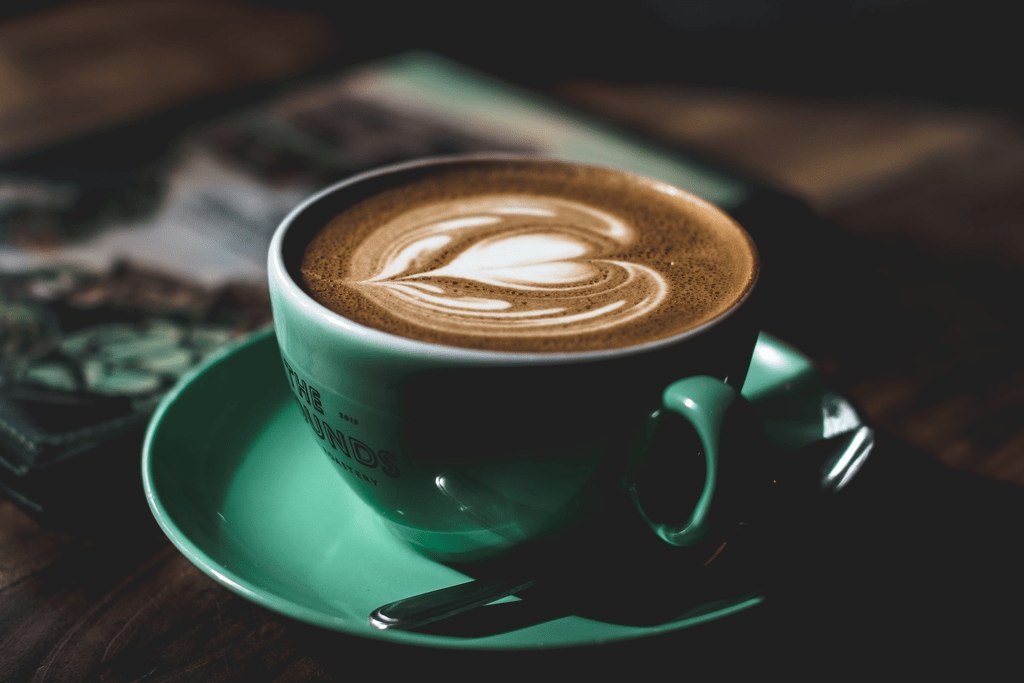
The Boston-area literary magazine Pangyrus recently published a braided essay I wrote about the impact of being severely allergic to food containing dairy products. The incident around which the piece is constructed was my accidental March 2023 ingestion of some kind of dairy product in spite of ordering an oat milk latte and a vegan burrito (presumably dairy-free) at an upscale Seattle coffee shop. My rapid consumption led to a trip to the ER.

Ironically, later that afternoon, I had been slated to attend a session at the writers’ conference about writing about one’s disabilities. I was most looking forward to meeting writer Sandra Beasley, someone whose work has delved into her life-altering and life-threatening food allergies. Sadly, I was sitting in an ER bay with epinephrine and steroids flowing through my veins when Sandra started speaking on her panel. I had to later watch her session online from the safety of my Boston area home.

Here’s how the Pangyrus essay begins:

A black bulldog, strapped into a red harness, peers over its person’s shoulder and stares at me. We’re in a line at a small, indie coffee shop, where I’m jonesing for some of that famous Seattle coffee. The bulky canine in front of me, indifferently sniffing the air once I become a boring subject to observe, is likely hoping for a morsel of some of the baked goods the scents of which are subtly threaded through the heavy coffee aroma. 

A New Englander, I’m a regular at my local Dunkin’ Donuts, although I occasionally go to Starbucks to splurge for an oat milk latte. Most mornings, I use my Keurig machine to brew two cups of coffee, hoping that the caffeine will force my brain to focus, like when you need to reboot a laptop. Control. Alt. Delete. 

This coffee shop near Lake Union, not far from one of the several Google office buildings in the city, is brimming with Millennials and Gen Zers, many in running gear and coated with a thin sheen of perspiration. The room is loud as benign chatter bounces off the spartan walls. I feel the sound in my chest. Scott and I — early Gen Xers — definitely feel our age.

To read the rest of the essay in which I experience anaphylactic shock — see the pics above of me in the ER AFTER I’d been injected with medications, when the swelling around my eyes had lessened and I was able to breath easier — click here.

Image credit: Pangyrus.

take the #hotdisabilityaidsummer challenge

Blogger and Instagrammer Jessica Gregory participating in the Instagram #hotdisabilityaidsummer challenge.

Many folks with chronic illnesses regularly use “disability aids” to help them move through the world and do the things they need to do on a daily basis.

Some need mobility aids like crutches, scooters, or wheelchairs. Others need permanent ports in their chests to make the administration of regular doses of medication easier. Yet others need braces, cooling vests, or supportive tools.

The problem is, these items are oftentimes stigmatized. Rather, the people using these items are stigmatized, pitied, looked upon with raised eyebrows. This makes some — including yours truly — reticient to use these aids or reveal them in public.

Author Elissa Dickey posing with the fan she needs to cope with MS-related heat sensitivity.

I was thinking about this subject during a recent conversation with fellow writers as we were discussing our disability aids. I mentioned how I was worried about being able to sit through an upcoming evening game at Fenway Park in Boston to see my beloved Red Sox play. Multiple sclerosis has damaged a part of my brain that regulates my temperature, so that when I’m in a place where it’s hot and/or highly humid, I immediately start to feel ill. Symptoms can include vomiting, stars in my peripheral vision, leg weakness, and dizziness. I can begin to feel “normal” again once I cool off. (This is the reason why, after I take a shower, I need time to cool off before getting dressed, otherwise I’ll become sick.)

When I saw the forecast for this Sox game — temps in the 80s — I was concerned. In order to make it through the game, I’d need to rely on a host of disability aids like a specialized (and very unfashionable) velcro-enclosure cooling vest, cooling cloths, and pressing a series of ice packs onto my neck and in my hands.

A writer who lives with life-threatening allergies — Sandra Beasley, who wrote, Don’t Kill the Birthday Girl: Tales from an Allergic Life– said she has to tote an Epi-Pen with her everywhere she goes in the event she accidentally ingests something that could kill her. Beasley said she has had to explain to venue personnel at events she’s attending what it is and why she needs it. She encouraged me not only to attend the game, and to openly and unabashedly use my disability aids, but also suggested I create an Instagram challenge where I post a picture of myself wearing that hideously ugly cooling vest, a way to destigmatize it. I was too shy to use some of the hashtags she suggested, like #hotgirldisabilitysummer, so I came up with the more anodyne hashtag: #hotdisabilityaidsummer.

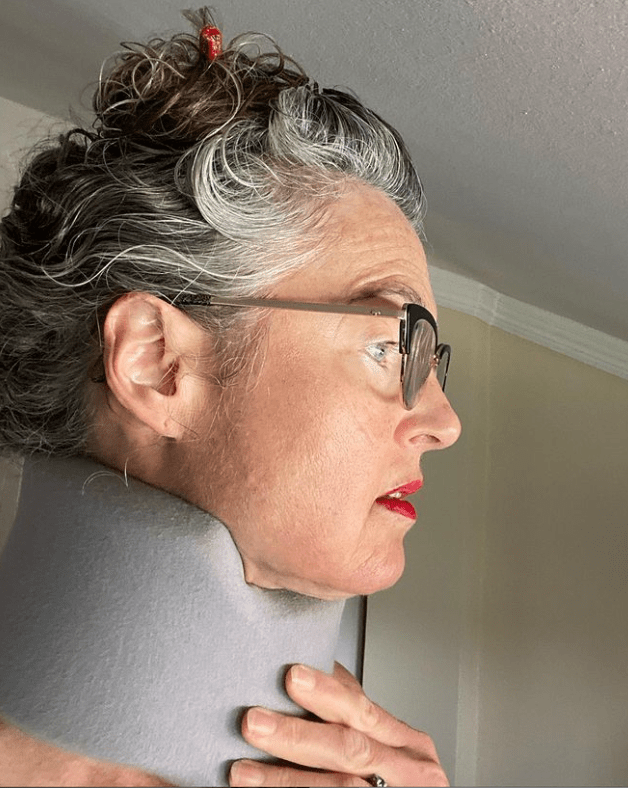
Writer Jennifer Steil, participating in the #hotdisabilityaidsummer challenge, in her neck brace that allows her to work at her computer without excruciating pain.

A post I’ve written for The Mighty, promoting the #hotdisabilityaidsummer challenge, has been published, and others have been joining in on Instagram.

The first image on this post was shared by Jessica Gregory, who goes by the nickname “Delicate Little Petal” on Instagram. In her #hotdisabilityaidsummer post about her crutches, Jessica wrote, “I’m freshly vaccinated and looking forward to my first sexy summer on four legs!”

Author Elissa Dickey (second image), a fellow MS patient who suffers from heat sensitivity, shared a pic of her face next to a fan.

Writer Jennifer Steil (third image) posted a photo of herself wearing the neck brace she needs to don when she’s writing because she said, “My neck is held together with titanium. I have occipital nerve damage and cervicogenic chronic nerve pain.”

Collectively, I’m hoping that #hotdisabilityaidsummer will at least encourage those with chronic illnesses to be less embarassed by their disability aids. I know that I have been less afraid to don my cooling vest as a result of the challenge.

Here’s the link to my original Instagram post.

Image credits: Jessica Gregory, Elissa Dickey, and Jennifer Steil.

talking women & health with authors & poets

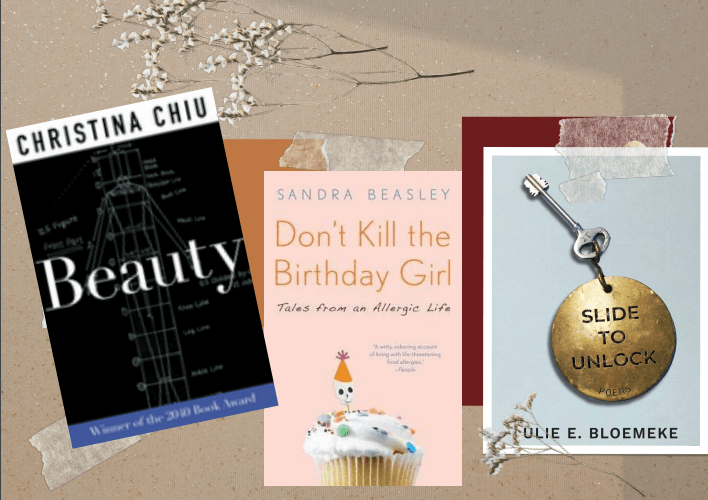
Author Christina Chiu — who wrote the powerful Beauty (do yourself a favor and read it!) — invited three writers to tackle the topic of women & health, while she also shared candid stories of her own illness, as well as her son’s experiences with food allergies.

Among her guests:

Sandra Beasley, the author of the memoir, Don’t Kill the Birthday Girl: Tales from an Allergic Life, and more recently, Made to Explode: Poems, spoke about her food allergies and how she has embraced her disability as a part of her identity.

Poet Julie E. Bloemeke — whose collection of poems, Slide to Unlock, “investigates how modern technology redirects our erotic and familial lives” — discussed not only how she dealt with depression, but how it and various therapies for it influenced her writing.

I, meanwhile, read aloud a section of my multiple sclerosis-centric memoir Uncomfortably Numb where the neurologist who first examined me — after an MRI showed a lesion on my brainstem — suggested that my symptoms of numbness were likely “psychosomatic.”

I hope the discussion helps give people with illnesses and/or disabilities some sense that they are not alone.