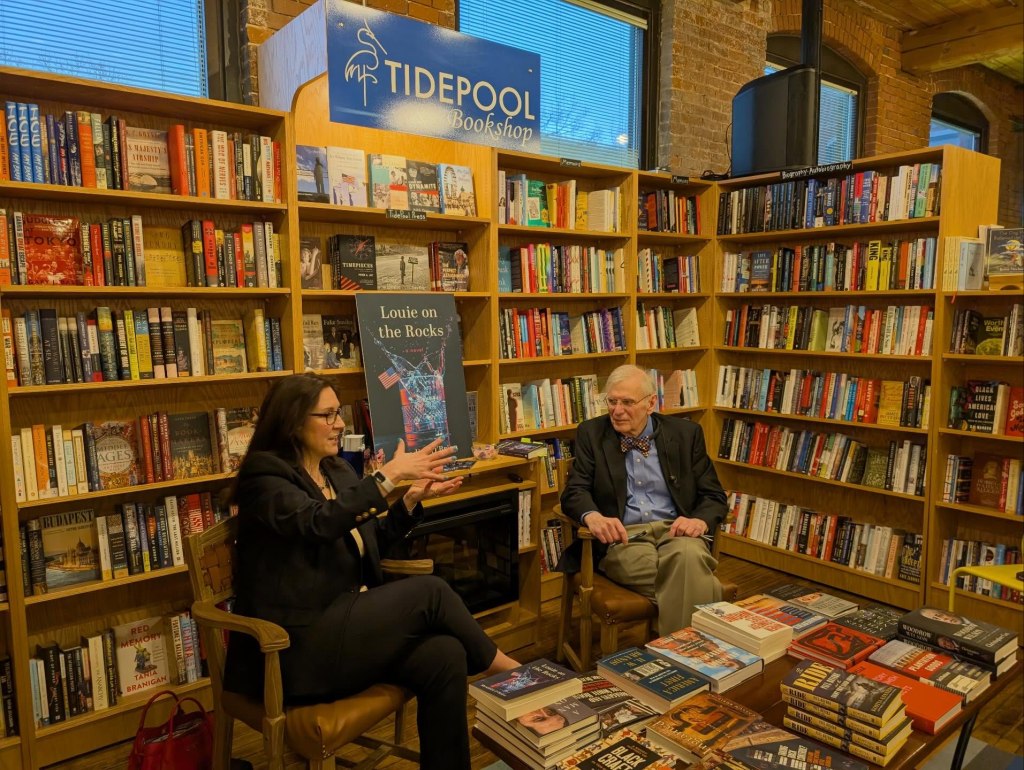
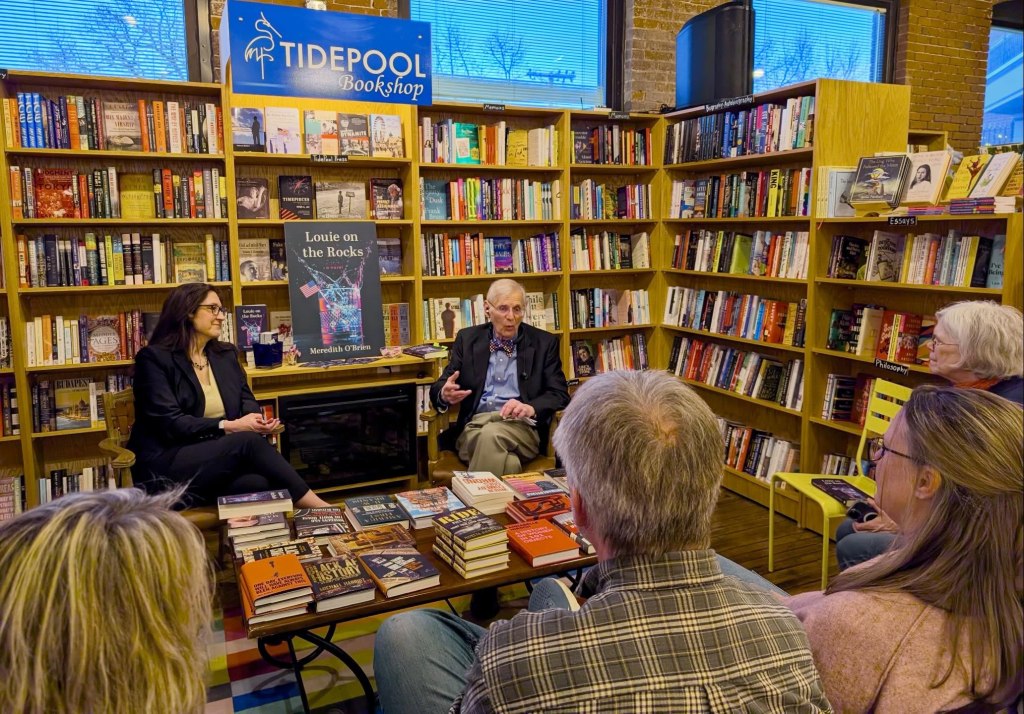
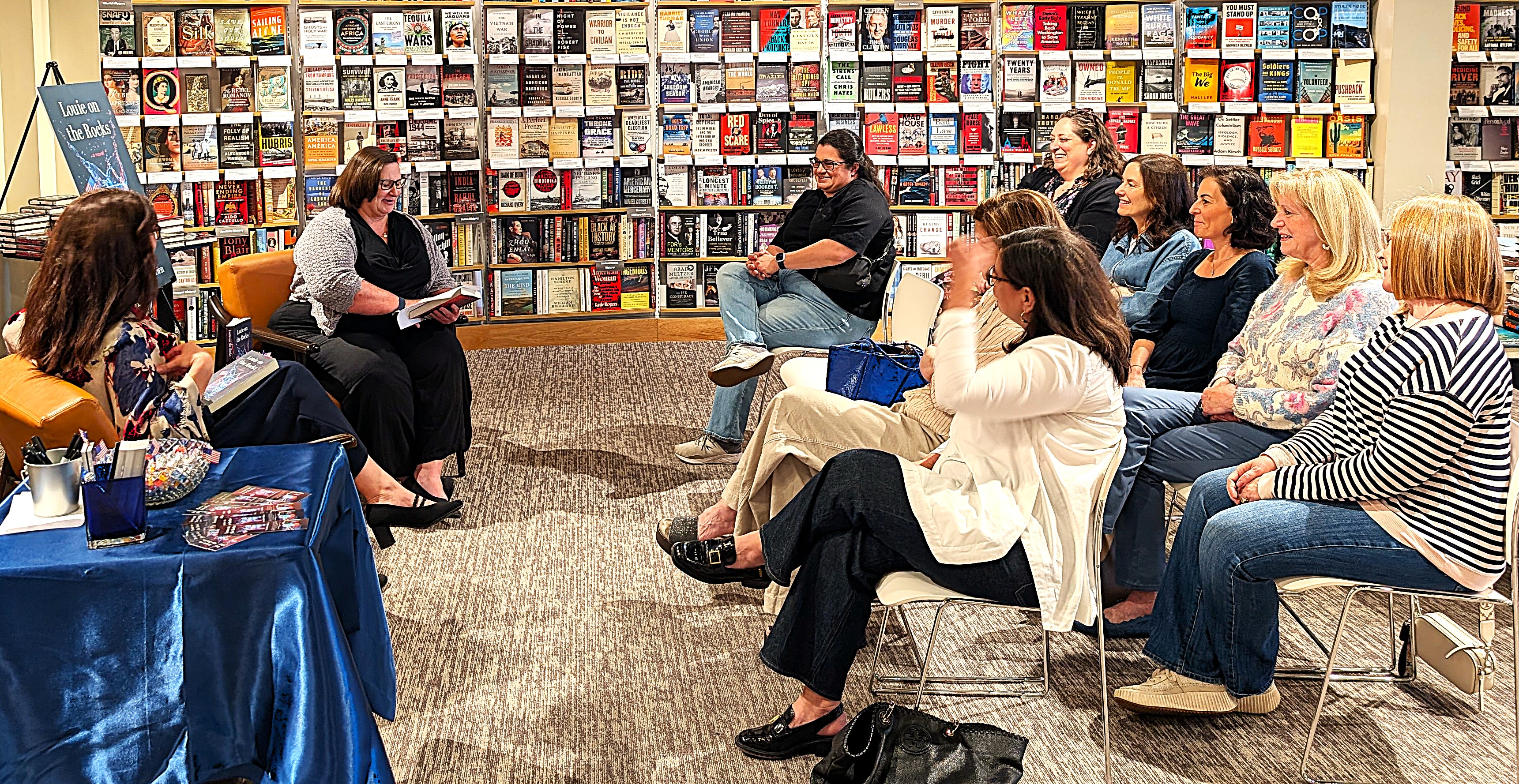
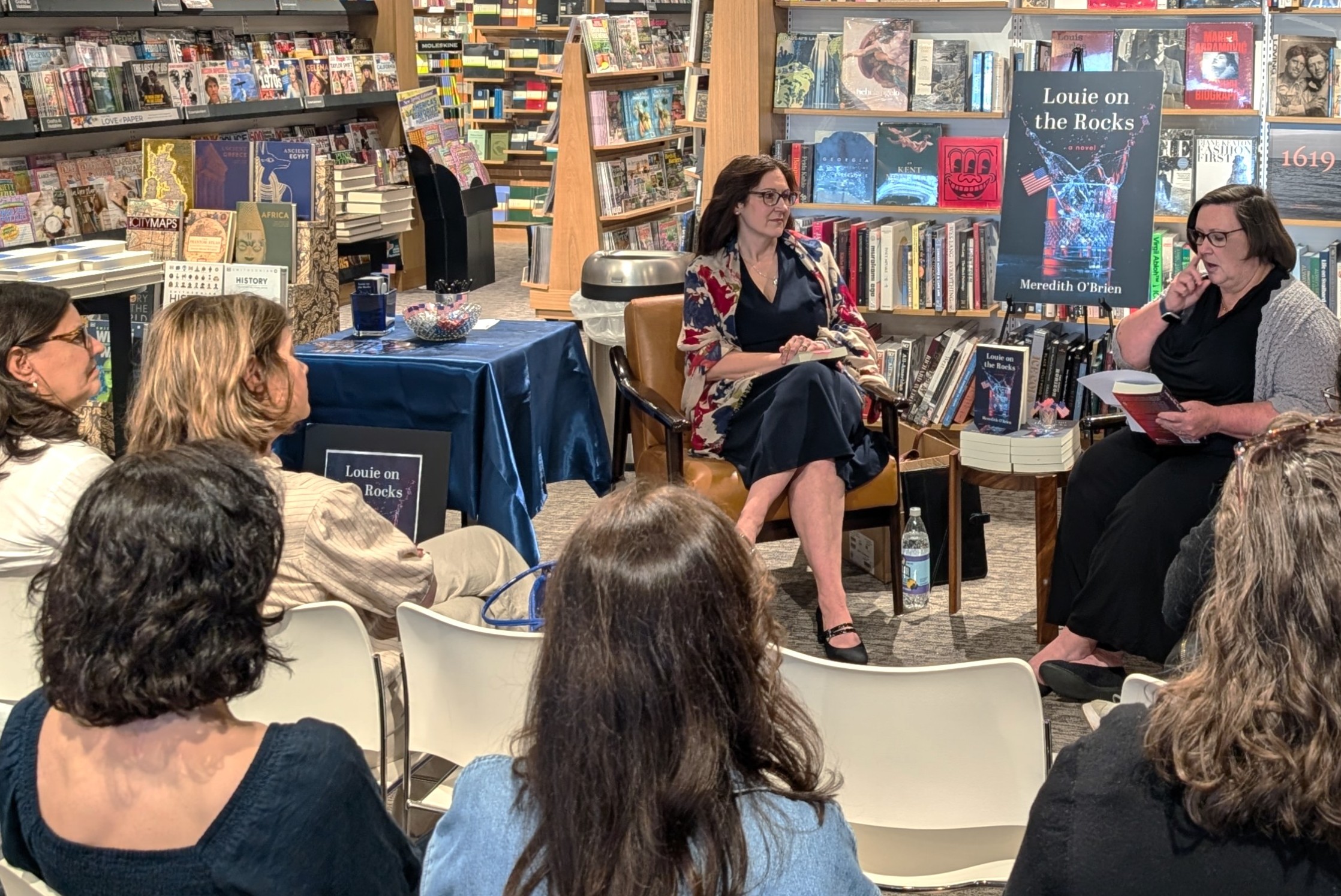
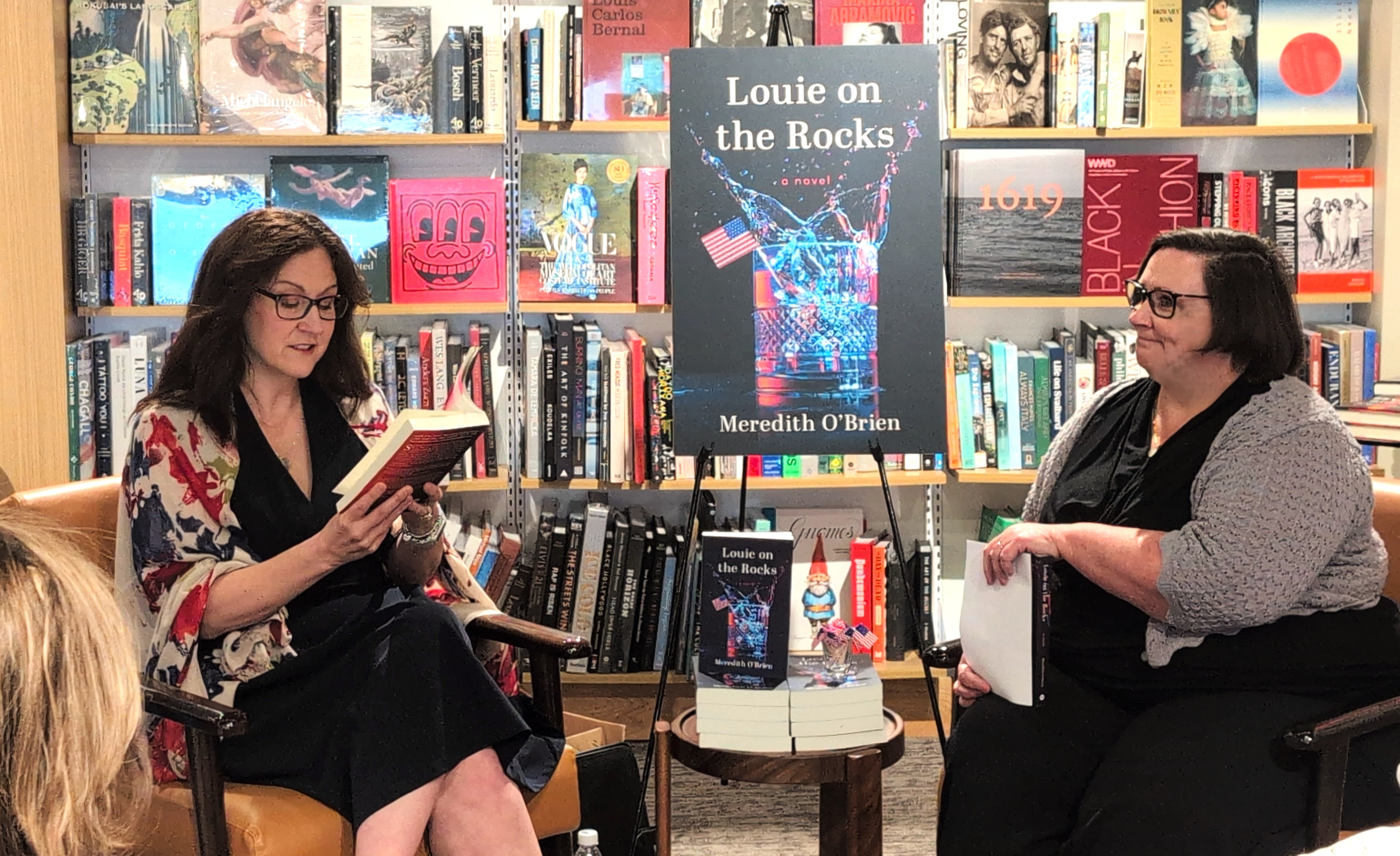
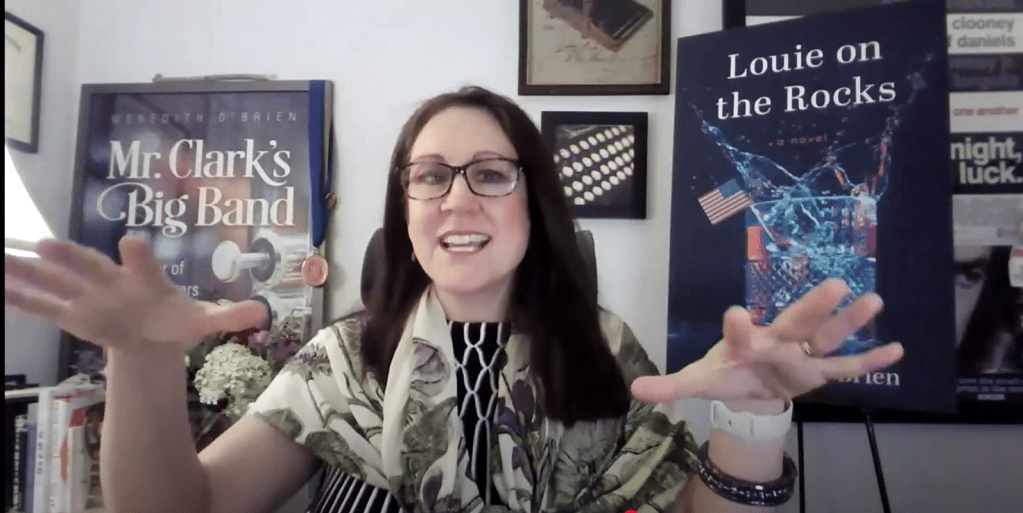
The lovely indie store TidePool Bookshop in Worcester kindly provided me the opportunity to chat about Louie on the Rocks with longtime journalist and former opinion editor of the Worcester Telegram & Gazette, Tony Simollardes.
Tony also reflected on his Clark University writing students’ reactions to various Louie threads as I’d spoken with his class earlier in the semester. One poignant question one of his students asked asked made me realize something. Beyond the obvious connection between the deceased mother, Helen, in the novel, and my own mom who passed away in 2014. I realized that, perhaps, I was trying to imagine having conversations with my mother about the events of the day through the Helen character. (My mom would’ve been epically peeved by everything that’s been happening, just like Helen.)
Multiple sclerosis challenges ranging from misdiagnoses and obtaining work accommodations, to advocating for chronic illness causes and writing from the patient perspective were chief among the many issues I recently discussed with two podcasters.
Southern California’s Dr. Brandon Beaber, a neurologist specializing in multiple sclerosis, chatted with me recently for his podcast about my new book, Uncomfortably Numb 2: An Anthology for Newly-Diagnosed MS Patients, touching on topics like when or whether to tell people you have MS and what lessons I’ve learned since I was diagnosed in 2014. Spoiler alert: There’ve been a lot of them.
Meanwhile, podcaster RA Cook, a fellow author and western Massachusetts native, hosted me as a guest on her podcast, Well Done You. Our wide-ranging conversation addressed topics like writing and teaching journalism at the university level, to being a multiple sclerosis patient and advocating for issues facing those living with chronic illnesses.
I was honored to be a part of both of their podcasts.
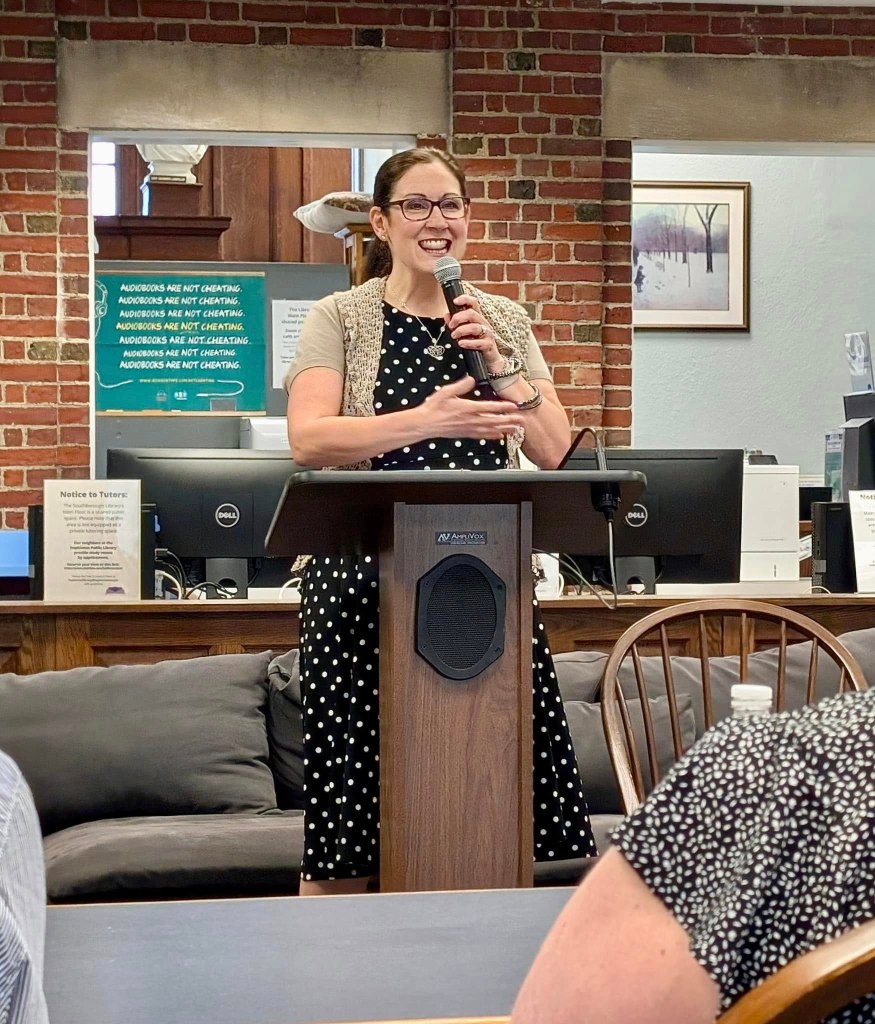
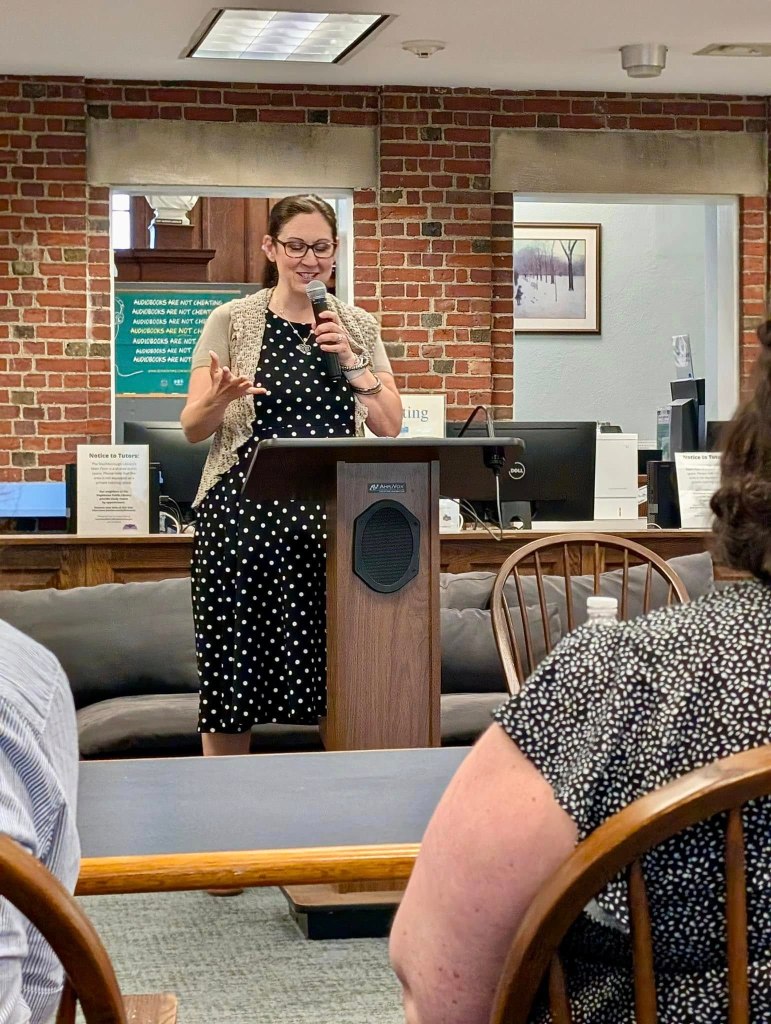
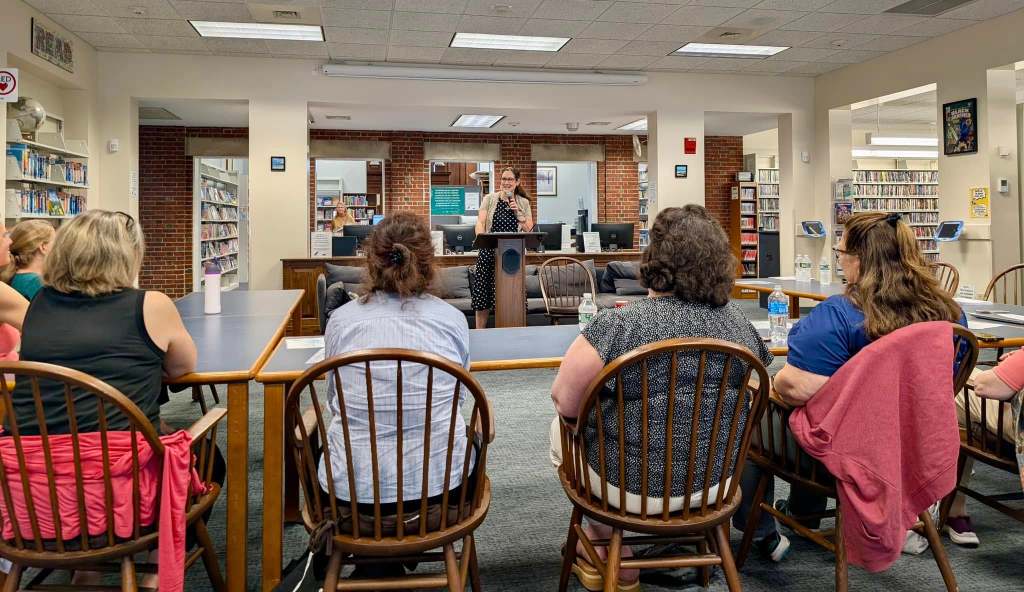
I enjoyed a substantive discussion with the folks at Southborough Public Library about political divisions in families during the Trump era, as well as how to deal with aging parents who make decisions that negatively affect their health and/or their finances, major themes explored in Louie on the Rocks.
Prior to the Q&A, I gave a 20-minute speech about the impact of our intense political divisions on not just our families but on our local communities as well. Here’s an excerpt:
My Louie character is a proxy for MAGA voters who see the world in which they grew up transformed into something they don’t recognize. Louie was a blue-collar worker who never went to college but who married and put his daughter through school. He thinks the world has left him behind and he’s angry about that. He lashes out against things that challenge his world view, that make him feel insecure, that make him feel less-than.
Helen represents that middle-of-the-road person who wants to love and stand by Louie for the wonderful things he’s done, but who also chastises him for the homophobic things he says and for supporting a candidate whom she believes spouts hatred.
The Lulu character is a proxy for progressive voters who just want to be free to live their own lives. They don’t understand why who they love or what kinds of food they choose to eat triggers some people. Lulu’s anger that her mother failed to cut Louie out of her life because of the hatred he espoused, echoes the feelings of a large portion of Democratic voters, particularly younger ones.
We’ve divided ourselves into camps. The MAGA camp, the anti-Trump camp. The pro-ICE immigration raids, the anti-immigration raids. …
There seems to be no common ground any longer, no place to stand where someone isn’t hurling names at you. There seems to be no way for people to calmly discuss issues without the discussion sinking into black-and-white terms.
We’ve been pushed into these camps as a response to the success of the MAGA movement and its leader. Their successful tactics – using anger, resentment, demonization, the it’s-us-or-them – have been co-opted across the world.
I appreciated seeing friends and neighbors — and even my state representative! — in the audience, along with members of the Friends of the Southborough Public Library. Public libraries are our gems!
My UMass-Amherst roomie and bestie, Gayle Long Carvalho, showed us her English teacher side by asking insightful and probing questions about Louie’s many themes ranging from generational divisions and understanding the mindset of the lead character as a proxy for MAGA voters, to being the adult child of a parent who isn’t acting in his own best interest and what happens when one spouse in a long marriage dies and leaves behind someone who doesn’t know how to pay the bills.
Gayle was, in two words: rock star.
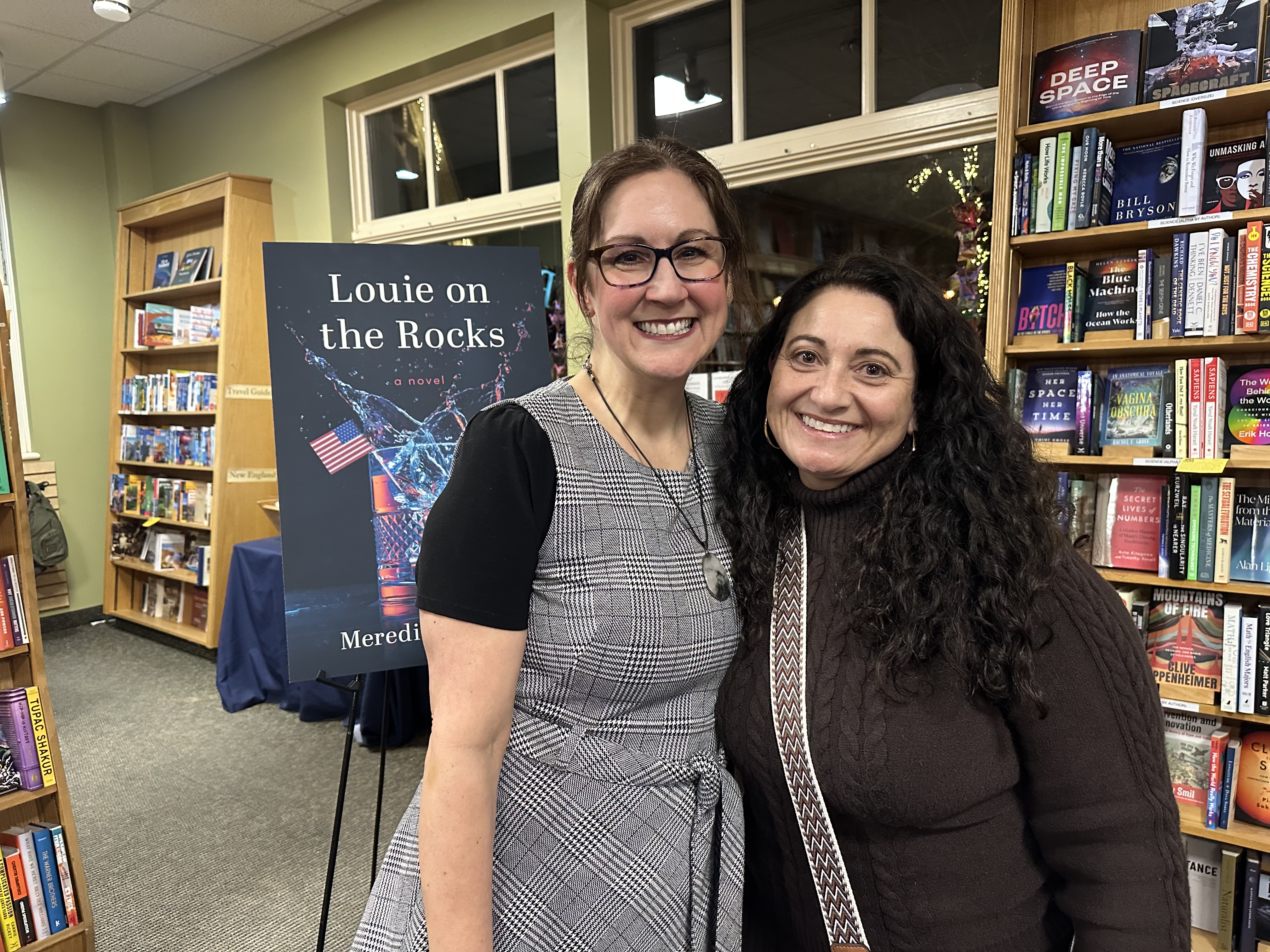
The lovely crowd boasted friends from Southborough, UMass, and even an MFA student of mine from the Bay Path University MFA creative nonfiction program who I met in the flesh for the very first time. Thanks to all who took the time out of your day to chat with us.
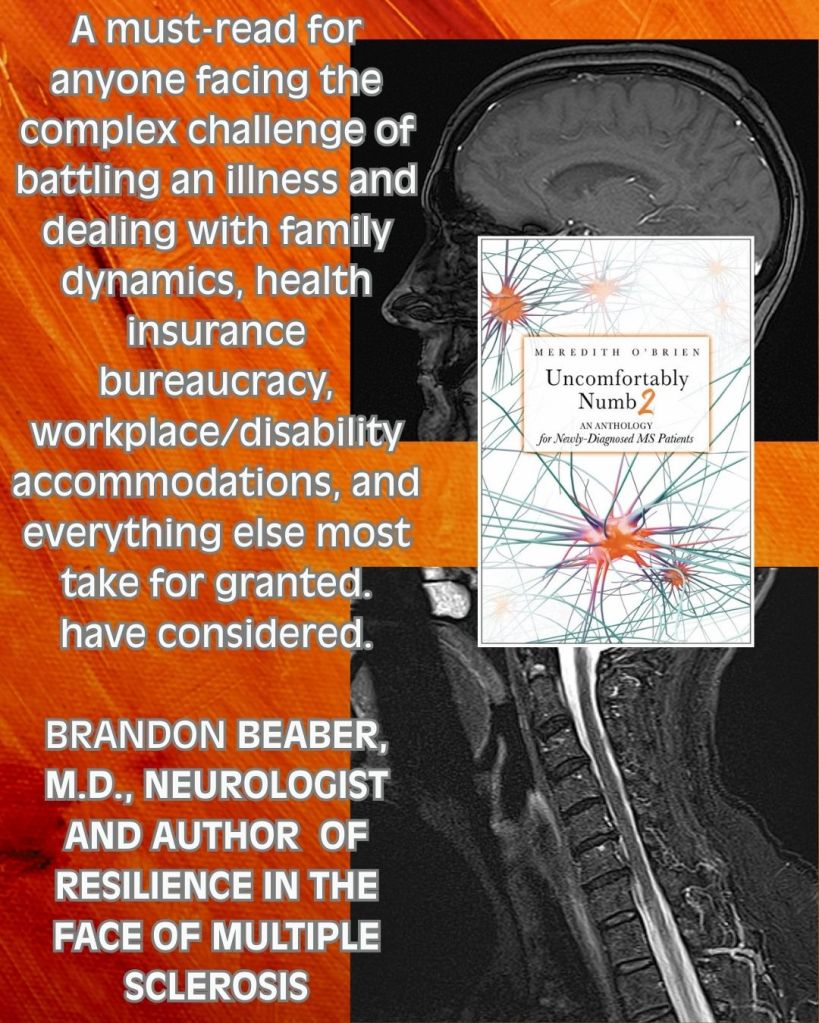
MS Activist and Influencer Jodi Dwyer said the new multiple sclerosis anthology Uncomfortably Numb 2 would’ve been “an amazing resource” had she had it in her hands when she was first diagnosed.
That was the goal of this sequel to my MS memoir. It was to create a guide that I wish I’d had when I received my own diagnosis in 2014. Comprised of stories from patients with varying stages of MS, Uncomfortably Numb 2 includes stories from a woman who was diagnosed as a teen and a neurologist who treats adult and pediatric MS patients.
I’m thrilled that the sequel to my 2020 medical memoir is now on sale. Uncomfortably Numb 2: An Anthology for Newly-Diagnosed MS Patients tells the stories of a variety of multiple sclerosis patients who are in varying stages of the autoimmune disease. A neurologist who specializes in MS and pediatric neurology, as well as a National MS Society state advocacy professional’s stories are also included.
Kirkus Reviews gave it a shoutout:
This follow-up to O’Brien’s memoir, Uncomfortably Numb (2020), follows several multiple sclerosis patients and experts on their emotional journeys. It’s easy to see shared experiences across the many narratives; many of the people presented here have faced similar challenges with aspects of their illness, from dealing with insurance and prescription drug cost issues to other people’s judgement of using the Americans with Disabilities Act parking when their symptoms aren’t visible to others. A project that many will find relatable.
The president and CEO of the National Multiple Sclerosis Society, Dr. Tim Coetzee was kind enough to write the foreword in which he says, “This book is essential readding for anyone who wants to fully understand the journey of MS from the perspective of those living with the disease.”
Reuniting with deeply-admired colleagues is always a joy. Reuniting with colleagues who leave you feeling like a rock star is utterly fabulous.
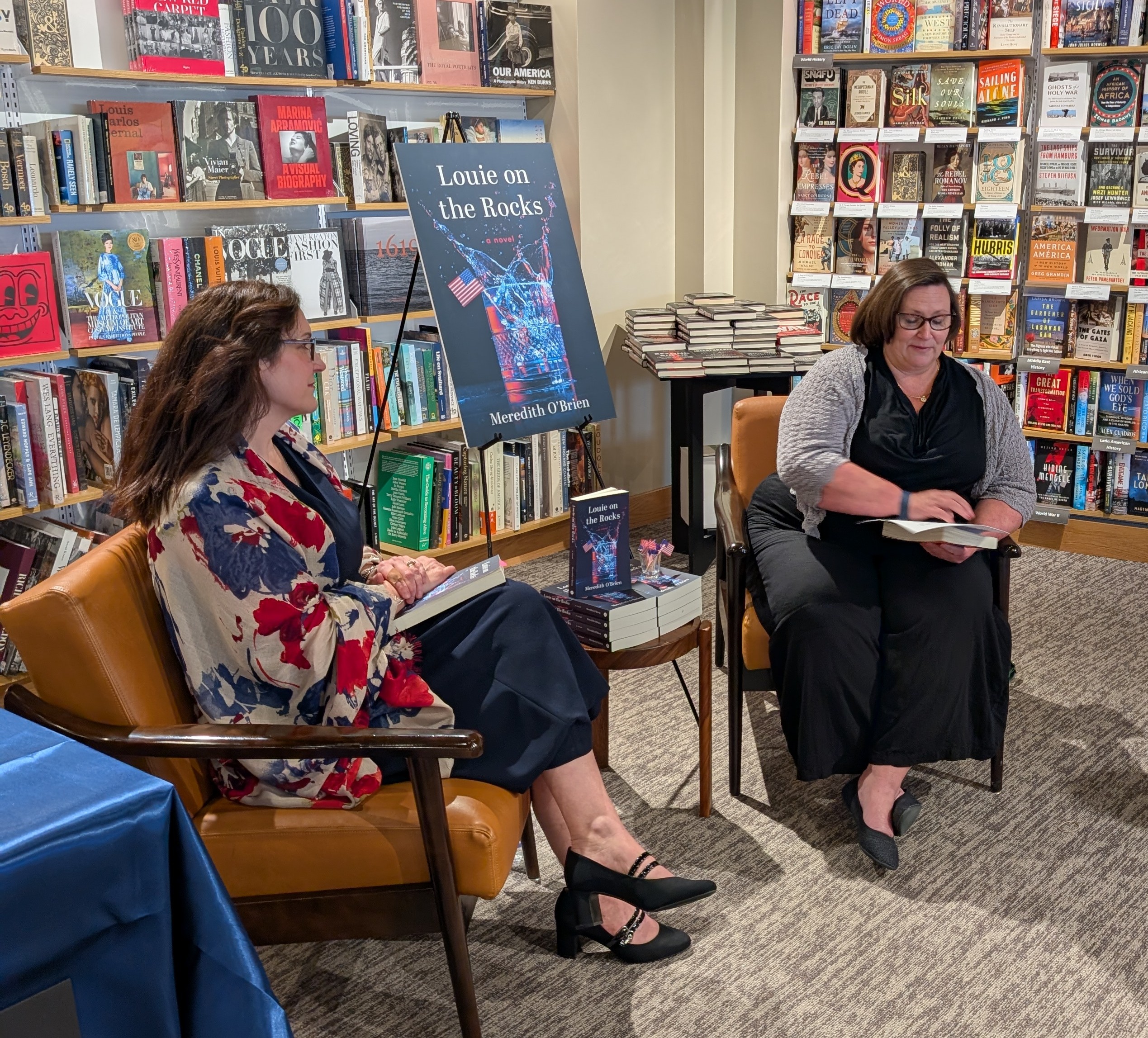
Such was my feeling after Suzanne Strempek Shea — my former newspaper colleague, writing mentor and fellow MFA creative nonfiction writing instructor — interviewed me for a book talk about my novel, Louie on the Rocks, at the Odyssey Bookshop in South Hadley. Suzanne has an uncanny ability of asking incisive questions that frequently give me pause and make me wonder why I’ve never thought of that particular angle before.
Our back-and-forth, as well as the questions from attendees, focused a great deal on the subjects of my vacillating between different writing genres, and how I rendered on the page an authentic depiction of people who hold different political beliefs than I hold. That’s a question I’m getting a lot. It’s no secret that I’m adamantly opposed to all things MAGA and what’s happening under the Trump administration, but when I was developing the character of Louie Francis, I placed my personal politics inside a box and shoved aside. My charge was to create a fully-developed character and figure out how he thought. Additionally, I wanted to illustrate that, in spite of our currently polarized climate, Louie wasn’t and shouldn’t be perceived as just one thing, as just a MAGA dude. He was a good and supportive husband, a loving son-in-law, a reliable employee, and a respected volunteer in his community. Writing Louie required me to think more fulsomely about the layers and texture of his life, not simply through the lens of his politics.
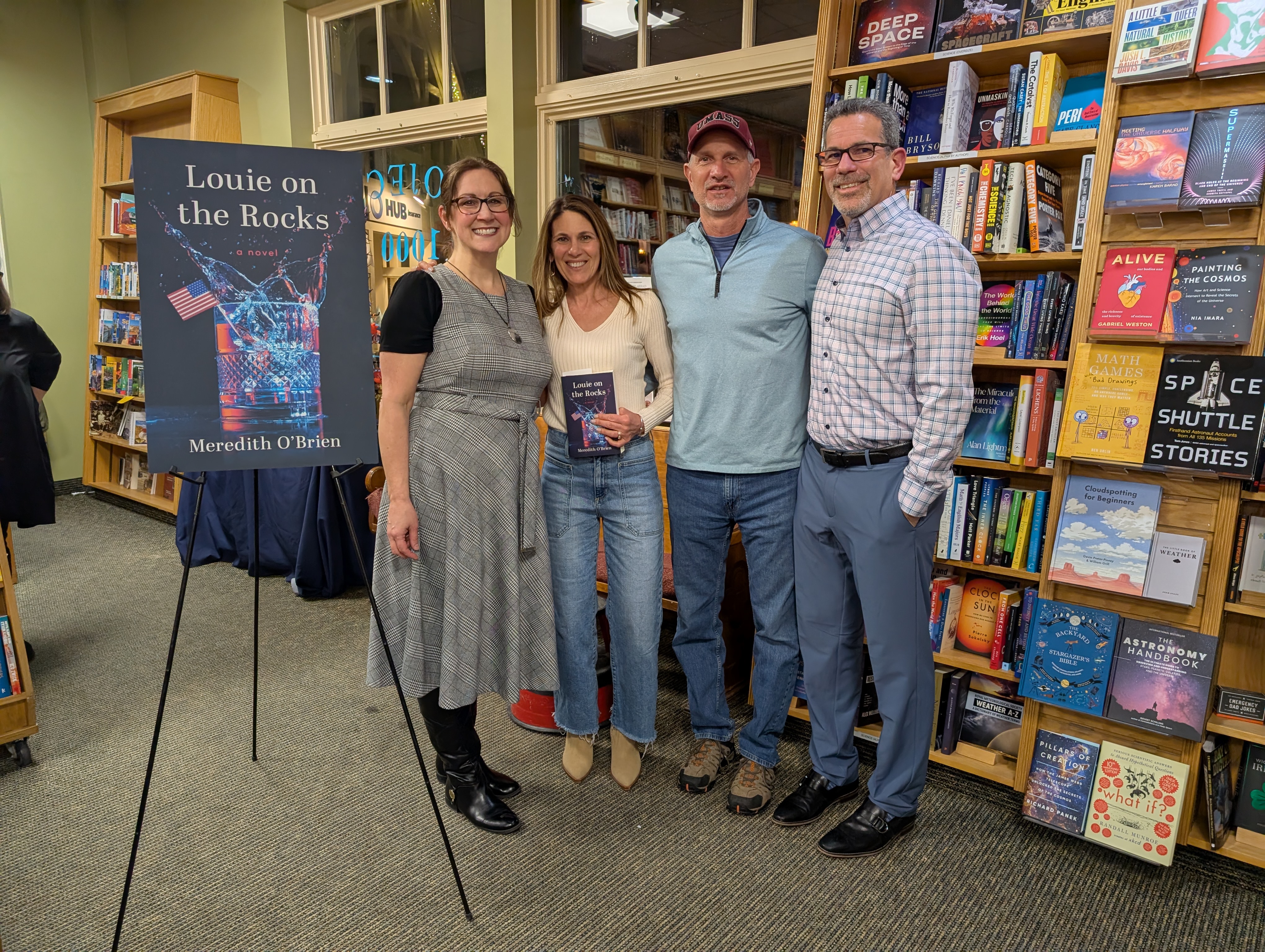
Afterward during the book signing portion, I had the chance to chat with folks and was thrilled to see my very first friend in my hometown of West Springfield there in attendance — Gina! — as well as two pals from my UMass-Amherst days. And the support from the Bay Path University MFA in Creative Nonfiction community, wow, it made me feel blessed. In addition to Suzanne, there was her husband Tommy Shea (who mentored me when I was a young newspaper reporter), former MFA director Leanna James Blackwell, and Anne Pinkerton, with whom I had classes when I earned my own MFA from Bay Path.
The Springfield Republican, the newspaper for which I used to work — in its Westfield bureau covering the hill towns as well as Southwick, Massachusetts, and in its Springfield office while covering West Springfield — graced me with a story about Louie on the Rocks which explored the political polarization which stressed and already-fragile father-daughter relationship that was on the edge of complete rupture.
It also gave a shout-out to the March 6, 7 p.m. book event I have slated in western Massachusetts, in South Hadley’s Odyssey Bookshop with one of my beloved former newsroom colleagues: Suzanne Strempek Shea, who’ll be in conversation with me at the event.
Included among the attendees were MFA in creative nonfiction students of mine from Bay Path, as well as a dear friend from my Massachusetts hometown, and even a relative from the Philly area.
It was a meaty conversation and no, I didn’t spend most of the time looking like I was casting a Harry Potteresque spell that the still image above might suggest. A review of the video, however, shows me how much I use my hands when I talk.









 Meredith OBrien